How In-House Training Powers Sustainable Business Growth
Learn How In-House Training Powers Sustainable Business Growth
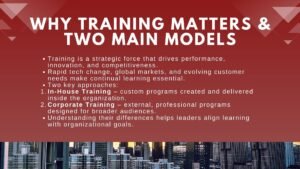
In the present competitive and fast changing business world, companies are becoming more conscious that their human resources are their best source of value. It is easy to copy products, strategies and even technologies but it is hard to imitate capabilities and culture of an organization. This fact contributes to making employee training not only an operating need but a strategic one as well. In-house training in Singapore has become an extremely effective tool of sustainable business growth, whereas many companies invest in the development programs or in the standardized corporate training package. In-house training enables the companies to unlock potentials and improves capacity to adapt to the challenges in future by ensuring a perfect fit between programs and business objectives, promoting alignment with corporate culture, and creating long-term employee engagement.Defining In-House Training and Its Unique Role
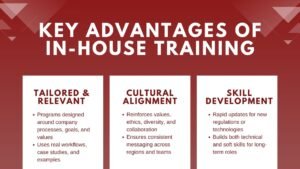
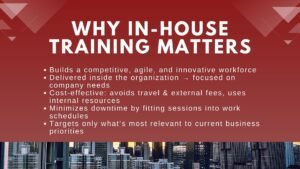
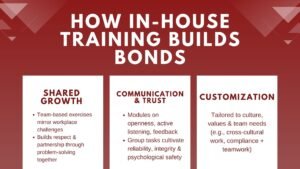
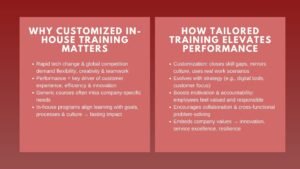
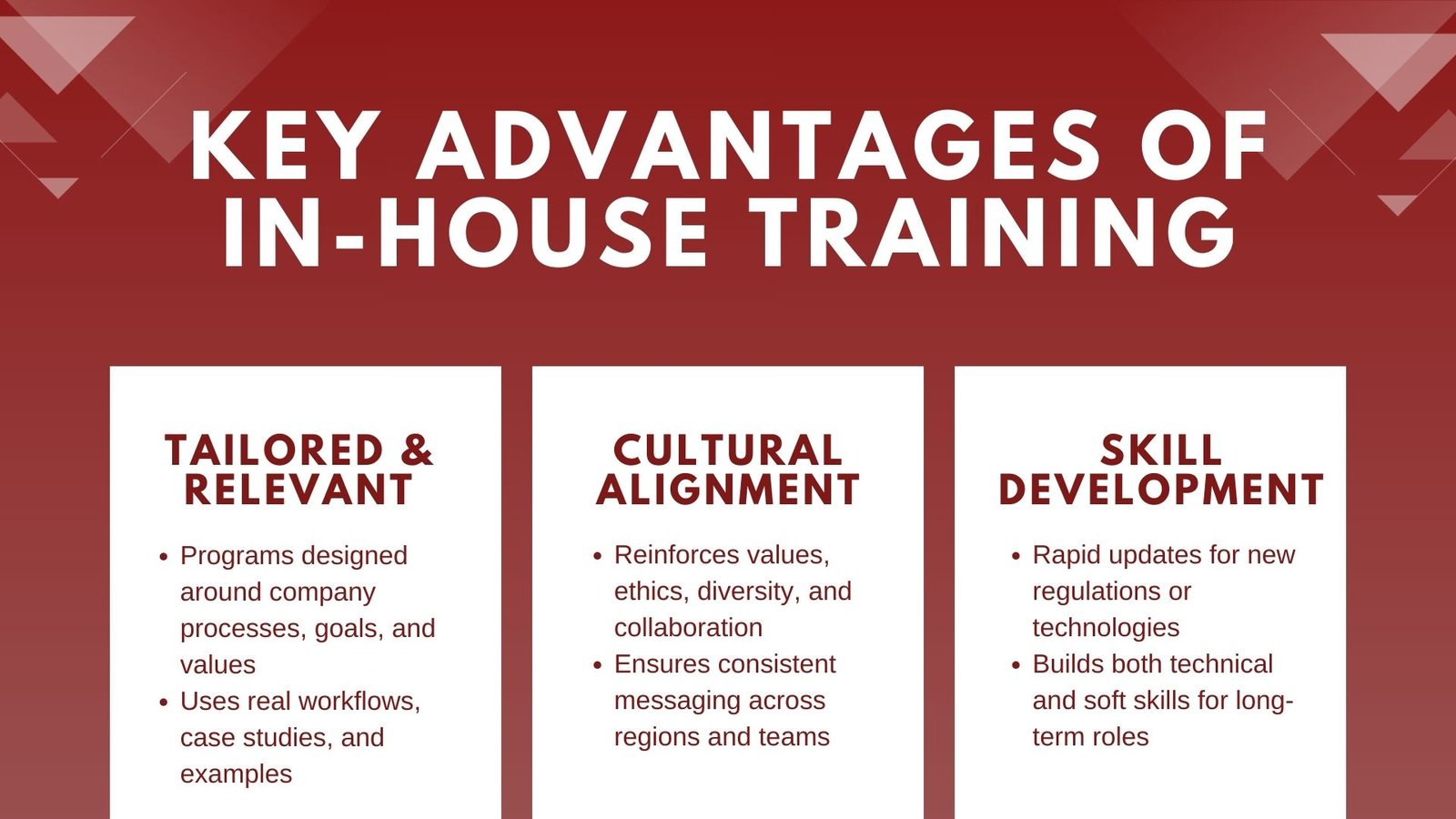
In-house training is that type of training which has been created, built and presented inside the organization. In-house training is bespoke, unlike external training programs which tend to be standardized within the industry, i.e. the training is designed based on the processes, goals, and values of the company. Training on board or training new employees, creating leadership pipelines, strengthening compliance, or improving technical skills; in all cases, In-house training in Singapore is deeply associated with the contextual factor of the organization. Many companies now invest in a customized in-house training program Singapore to ensure that their workforce develops in direct alignment with corporate needs. The special power of it is that it can withstand the real life of the business smoothly. Applicable case studies, workflow and examples can be integrated into the training material by internal trainers or those with expertise in those areas. Consequently, it is more likely to increase retention and practical use as the employees can also recognize the immediate applicability of what they are learning to their jobs. In the long-term, this alignment enhances the performance of both individuals and the organization, highlighting the importance of in-house training for businesses across different sectors. In-house training in Singapore is also a source of ownership as well as pride to the employees. The awareness of the fact that the company has invested in shaping personalized learning experience leads to a feeling of loyalty and a closer relationship to the workplace. This closer contact does not only enhance productivity in the short run- it enhances the long run sustainability of the business through eliminating turnover and developing a workforce that is aligned with the mission of the company. In industries such as clean energy, renewables sector training in-house Singapore is also becoming an effective way to bridge technical skill gaps while keeping training relevant and business-focused.In-House Training as a Driver of Cultural Alignment
The culture has been said to be the invisible glue that unites organizations. It spells out the interaction of employees, decision making and goal seeking. However, culture is sometimes a weak thing particularly when the organizations are developing or passing through significant transitions. The benefits of in-house training include a mechanism of cultural reinforcement and maintenance that cuts across the levels of the company. Training prepared in-house is a natural expression of values, principles and working methods that an organization holds. Sales training module may incorporate not only deal-close techniques, but also teach how to promote the ethical standards of the brand. A leadership program may highlight not only the efficiency of the managerial processes, but also the attitude of the company toward diversity, inclusion, and collaboration. These innuendos but mighty reinforcements guarantee that culture is not constrained by mission statements but practiced in day to day activities. In addition, when organizations grow geographically or spread their activities, the training of in-house means uniformity. The same messages and expectations can be sent to employees across regions and departments and achieve alignment even with local market or team differences. This uniformity is essential to the sustainable growth because it avoids business fragmentation and assists the business to have a single identity.Building Skills for Long-Term Adaptability
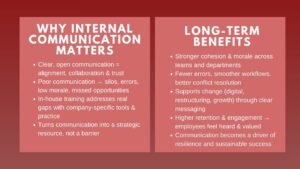
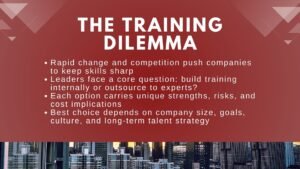
Sustainable growth is not concerned with short term victories, but with capacity to survive in shifting environments. Training internally is important in giving the staff the capability of being adaptable. Contrary to this where external programs may be slow to adjust to the change in a particular industry, In-house training in Singapore can be quickly changed to suit the new realities. In this case, an organization in the financial services industry can add new regulatory requirements into its training modules within a short time. A manufacturing company is able to update its own programs to incorporate new technologies of production or protection measures. Through the development of this responsiveness, in-house training makes the employees stay pertinent and competent despite the change in external conditions. Another aspect that is equally important is that in-house training allows one to concentrate on long term skills creation. In addition to technical mastery, it may develop soft skills like communication, problem solving and leadership, that will always be needed regardless of the industry changes. This holistic method produces employees who are not just efficient in the jobs that they are presently, but also those who are ready to assume future roles. Through this, In-house training in Singapore is directly involved with the succession planning and long term organizational continuity.Financial and Strategic Benefits of In-House Training
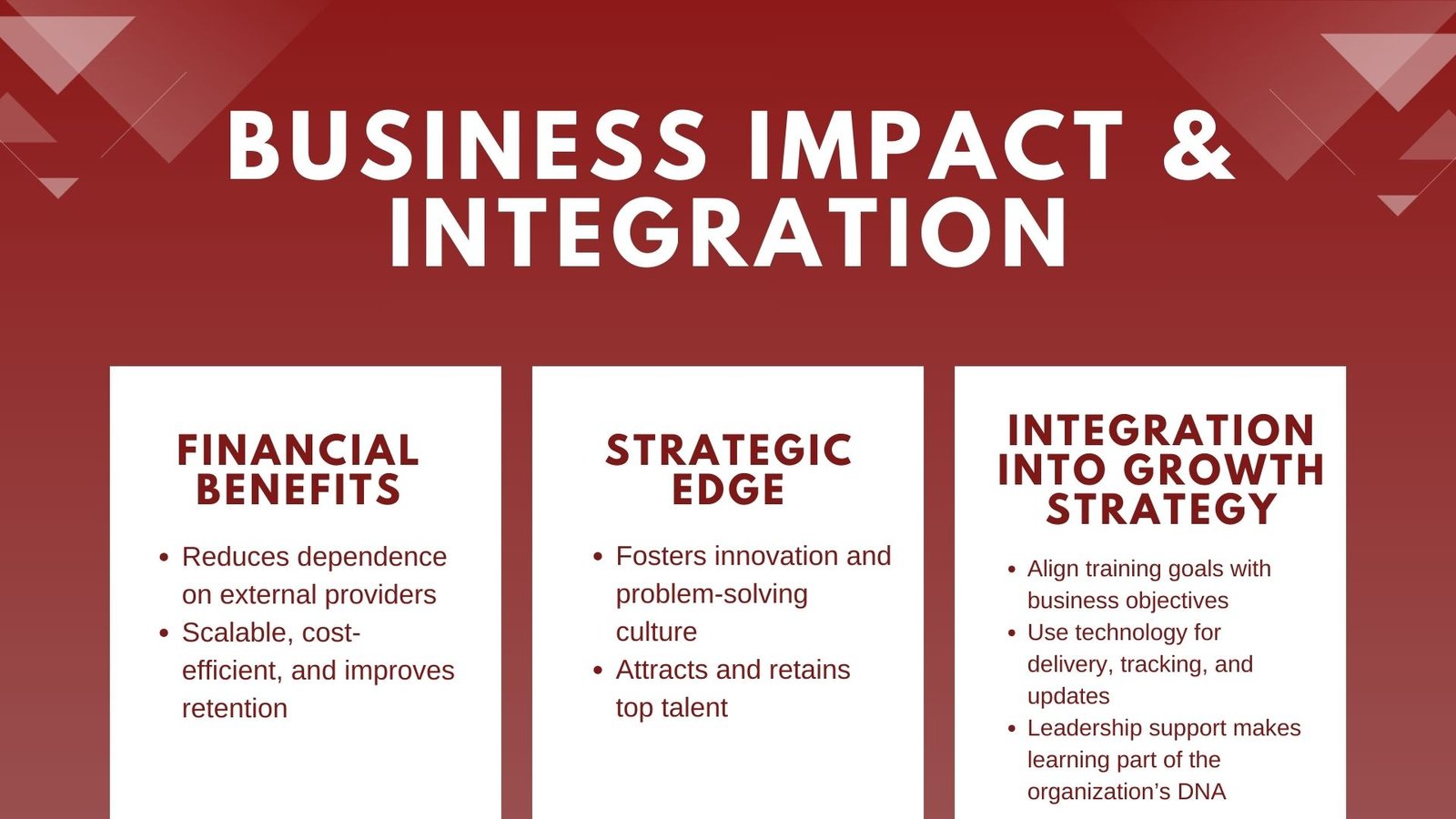
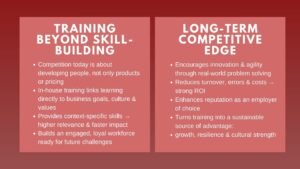
The financial and strategic advantages of in-house training are enormous and long lasting even beyond the course of learning. Although the initial expenses involved in the design and delivery of internal programs may be high, the investment can in many cases pay back in the longer run. First, in-house training eliminates dependence on external training service providers, which reduces long term costs, particularly where employee training is repetitive among large workforces. A developed program can be used and modified again without having to incur the per-participant cost of an external seminar or certification. Such scalability renders the in-house training especially cost-efficient to large-scale organizations. Second, internal training enhances retention and minimises the turnover expenses. When employees are invested in, chances of remaining with the company are increased. Given that it is estimated that the replacement of one employee would cost between half and two times the salary of an employee when recruitment, onboarding, and lost productivity are included, even relatively small changes to the retention would result in big savings. In-house training strategically places companies in the position of learning organizations. Businesses can attract the best talents who will be interested in growing the business because a culture of constant development has been established. They also develop a culture of resiliency in that the workers who have current knowledge can more easily innovate and solve problems. This will not only place the organization in a position to survive but dominate its industry.Integrating In-House Training into a Growth Strategy
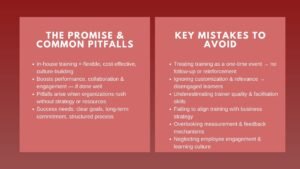
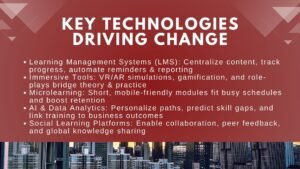
In-house training in Singapore needs to be a part of the strategy of the organization to be the real driver of sustainable business growth. This entails matching the training intention to the overall business strategy so that learning programs can lead to quantifiable impacts on business like revenue increase, client satisfaction, efficiency of operations or innovation potential. Leaders should consider training as an investment with long term value, but not as a one time affair. New training modules should be developed based on regular evaluations of the skills of workforce, the performance measures, and the future needs of business. Technology can also prove to be important. Learning management systems, e learning platforms and performance monitoring tools enable companies to effectively provide training, track progress and modify the content according to feedback and outcomes. Leadership participation is also very critical. Employees will have a greater likelihood of taking in-house training seriously when it is championed by executives and included in the design or delivery of training. Such top-down support makes training a part of the organizational structure and not as an additional activity. With time the in-house training can be integrated into strategy to create a virtuous loop with learning fueling performance, performance fueling growth and growth creating new opportunities to learn.