Cost Effective In-House Training Programs in Singapore
Understanding Cost Effective In-House Training Programs in Singapore
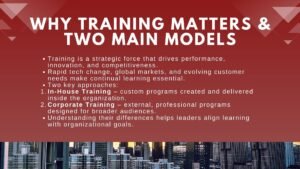
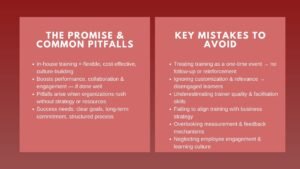
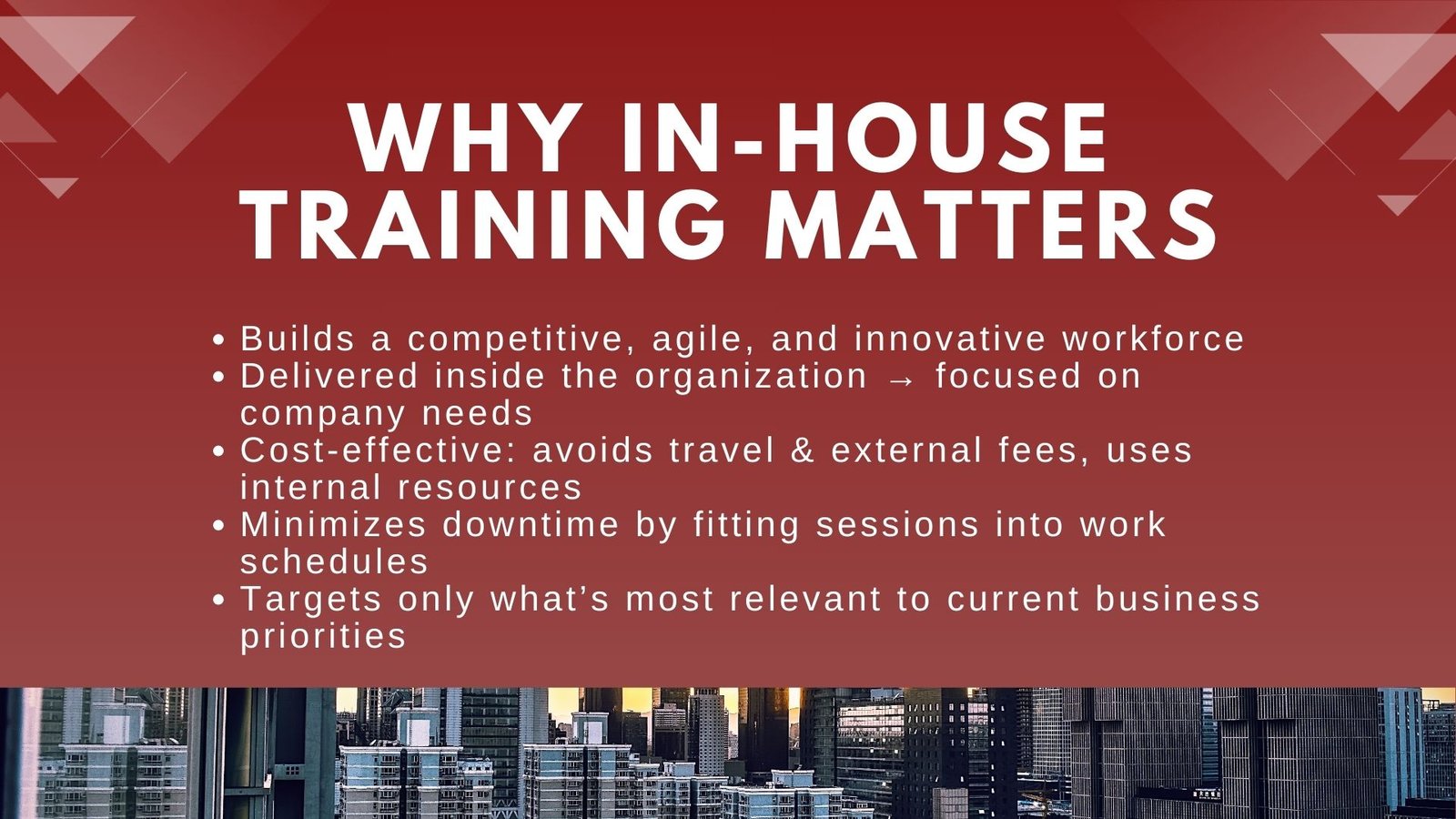
In this modern dynamic world of business organizations, there is pressure on them to be competitive, agile and innovative. Learning and development of the employees are very critical in the continued growth and sustaining their competitive advantage. In-house training is one of the training methods available, and it has become a training method of choice to most businesses, especially those that are interested in customized in-house training options in Singapore designed to meet the company specific needs. Compared to outsourced/external programs, In-house training in Singapore is carried out within the in-organization context, and the trainers aim solely at the workforce. Such a structure renders it not only cost-effective, but it is also extremely flexible to the objectives and culture of the company.The Cost-Effective Advantage of In-House Training
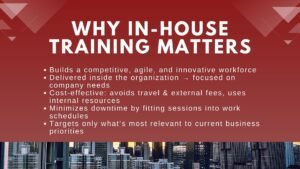
The cost effectiveness of in-house training is one of the greatest attractions of the training method. In many cases, external training programs may force organizations to be subjected to paying out an individual employee entry, traveling, and training facilities. Training large teams is compounded with these costs, hence making it expensive. In-house training can help to reduce a good part of these costs since it takes advantage of internal facilities and resources and also brings together the participants at a centralized location, which highlights the importance of cost vs external training in-house training Singapore perspectives. Logistics are not the only area that saves costs. Under the in-house training, companies tend to realize that it is more valuable in the long-term as it reduces interruptions of production. The organization also enjoys fewer downtimes since employees do not have to leave their workplace at the end of a long time. Moreover, the content of training could be modified to fit in line with the current business issues and this makes it more efficient since only those things that are most important to the company need to be trained. This is an investment that is focused to make the most out of the training investment so that organizations are able to invest in a strategic manner, especially when implementing the best in-house training programs tailored for Singapore businesses.Practicality: Seamless Integration with Daily Business Operations
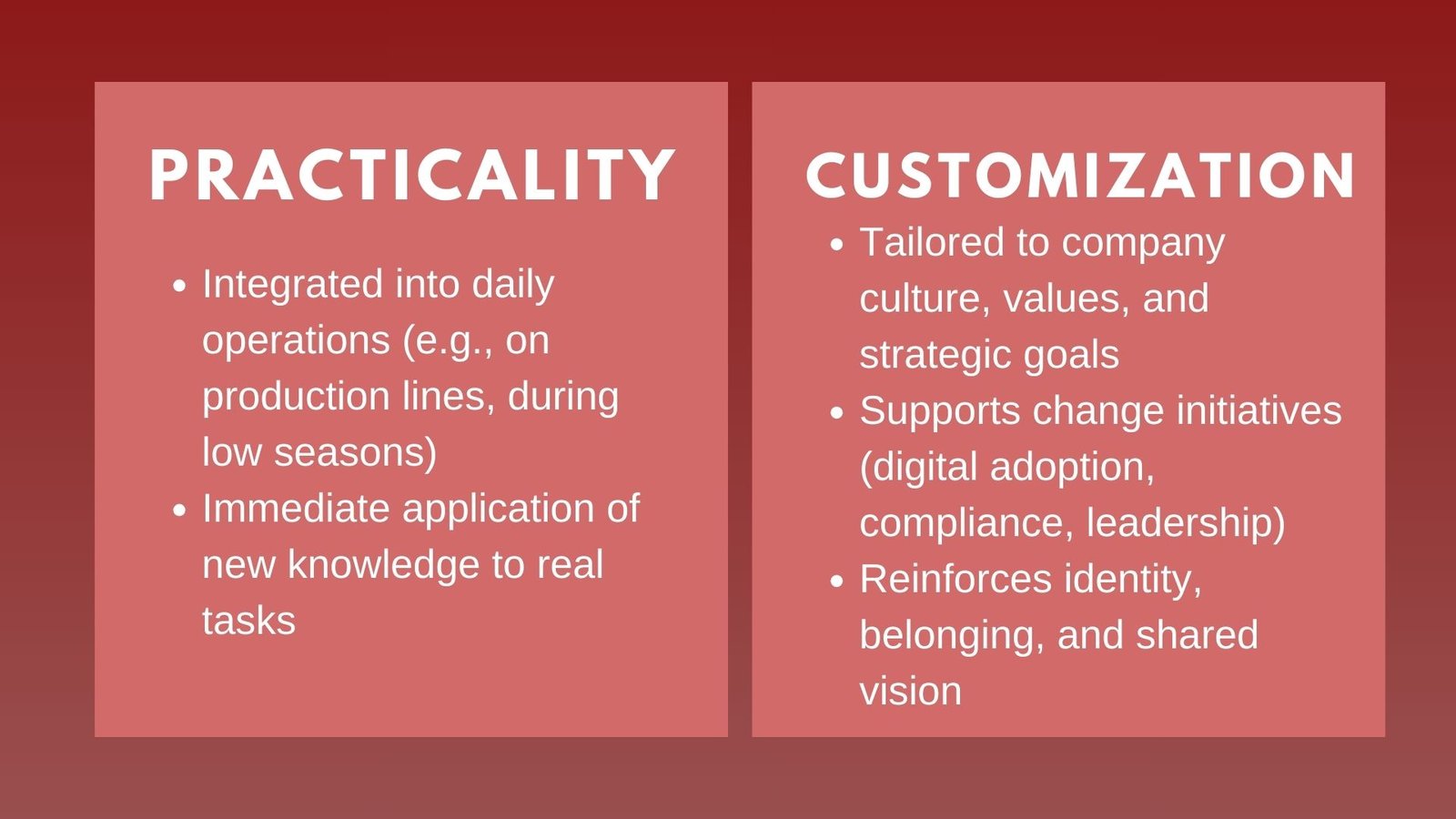
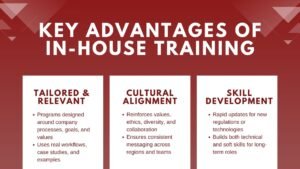
Another characteristic strength of in-house training is practicality. In-house programs can be incorporated in the day-to-day life of the business unlike standardized external training modules. The training period may be arranged at a time that will not cause major disruption to important operations, e.g. during low seasons or in fewer, short-period training. This flexibility will guarantee that the company has a continuous flow of operations and the employees have an opportunity to grow professionally. Further, In-house training in Singapore practicability is carried to the content design. Trainers are able to customize materials to match the existing projects, workflows or any industry challenge in an organization. An example is that a manufacturing firm may integrate training activities in its real production lines, and a financial services company may center its training activities on compliance matters related to its regulatory context. Such an immediate applicability allows the learning process to become more interesting and guarantee that the employees are able to convert knowledge into practice virtually immediately.Customization: Tailoring Training to Organizational Culture and Strategy
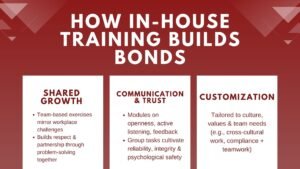
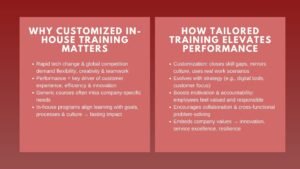
The ultimate advantage of in-house training is that it can be customized, perhaps the most valuable indeed. External training providers usually offer general training programs, which are applicable to most industries in general. On the contrary, in-house training can be specifically designed to capture the culture, values, and strategy priorities of the organization. Customization enables companies to integrate training purposes into long-term goals, which will enable the employee development to be part of the overall business success. Customization leads to the increased involvement of employees as well. The training that resonates with the realities employees have to deal with on a daily basis will be perceived as relevant and important. An example of this is that an organization that is going through a digital transformation can develop in-house training programs that target new software adoption, skills in data analytics, and digital literacy. This makes employees feel supported and ready when change is occurring and this makes resistance less and overall morale is boosted. In addition to the development of the skills, In-house training in Singapore that is customized can reinforce organizational culture. Programs may focus on company values, leadership principles, and collaboration team strategies that reaffirm a common vision. Such a strategy does not only strengthen the technical abilities of the company, but it also helps to develop identity and belonging among the employees.