Conflict Resolution and Team Collaboration: Internal Training Programs
No work place is devoid of conflict. Differences in opinion, personality or priorities are inevitable in any collaborative environment. However, depending on how an organization tends to deal with conflict, it becomes a source of growth or dysfunction.
A Conflict Resolution and Team Collaboration Internal Training Program establishes the mental attitude and the means of communication for employees and leaders to transform disagreements into opportunities for innovation and trust-building. It has a strong focus on understanding points of view, cultivating respect, and open communication, even within disagreements that are not easy. As part of team building in-house workshops for businesses in Singapore, this program is designed to strengthen workplace relationships and create a more cohesive team environment.
This training helps to switch teams from reactive to being able to take proactive steps, utilizing resilience and emotional intelligence to enhance collaboration in the long awaited future.
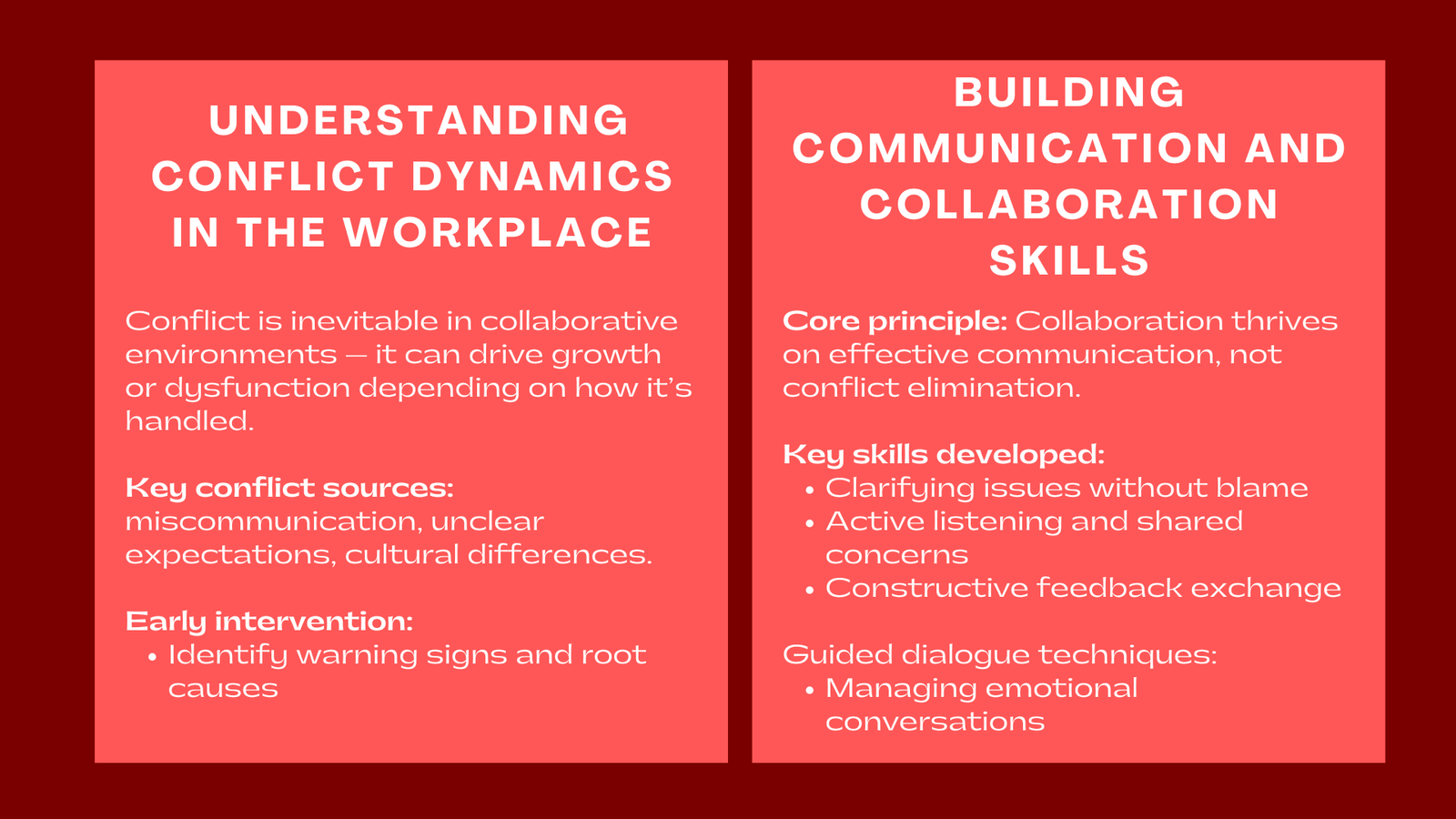
Understanding Conflict Dynamics in the Workplace
The program will start by enabling participants to recognize typical sources of conflict in the workplace – breakdowns in communication, vague expectations, and cultural differences. Participants are then trained to identify the early warning signs and the root cause analysis before it turns out of control.
They are introduced to the Thomas Kilmann Conflict Mode Instrument (TKI), which details several conflict-handling styles – competing, accommodating, avoiding, compromising and collaborating. By recognizing their own working style, employees are able to adjust their way of working to get the best results for both parties.
Additionally, role play assignments give participants an opportunity to explore actual work place situations and strengthen matters relating to empathy and assertiveness.
Building Communication and Collaboration Skills
The most essential aspect of conflict resolution is communication. This part of the program focuses on teaching participants skills for clarifying issues without attributing blame, how to listen actively and position issues into an area of shared concern.
Participants have guided dialogue skills that help them understand each other even in a highly emotional situation. They also learn how to provide and receive constructive feedback effectively to ensure that the process of feedback is respectful and focused on solutions. This approach is a key element of leadership employee development training Singapore, helping teams strengthen communication and collaboration capabilities.
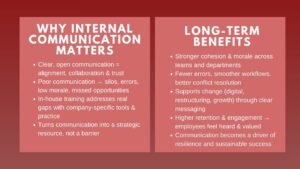
The training focuses on the fact that collaboration does not mean conflict is eliminated but rather that it can be dealt with in a constructive way. Moreover, open businesses are more innovative and flexible as varied insights result in improved decision making.
Creating a Collaborative Culture of Trust
Sustainable teamwork requires a culture where people feel safe to have an opinion and take risks. The concluding section of the program is concerned with the role of leadership in being models of transparency and inclusivity.
Managers are educated on how to help hold open discussions, mediate conflicts in an objective way, and strengthen the goals of a team. The course also offers strategies to build psychological safety – the idea that each and every member of the team has respect and feels valued. This approach aligns with the benefits of financial employee training and development Singapore, where strong leadership and open communication directly support organizational growth and team performance.
Through ongoing practice and thinking, teams build habits of working together over time to manage tension and build relationships.
Conclusion to Conflict Resolution and Team Collaboration Internal Training Programs
War, if handled well, can be a force for growth. Fixing conflict: this training helps organisations to re-core misconception of conflict as an opportunity to learn, work together and become even better.
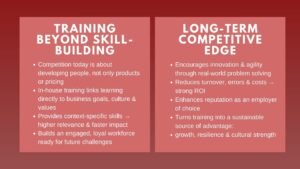
By providing employees with the tools to communicate, with empathy, and with self-awareness, businesses create an environment where collaboration will occur naturally within the workplace. Over the long run, this translates into greater levels of engagement, innovation and an integrated culture that can weather the storms with cultural unity and resilience.
As teams keep using these principles they not only resolve problems more effectively, but they also develop deeper trust and respect for each other. The organization extends itself, adapts, and opens itself to new ideas – and what may have been disagreements exude creativity and movement toward a new direction. Ultimately, conflict resolution mastery enables both individuals and teams to help create a better, more vibrant workplace where success of the whole team reigns supreme over individual differences.