Critical Thinking and Problem-Solving Corporate Training for Employees
Critical Thinking and Problem-Solving: Corporate Training for Employees
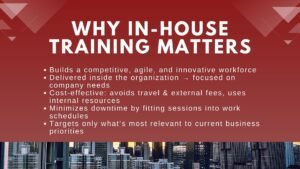
Critical thinking and problem-solving are now essential skills to any employee at every level of his or her organization, as the modern corporate world is marked by constant change of environment, no end of competition, and complexity of each strategic choice. The pace of change in the modern industries cannot be done by a professional who could only act according to the procedures that are laid down but rather one who could analyze, assess and act upon the problems in an organized and innovative way. Many companies now focus on in-house training Singapore for problem-solving to help employees strengthen these skills within their specific business context. Organizations do not succeed merely being technical or efficient at their operations; they are sustainably successful when their staff is able to see the problems in a diverse range of approaches, and they are able to foresee new challenges, and develop innovative yet reasonable approaches which would help to manage the business needs of the bigger scope.
The only choice that is unique to human employees in the time of digital transformation when planning and oversight become more and more automated and filled with data is the possibility to think, reason, and make informed decisions in case of uncertainty. This professional work on Critical Thinking and Problem-Solving is directly aimed at increasing the analytical power of the employees, their strategic thinking and decision-making based on evidence. It provides the participants with practical frameworks of problem identification, root cause diagnosis, alternative evaluation and effective solutions implementation. The defocused purpose of the program will be to convert reactive personnel into active thinkers, those who can ask questions, challenge suppositions, oppose standard wisdom, and play an active role in generating significance in the organization, flexibility, and durability in an ever-changing world.
The Relevance of Critical Thinking in Modern Workplaces
Bridging Analysis with Action
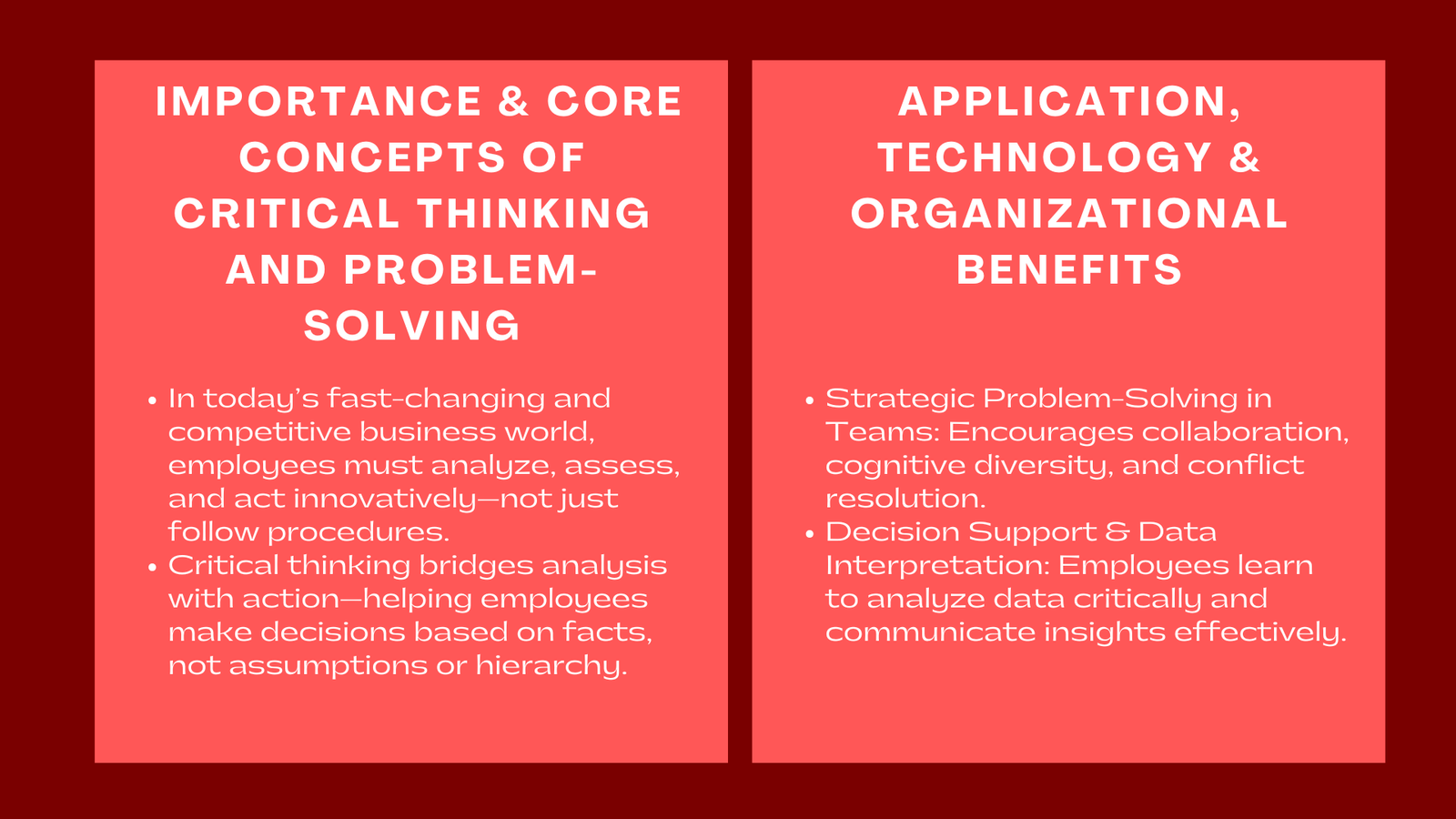
Critical thinking is a process that exists between knowing a problem and intervening with a successful solution. When working in a high-speed corporate setting where there is lack of time and resources, employees are usually forced to make instant decisions, and they tend to jump into action without a proper analysis of the underlying factors or even outcome of the situation. Such training increases the participants to take a step back, consider the available information without bias and base judgements on facts, evidence and rational thought instead of presumption and seniority of roles at work.
The participants are taught systematic thinking techniques, including cause-effect mapping, analyzing arguments, and decision-tree analysis – all techniques which encourage rational, arguably sound thought. By applying these tools of analysis into their working routines, the employees will reinstate the power to evaluate the information objectively, detect the patterns that remain concealed, pinpoint the possible biases, and avoid making the costly errors that are the result of a conclusion hurried. In addition, this training focuses on the fact that analytical thought should never be out of action. It means that, besides making sure that participants can think, it is the translation of the insights into strategic initiatives that can realize the well-grounded analysis into business outcomes that will not only stand more efficiency in the short-term business but also contribute to long-term growth.
Addressing Complex and Ambiguous Challenges
The modern organizations are under volatility, uncertainty, complexity, and ambiguity environments, which are commonly known as the VUCA world. The market disruptions, fast changing technology, operations inefficiency, the stakeholder battles, and issues usually do not have straightforward solutions. With the help of practical case studies and practical exercises that offer a scenario with unclear issues or problems to study, participants get to learn how to approach such ambiguous issues/problems in a systematic manner: delimiting the scope, isolating the key variables, testing hypotheses, and synthesizing the findings into focused evidence-based solutions.
This is a very suitable skill set in a cross functional team where decisions have to be made based on financial feasibility, practical feasibility as well as ethical accountability. This enables the employees to work on initiatives that require creativity and analytical rigor by learning how to structure problems and handle them in a systematic way. They even learn how to leverage their thought process to various situations as they are able to handle risks in the project and even how to better serve their customers and end up being invaluable resources to the organization.
Core Components of the Critical Thinking and Problem-Solving Training
Developing Analytical Reasoning
Critical thinking is based on an analytical reasoning, the learned skill of breaking down large, complicated information into smaller, easily detectable bites. In this module, the participants will learn how to acquire or analyze data sets correctly, in order to judge the validity of information, and the distinction between correlation and causation. The training relies on the logic based framework that can encourage healthy, objective measures in the decision-making procedure where employees are expected to be able to validate each and every finding with verifiable information as opposed to opinion / assumption.
Respondents also go through the element of making inductive and deductive arguments in the work environment. They also get to know how to extract general principles via particular observation and to test hypothesis against given facts and thus learn to convert crude information into practical information. Such an austerity in thought processes does not only make people strong in making decisions but also makes the entire department more robust in solving problems collectively. This will make employees have a sense of the courage to come up with recommendations that are pragmatic, evidence-based, and justifiable before their colleagues, superiors, and even executives.
Creative Problem-Solving Techniques
Whereas analytical thinking is structured and disciplined, creativity is a source of innovation and flexibility. The training thus incorporates innovative problem solving methods of brainstorming, design thinking and lateral thinking. The methodologies make the participants applaud the customary assumptions, consider various opinions, and come up with novel ideas that could result in paradigmatic resolutions.
The participants rehearse refraining problems to see the underlying opportunities, the participants test various hypotheses, and they brainstorm with other employees to develop solutions that are creative and implementable. Trainees practice these techniques on real-business critical thinking and problem-solving training for corporate employees to the group exercises and simulations, addressing such scenarios as optimization of business processes, customer service improvement, and the creation of a new service prototype. This moderate strategy of combining logic alongside creativity makes the employees capable of sorting the uncertainty with dexterity and also remain stuck to the integrity of analysis.
Decision-Making Under Pressure
The capability to make excellent decisions under pressure is one of the most crucial examinations of efficient reasoning in the work setting. Quick and informed decisions concerning incomplete or contradictory information are often required by business environments. This program provides the participants with decision making structures (risk assessment matrices, prioritization structures, cost-benefit analysis models) which allow them make a quick analysis of the multiple choices.
The trainees also get to know how to differentiate between urgent and important work, opportunity cost, as well as rationalizing it in a transparent manner. By using the form of simulated time-constrained decision exercises, participants are made stronger in their actions of making employee development programs for analytical and creative decision-making without losing the depth of the analytical elements. The ability to create accountability, trust, and confidence among teams brings about the reliability of withholding some crucial decisions and making them every time, in a logical manner, especially during a short deadline or unforeseen circumstances.
Practical Application in the Workplace
Strategic Problem-Solving in Teams
Critical thinking is most effective when it is done in a teamwork. The module aims at instilling a culture of shared thinking, in which the employees are taught to host collective and problem solving sessions, combining different perspectives, and reach an agreement without having to undermine the rigor of the analysis. The participants are taught the methods of dealing with the conflicts peacefully and using cognitive diversity to make more balanced decisions.
Immersive simulations help employees to solve plausible business scenarios like operational crises, inadequately aligned project objectives, or communication fails within the company. These exposures create a sense of teamwork, flexibility and emotional intelligence which are prerequisites in contemporary organizations. Integrating critical thinking within the team situations makes the teams not only more efficient, but also more innovative and strong.
Decision Support and Data Interpretation
Modern organizations produce highly large amounts of data on daily occasions but that data cannot be considered meaningful without context or interpretation. The training is used in an attempt to bridge the gap between decision-making and data-driven by training participants to analyze information both qualitative and quantitative in a critical manner. The employees are taught on how to doubt the reliability of data, identify trends and use numbers to turn findings into strategic options.
The participants also will gain skills in providing evidence based knowledge in persuasive talkative stories that can lead to sensible choices. They will be able to change complex sets of data into business insights at the course conclusion with confidence and ensure that data is a driving force of action but not bewilderment in business.
Developing Strategic and Cognitive Agility
Building Reflective Thinking Habits
More than solving short-term problems, critical thinkers should be able to constantly check the rationality of their lines of thought. This training will advise participants to engage in metacognition, which is being mindful about their thinking method in guided reflection and self-assessed practice. They are taught about cognitive traps like overconfidence, groupthink, and confirmation traps that may lead to bias in objective thinking.
Through reflective thinking practices, the employees become intellectually humble and open-minded. Such an attitude helps them to adjust to the feedback, test their own assumptions and constantly improve their analytical procedures. In the long run, this self knowledge brings out maturity in judgment and uniformity in the decision making quality.
Enhancing Communication and Influence
Effective communication is the incomplete part of critical thinking. The participants get knowledge on how to express their thoughts clearly, how to make arguments to convince people and change their message to fit the target audience. They train to construct arguments based on evidence, apply organized reasoning and narration to get complicated insights clear and compelling.
Effective communication would make the difference between losing the analytical findings in translation and making them active. The skills are particularly essential in leadership, as they allow the person to impact the decision-making process in the organization with credibility and logical persuasion instead of authority and feelings.
Integrating Technology and Continuous Learning
Leveraging Digital Tools for Enhanced Reasoning
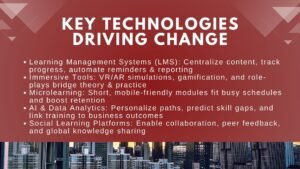
The program stipulates the use of technology as an important facilitator of contemporary problem-solving. The participants discuss digital solutions that help to improve the process of reasoning, such as data visualization tools, groupware, and AI-based analytics frameworks that help analyze multivariable variables. Technology enables professionals to automate ordinary tasks of the analytics and concentrate on high-level decisions and make them, thus enhancing efficiency and accuracy. Through the process of learning how to utilize digital systems, the participants can be offered the mandate to establish meaning to complex sets of data, find correlation, and generate actionable insights that facilitate strategic decision-making.
Cultivating a Culture of Continuous Learning
Moreover, the module allows cultivating the habit of lifelong learning. The participants are advised to consider critical thinking as a developing ability, which has to adjust to new technologies, industries, and global tendencies. As employees receive training, they are offered the digital learning tools and online discussion discussions and project-based activities to remind the employees about the need to apply their skills in their daily responsibilities. It is focused on developing a type of lifelong learner, in other words, professionals, who consider any difficulty as a chance to deepen the knowledge and improve judgment skills.
Benefits of Critical Thinking and Problem-Solving Training
Enhancing Organizational Adaptability and Innovation
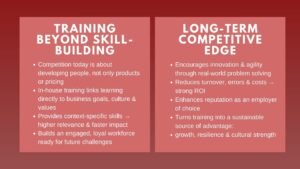
The effects of this program are not limited to the performance at a personal level. Critical thinking and problem-solving employees will add to the flexibility, innovation, and the ability to compete with others in the long term. These employees are in a better position to detect any risks that may be involved before they spread and introduce innovative ideas, which can be used to solve difficult problems, and make efficient, sustainable decisions.
Driving Productivity and Professional Growth
To the organizations, it has the advantage of increasing productivity, minimizing errors of operations, enhancing interdepartmental cooperation, and strengthening the decision-making structures. Analytically-trained workforce proves to be more confident, involved and keyed towards strategic objectives. To the employees, this training develops indifference, career advancement, and the boldness to make decisions based on logic and sound judgment. Finally, strategic assets can be viewed as the strengths of critical thinkers and problem-solvings because they enable individuals and organizations to survive in complexity.
Conclusion to Critical Thinking and Problem-Solving Corporate Training for Employees
Critical thinking and problem-solving have proven to be the core of successful leadership, innovation and prolonged competitiveness in a business world that has become unpredictable, uncertain and rapidly changing in terms of technology among others. This is a corporate training program that enables employees to transcend the aspect of routine execution and have a mindset of inquiry and reflection and systematic thinking. With the combination of logic, creativity, and communication, participants become analytical leaders, who are more able to navigate the uncertainty, complex challenges, and make organizational success clear, precise and confident.