Professional In House Legal Certification
In House Training Contract Opportunities in 2026: Legal Framework, Commercial Strategy, and Future Market Outlook
Introduction to Professional In House Legal Certification
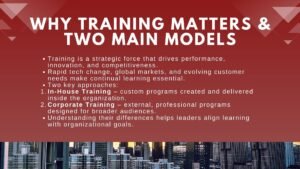
The models of corporate learning and professional development have changed fast in the last ten years, where internal capability building that is customized has become strategic rather than a wish cost. At the centre of this transformation is the rising importance of in house training contract opportunities, supported by a more stringent regulatory emphasis on in house training law and progressive planning of the in house training contract 2026 landscape. Financial, technology, energy, healthcare and government organizations are turning to formal in-house training arrangements to regulate intellectual property, address compliance risk and provide workforce competency assurance. In the initial stage of this strategic transformation, executives are not asking whether in-house training contracts are applicable, but rather how to be able to legally, commercially and operationally organize and structure it in a way that can be scaled on a long-term basis. This paper is a detailed and professional discussion about the business rationale, legal form, market development and business prospect of in-house training contracts into 2026.The Strategic Business Role of In House Training Contract Opportunities
Why In House Training Contract Opportunities Are Expanding Globally
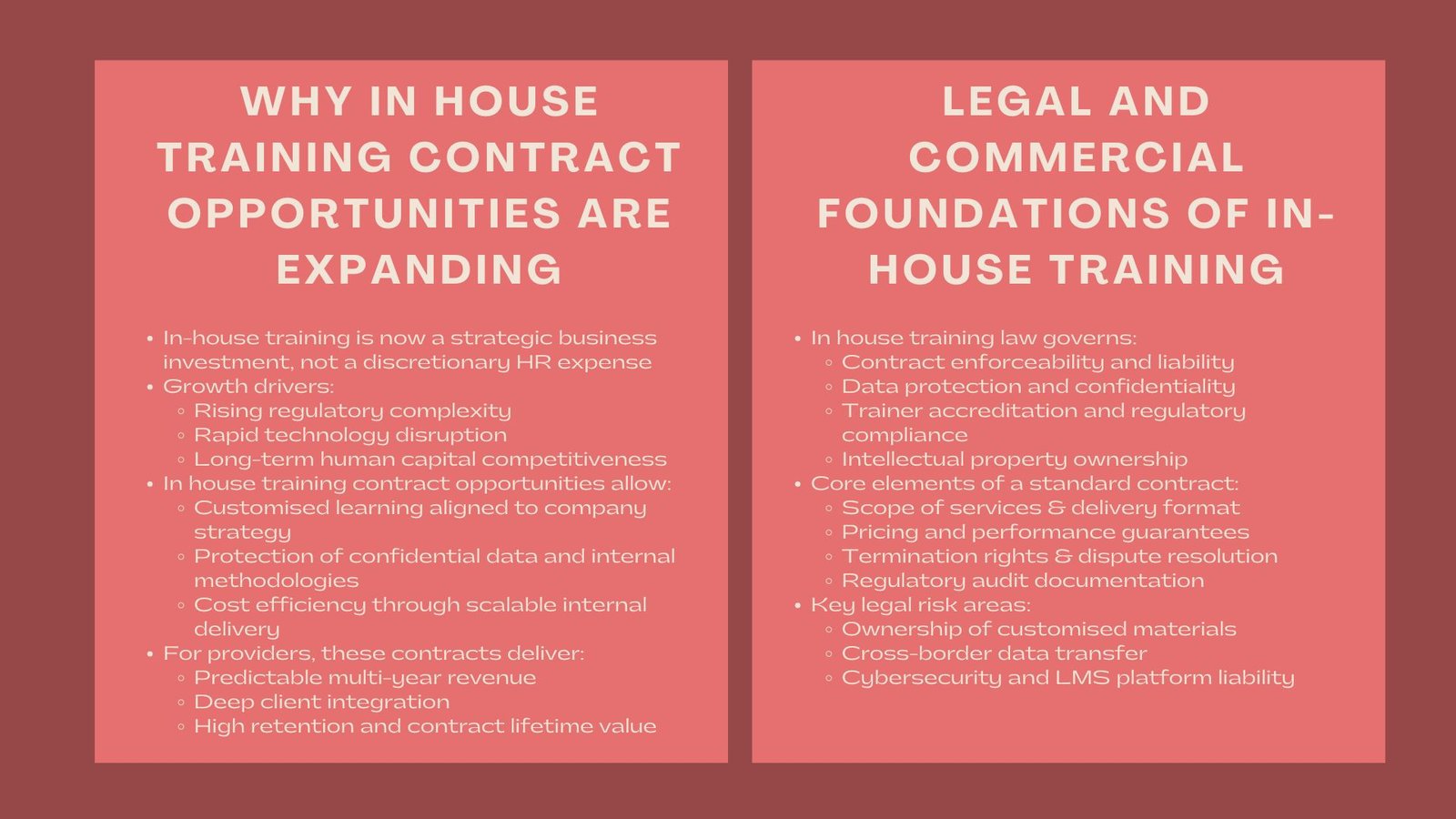
Three converging forces are fuelling the rise in opportunities of in house training contracts, and these are regulatory complexity, acceleration of technology and competitive human capital strategy. The pressure on companies to retrain their workers in compliance with financial regulations, digitalization, cybersecurity, ESG implementation, and advanced leadership is ongoing. Although external public training programs are beneficial, they are not always appropriate with regard to the individual requirements of a company operation, risk situations, and confidentiality. In-house training contracts help businesses to match learning outcomes and strategic business goals and keep proprietary data, internal case studies and sensitive methodologies in-house. This business system, too, is cost-effective in the long-term since training materials can be copied in different departments without paying open-market charges. In house training contract opportunities business also provides predictable and stable revenue, long-term relationships with clients, and scalable models of delivery which is better than the one-off engagement with the public workshop.Revenue Stability and Long-Term Partnerships Through In House Training
Commercially, in-house training contracts transform one-off training revenues to multi-year strategic agreements. Framework agreements are often signed by organizations over a period of twelve to thirty-six months and consist of core programs, refresher modules, leader development tracks and regulatory updates. Due to this, in house training contract opportunities provide repetitive income data set with reduced sales volatility and higher client retention indices to the training institution and consultants. The operation integration is also enlarged through such contracts. The trainers become to be the semi-embedded knowledge partners through which they develop more understanding of the change priorities and the workforce risks of the organization. This integration makes the switching costs of the clients more expensive and improves lifetime contract value.Understanding In House Training Law in a Commercial Environment
Legal Foundations of In House Training Law
The growth of internal corporate learning provisions has increased the focus of in house training law, the legal enforceability, liability apportionment and intellectual property protection and regulatory compliance of the training engagements. Contrary to a publicly conducted training, in-house training contract might include customized content, the right of access to company information and regulatory-based content requirements. In house training law usually governs the formation of a contract, the scope of services, accreditation of trainers, confidentiality provisions, data protection requirements, scope of liability and rights to termination at minimum. Training contracts in a highly regulated sector like banking, aviation, pharmaceuticals, and energy can also be required to adhere to the licensing and continuing professional education (CPE) regulations and audit trail in the sector.Intellectual Property and Confidentiality Under In House Training Law
One of the most commercially sensitive issues that is covered by in house training law is the ownership of intellectual property. In most cases, the organizations demand that all the training materials that are created based on the contracts are their property. On the other hand, the training providers can want to keep ownership of the basic structures, procedures, and instructional types and give them a restricted usage license. Without due legal drafting, there might be conflicts on reuse rights and further commercial exploitation or even on the material created by employees in the course of training engagements. High confidentiality clauses are also very important especially where training case studies incorporate internal operational data, financial records or other sensitive governance procedures. With cyber risk and data privacy regulation taking into scale in the global arena, in house training law currently falls within the direct enforcement of personal data protection law, digital protection law, and cross-border data transfer law.The Commercial Structure of In House Training Contracts
Core Elements of a Standard In House Training Agreement
The in-house training arrangement is professionally organized and is structured to include training scope, training program structure, training delivery format, training trainer qualifications, service schedules, pricing decisions, termination, performance guarantee and dispute resolution. Although pricing can be done in terms of per-program or annual retainer model, an increasing number of complex contracts are based on performance outcomes based on the results of an assessment or regulatory audit. This structure gives the company a commercial edge in predictability. To organizations, it lowers uncertainties in regards to annual training budget. To the providers, it makes projected revenues stable. These dynamics justify the reason why in house training contracts opportunities are now favored compared with ad hoc training purchases at the enterprise scale.Risk Allocation and Liability Management
Liability allocation is mandatory under in house training law. The results of training may have an influence on compliance risk, the safety performance, and reputational exposure. When a regulatory violation takes place following the delivery of training, it is possible to ask questions about whether this failure was caused by a lack of training, a negligent attitude on the part of the participants, or a management failure. Contractual liability issues make the obligations of the trainer clear as opposed to the operational liabilities. Contracts that are well written shields the trainer to reasonable levels and the organization has legal responsibility in the choice of implementation.In House Training Contract 2026: Market Outlook and Structural Shifts
Why In House Training Contract 2026 Will Look Different
The in house training contract 2026 arrangements market will be likely to have a different structure compared to the one in pre-2020 models. Online delivery, AI-based learning systems, competency analytics and digitalization of regulations will change the form of training delivery as well as contract structure. By 2026 with the majority of in-house contracts, the frameworks will be based on the hybrid delivery model, with virtual simulation, live workshops, continuous microlearning, and automated tests. This change will necessitate new provisions in the software licensing, platform availability, data possession, and cybersecurity responsibility in the in house training law.Budget Realignment and Strategic Workforce Reskilling
The training budgets of corporations are also changing, with the discretionary spending getting converted into the capital classification of the board. Reskilling is now becoming a balance-sheet risk management tool, as opposed to human resource cost, in most industries. Consequently, in house training contract opportunities will increasingly be driven by enterprise-wide transformation initiatives such as digital transformation, risk culture reinforcement, ESG integration, and succession planning. This increase in budget boosts the commercial status of training contracts and increases the level of governance on providers.Regulatory Influence on In House Training Law
Sector-Specific Regulatory Training Obligations
Mandatory professional standards have a strong influence on in-house training law in the financial services sector, energy sector, healthcare sector and in the Government sector of administration. Regimes against money laundering, cybersecurity, occupational safety, and data protection have mandatory training elements in most cases. Inability to adopt compliant programs may attract regulatory fines, executive liability and license suspension. Training contracts conducted internally are also an important tool of defense of regulation in such environments. Filled-in training attendance and assessment outcomes, updates on the curriculum are used as evidentiary evidence of adherence when auditing and in investigations.Cross-Border Training and Legal Complexity
International companies that implement regional training programs also have to deal with conflict of in house training law. Training delivery can be regulated by more than one jurisdiction and the contracts may be governed by one jurisdiction. Professional licensing, taxation, employment laws, and data privacy are some of the differences that make implementation and compliance challenging. This complicates the significance of jurisdictional legal planning in designing in house training contracts 2026 of global organisations.Commercial Risk and Opportunity in In House Training Contract Opportunities
Market Entry Opportunities for Training Providers
The in house training contract opportunities business provides an opportunity to the training providers to scale up in the professional education market. As opposed to publicly-delivered courses, an in-house contract allows the provider to build proprietary industry-congruent vertical frameworks, which can be scaled across client portfolios with little marginal cost added. The entry barriers are however increasing. The organizations are now demanding industry credentials provable, regulatory recognition, sophisticated learning technology infrastructure and strict compliance with legal requirements. With the rise in the procurement standards, only suppliers that have strong compliance strategies according to the in house training law will obtain contracts at the enterprise level.Commercial Risk Management for Organizations
To the corporate buyer, the in-house training contracts push the delivery risk to the external providers. In case of a provider that ceases operation, the organization is at the receiving end of the regulatory and competency impact. Therefore, due diligence into the ability of the provider, financial soundness, legality, and technological stability have become the norm when it comes to enterprise training procurement. It is this risk-opportunity profile that strengthens the need to ensure that professional governance of in house training contract opportunities has become a central procurement competence.Technology, Data, and Digital Platforms Under In House Training Law
Learning Management Systems and Contractual Risk
By 2026, the majority of in-house training programs will be served by the enterprise learning management systems. This brings in new legal issues with the in house training law, such as service level agreements, disaster recovery, cybersecurity certifications and personal data handling processes. The training service providers are becoming more of a digital service provider besides being educators. This creates new risk dimensions in terms of system downtime, data loss, intellectual property leakage, and host country data.Artificial Intelligence and Automated Training Assessment
The structures of the training contract 2026 in houses are also changing due to artificial intelligence-driven evaluations and individualized studying software. Algorithms ownership, training data use, decision responsibility and liability on automated evaluation errors that can influence employee advancement or eligibility to a license should be now defined in contracts.The Strategic Value of In House Training Contract Opportunities for Workforce Transformation
Leadership Development and Succession Strategy
Companies are now incorporating in-house training contract opportunities within leadership pipelines that are in house based. Multi-year in-house programs fostering the development of future leadership skills in the digital strategy, ESG governance, cross-border compliance, and crisis management are coordinated with the corporate succession planning. This assimilation reinforces the strategic applicability of the training contracts and increases the level of legal and business sophistication as demanded by the in-house training law.Cultural Transformation and Risk Governance
In addition to transfer of technical skill, in-house training programs are now more aimed at risk culture, ethics, governance and behavior change. This places training not only as the provision of knowledge but as a risk mitigation mechanism in an enterprise. Based on this, the frameworks of in house training contracts 2026 have to accommodate long-term behavioral measures, audit feedback loops, and ongoing regulatory changes.Conclusion
The development of the in house training contract opportunities is indicative of a wider change in how organizations deal with risk, establish a capacity and gain long-term competitive advantage. With the increasing regulatory pressure and redefined delivery models due to technology, in house training law now takes centre stage in controlling the quality of training, protection of intellectual property and security of data as well as assigning liability. The nature and future commercial effect of in house training contract 2026 will be characterized by the incorporation of technology, AI aided training, complexity of cross-border compliance, and enterprise-wide plans to transform the workforce. To the corporate buyers as well as the training providers, winning this market will not be determined only on the instructional excellence, but also on the legal accuracy, technological reliability and alignment of the strategy with long-term organizational interests. Individuals who excel in these dimensions would be in the best position to spearhead the next level of professional competence development in the global economy.Frequently Asked Questions
Q1. What is a professional in-house legal certification programme?
A professional in-house legal certification programme is designed to help legal professionals develop the knowledge, skills, and competencies required to perform effectively in corporate legal departments. The programme typically covers areas such as corporate governance, contract management, compliance, risk management, legal operations, and strategic business advisory.
Q2. Who should attend an in-house legal certification programme?
The programme is suitable for in-house counsel, legal managers, compliance professionals, corporate secretaries, governance specialists, and lawyers seeking to transition from private practice to an in-house legal role. It can also benefit professionals who want to strengthen their understanding of legal and regulatory responsibilities within organisations.
Q3. What skills can participants gain from in-house legal certification training?
Participants can develop skills in contract review, regulatory compliance, corporate governance, risk assessment, stakeholder management, legal drafting, negotiation, and strategic decision-making. Many programmes also focus on emerging areas such as data governance, cybersecurity, ESG considerations, and legal technology.
Q4. How does professional legal certification support career development?
Professional certification demonstrates commitment to continuous learning and professional excellence. It helps participants strengthen their technical knowledge, improve workplace performance, enhance credibility with employers and stakeholders, and prepare for more senior legal and leadership responsibilities.
Q5. Why is ongoing professional development important for in-house legal professionals?
The legal and regulatory environment continues to evolve, requiring in-house legal professionals to stay updated on new laws, compliance requirements, governance standards, and business risks. Ongoing professional development helps legal teams provide more effective advice, manage organisational risks, and contribute strategically to business objectives.