Communication Skills and Presentation Workshops: Onsite Training Modules
Communication is the core of performance as well as the culture of any successful organization. It is the unseen force, the bond of people, makes strategies and, therefore, makes people work together to achieve shared goals. Be it speaking to a business proposal, negotiating with high value customers, general board meetings and conflict resolution between teams, the capacity to express ideas in an efficient and persuasive manner is what defines the credibility of an individual and the influence of the organization. Regardless of its irrefutable significance, efficient communication is still among the least developed but most projected skills of the professional environment in various industries. The failure of many such bright professionals to achieve their potential is not due to lack of the knowledge, instead, they have difficulties in putting the knowledge into practice.
The Communication Skills and Presentation Workshops: onsite communication and presentation skills training for corporate employees is aimed to seal this major gap. This training immersion and engagement program prepares the employees to have the ability and knowledge to communicate in a clear and confident and strategic manner. During the onsite training, the members develop their verbal, nonverbal and visual communication skills by learning how to make effective presentations to various audiences of corporations. The mixture of theory and practice, as well as personal feedback, allow a workshop to make professionals better persuasive speakers who can encourage action, impact stakeholders, and establish a trusting relationship over the long term.
The Importance of Communication Competence
Bridging Ideas and Impact
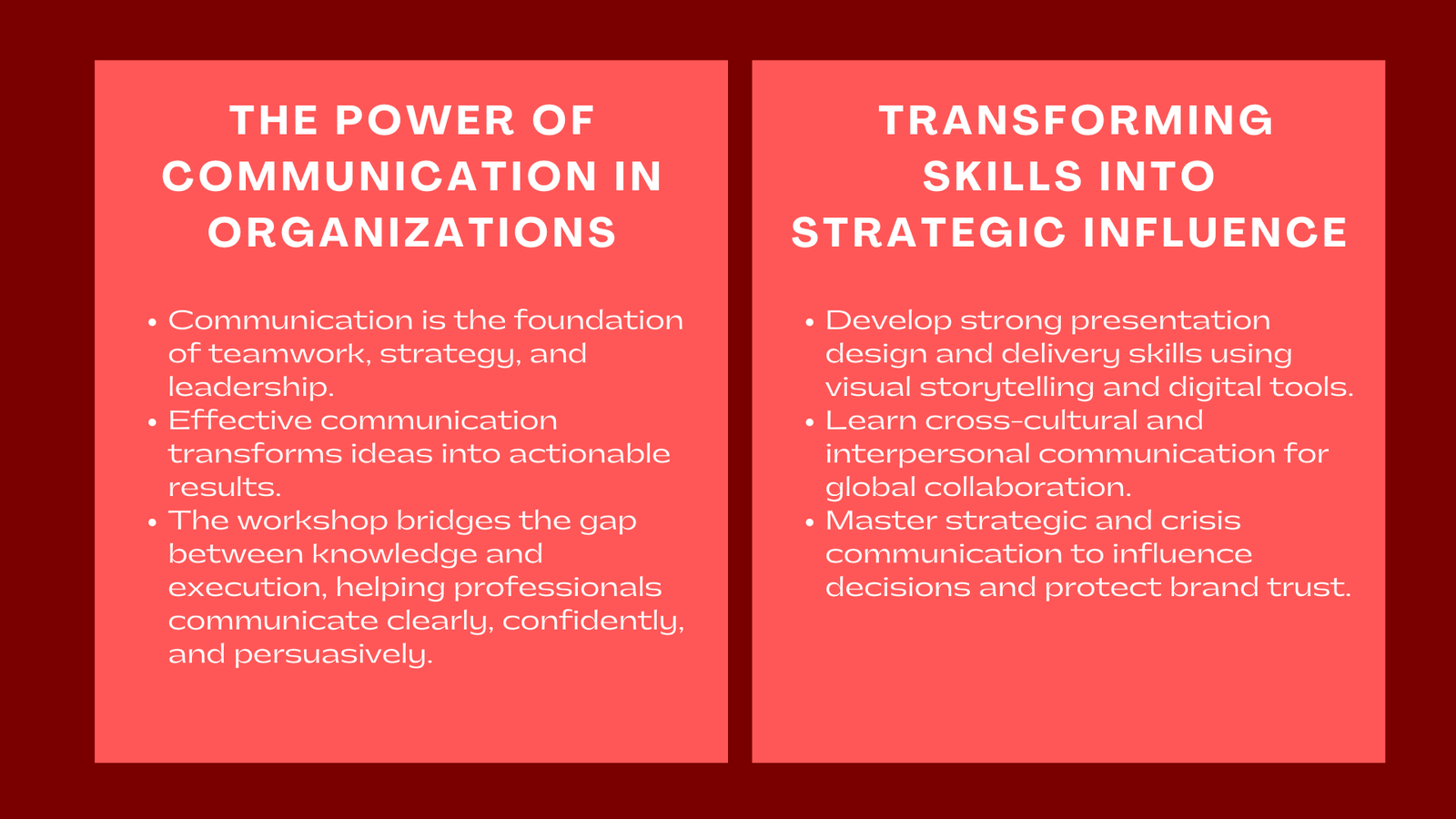
Good ideas should be translated into actual results, which is done through effective communication. It acts as the mediator of an idea and a reality. The best kind of idea or strategies that are developed within an organization will not mean a lot unless they are presented in a convincing manner to the right persons. In this corporate in-house training Singapore leadership and management program, the participants will be taught the way to format their messages in a logical structure, clear-minded, and emotional content.
They also learn to adjust language and tone to particular audiences – professional technical people need longer and more precise information whereas executives need shorter and more pithy strategic information. One of the components of this process becomes storytelling, through which the participants are enabled to simplify or condense technical/complex information into relational and convincing stories. The program focuses on empathy, emotional intelligence and understanding the audience to provide the employees with the skills on how the tone, pacing, and style of delivery can be adjusted to suit the situation, be it a boardroom, client conference or a group of their own employees. Such a flexibility will not only see the messages reach the audiences but will also make them deep rooted and bring about interest, trust, and action.
Building Confidence and Credibility
The anxiety of speaking publicly is one of the most frequent professional vices. Most employees feel nervous, or hesitant to give out their ideas and this may affect their credentials and delivery of the message. This workshop provides a psychologically secure and conducive atmosphere in which the participants will gradually overcome those fears after a guided practice and personalized coaching.
After training through sets of established methods like breath control, voice modulation, presence, etc. participants are trained to display authority and sincerity. They get insights on the necessity to balance confidence and humility and the ability to stay on track of the audience using a voice style variation and rhythm. Quite possible confidence is also reflected in the ability to structure a presentation correctly, in other words learning how to make a dominant hook to begin with, identify compelling evidence, reasoning and how to close with a convincing appeal. The combination of these skills will make professionals able to build credibility and gain respect irrespective of the size of the audience and the communication environment.
Core Components of the Communication and Presentation Training
Mastering Verbal and Nonverbal Expression
Impactful communication is based on verbal clarity and nonverbal congruence. The participants are made to understand that the meaning of a message is not only defined by the words, but also tone and inflection and body language. The impact of a good message may be ruined without the use of suitable energy or presence when tried to deliver a message. This module assists the participants to realise the effect that their words, tone, and pacing avoid, create, or conceal meaning and impact on the audience.
They also touch on how gestures, facial expression, and the body language are reinforced or contradict what one says. An example is that steady eye contact communicates the message of confidence and the nervous gestures are likely to divert the audience or communicate confusion. The program incorporates field exercises that instill congruence between verbal and physical presentation so that all aspects of communication like posture, emphasis of the voice, flow together lasts or makes one feel like a confident, sincere and coherent person. It is such an all-encompassing approach that enables the participants to develop more audience relations and make substantial impressions at a personal level due to their authenticity and control.
Crafting Persuasive and Informative Presentations
Learning the art of creating a presentation that does not only inform but it also persuades is one of the key pillars of this training. The approach taken in presenting the participants has been achieved in a well-organized manner in which the presentation balances both the facts presented with the emotional stories and logical arguments. They get to know how to come up with clear goals for every presentation, how to create a good narrative format, and how to keep the audience interested throughout the presentation.
Visual communication is also very vital. The seminar presents the design concepts of designing visually thematic, professional, and clean presentation materials. The participants get to know about the visuals to highlight the important messages such as charts and infographics or minimalistic slides, and the traps of information overload. Another thing that they do is the customization of presentation material and presentation delivery to various audiences, including the top management, the prospective investors, or the cross-functional teams. Through the learning of structure as well as contents, they can actually go on to make memorable, persuasive and results-oriented presentations.
Interpersonal and Cross-Cultural Communication
In a globalized world and a work environment that is hybridized, communication goes way beyond the knowledge of the language. Diversity Cultural intelligence and interpersonal sensitivity are critical to prevent misunderstanding and other unprofessionalism in various business environments. This module provides the participants with the cross-cultural communication strategies and empowers them with the strengths of overcoming the differences between the etiquette, the tone, and communication practices across the territories and the teams.
The participants also learn to listen actively, empathize, and control their emotions, which is the essential competency to establish rapport, control problematic conversations, and address the conflicts successfully. Using the knowledge of balancing assertiveness and diplomacy, the participants are made aware of developing trust and collaboration in multicultural teams. Linking interpersonal relationships and making a company culture more inclusive and respectful is only possible with the help of this competency.
Practical Application and Onsite Delivery
Interactive and Immersive Learning Experiences
This program has an onsite delivery model that guarantees that the learning outcomes can be put into the real workplace conditions. The classes are very interactive with the use of the lectures, group discussions, live simulations, and performance evaluation at individual level. Participants are involved in real-life activities, which include presenting the clients, project pitching, meeting the stakeholders, and briefing to internal clients. Constructive feedback is offered in the real time experienced by trainers to assist people in polishing the style of tones, pacing, and interaction with the audience.
Translating Theory into Real-World Performance
It is the practicality of this approach that hastens learning and the process of behavioral change. Participants do not merely learn the theory but they act upon it and feedback is provided and people are able to continue to self improve as the workshop goes on. At the conclusion of the training, the employees do not only leave with a better communication technique; but with the hope that they would be able to effectively apply at the end of the day in professional interactions. This will make the new skills internalized and easily transferred in the actual business conditions maximizing the training.
Enhancing Strategic and Leadership Communication
Communicating with Influence
In addition to the operational communication that happens in routine operations of an organization, this module dwells upon the strategic communication of high level that is the capacity to influence decision and lead to alignment at higher levels of management. The participants are taught about the application of rhetorical strategies, persuasion, and narrative presentation in framing their messages into a larger organizational objective. They train at relating logic and emotion, combining individual suggestions to company strategy and developing messages that will attract intellect and values.
Another aspect investigated in the training is the development of executive presence which is a personal trait of confidence, clarity and authenticity. The professionals are taught the ways to capture attention, to use the rejection with politeness, and to stay strong and at the same time be friendly. This power of influence communication is more important especially employee workshops for effective business communication and public speaking among project managers, departmental heads and leaders who will need to make gains among several stakeholders, or spearhead changes.
Crisis and Executive Communication
Communication is even more crucial in time of crisis or during negotiation that stakes a lot. This part of the workshop trains the workers to handle delicate communications like the crisis briefing, investor relations meetings or interviews with the media. They are taught to stay calm in stressful situations and presents vital messages in a transparent way and express sympathy in an empathetic manner and she is not to sausage clarity.
Participants also study reputation management and the need to insist on constant communication in order to maintain trust even in difficult times within the organization. They also train in creating and delivering statements that will help them to allay the minds of stakeholders, safeguard the brand, and encourage transparency through real-life exercises in crisis simulation.
Integrating Technology and Visual Storytelling
Leveraging Digital Tools for Effective Communication
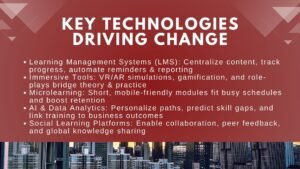
Technology cannot be separated from modern communication. This training will embrace the use of the most up to date digital tools to maximize the delivery of messages and interaction between the audience. The members will be presented with the use of PowerPoint, Prezi, Canva, and AI based visualization software that will process the information and findings and turn it into attractive visual narratives. They get to know how to incorporate graphics, videos, and other forms of interactive features to give life to their message and to be professional enough.
Adapting to Hybrid and Virtual Communication Environments
This particular stress on digital storytelling guarantees that the participants can easily transition into the hybrid or remote communication format, such as live conferences and boardroom meetings, online webinars and virtual client presentations. They are also educated to be present even in the event that one is speaking on different screens using voice dynamics, image, and interactive devices. The result is a workforce that are both well versed in both the traditional and digital communication channels to be able to enthrall the audience notwithstanding their platform or medium choice.
Benefits of Communication and Presentation Workshops
Empowering Individuals with Confidence and Clarity
The participants having undergone this training come out as communication experts able to present the ideas accurately, emphatically, and effectively. They do not only learn technical presentation techniques but also learn more about the psychology of communication, how to make people listen or attend to them and become motivated to act. This change develops self-confidence, builds professional credibility and equips one to be capable of representing his or her organization in an influential and poised manner.
Driving Organizational Excellence and Collaboration
In the case of organizations, the advantage is just as high. A high-quality working team will be able to work in a more productive way, will have fewer misunderstandings, and will implement strategies on a higher level with greater consistency and quickness. Communication skills are also strong, which enhance client satisfaction, create excellent relations with stakeholders, and consolidate the brand reputation of the organizations. The open flow of ideas expressed in a convincing manner leads to innovation, accountability, improvement of performance in general.
Conclusion to Communication Skills and Presentation Workshops Onsite Training Modules
The success of all organizations is blooded by communication. It brings people together, combines strategies and executes. Communication Skills and Presentation Workshops Collaborative training equips the employees to reframe every day interaction into the chance of influence, clarity, and leadership. Through learning to speak, listen and present the participants enhance the use of their presence as well as the voice and the culture of a certain organization.
As a result of this onsite training, communication becomes not a daily potential, but a strategic potential one that generates cooperation; develops confidence relationships; and improves performance at all levels of business. In the world of clarity and confidence where professional excellence is prone to be characterized, effective communicators do not inform people, but inspire them.