Learn How to Design Professional Training Programs
In House Training Company Solutions: Designing Effective In-House Training Workshops, Equipment, Formats, and Opportunities
Introduction: Learn How to Design Professional Training Programs
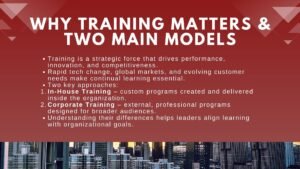
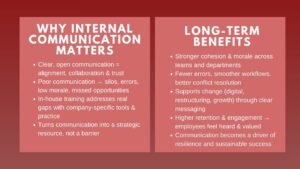
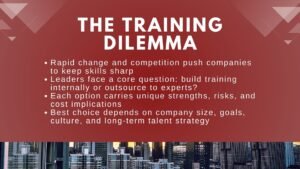
With organizations experiencing a rapid technological shift, changing regulatory requirements and growing competition on talent, workforce capability is now a strategic priority. Several organizations are no longer opting to use generic external seminars but instead have developed their own internal learning models which are directly related to their operations. This change justifies the increasing need to have an in-house training company capable of designing, developing and maintaining customized learning solutions in the organization.
No longer is the option of in-house training restricted to the development of basic skills and now it aids the pipelines to leadership, technical transformation, compliance readiness, and even the culture. This paper is concerned with in-house training as an organizational competence and how firms organize effective training programs in terms of the appropriate equipment, workshops, formats, and in house training opportunities in the long term.
1. The Strategic Role of an In-House Training Company
1.1 Why Organizations Choose In-House Training Models
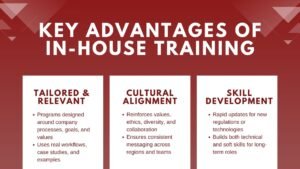
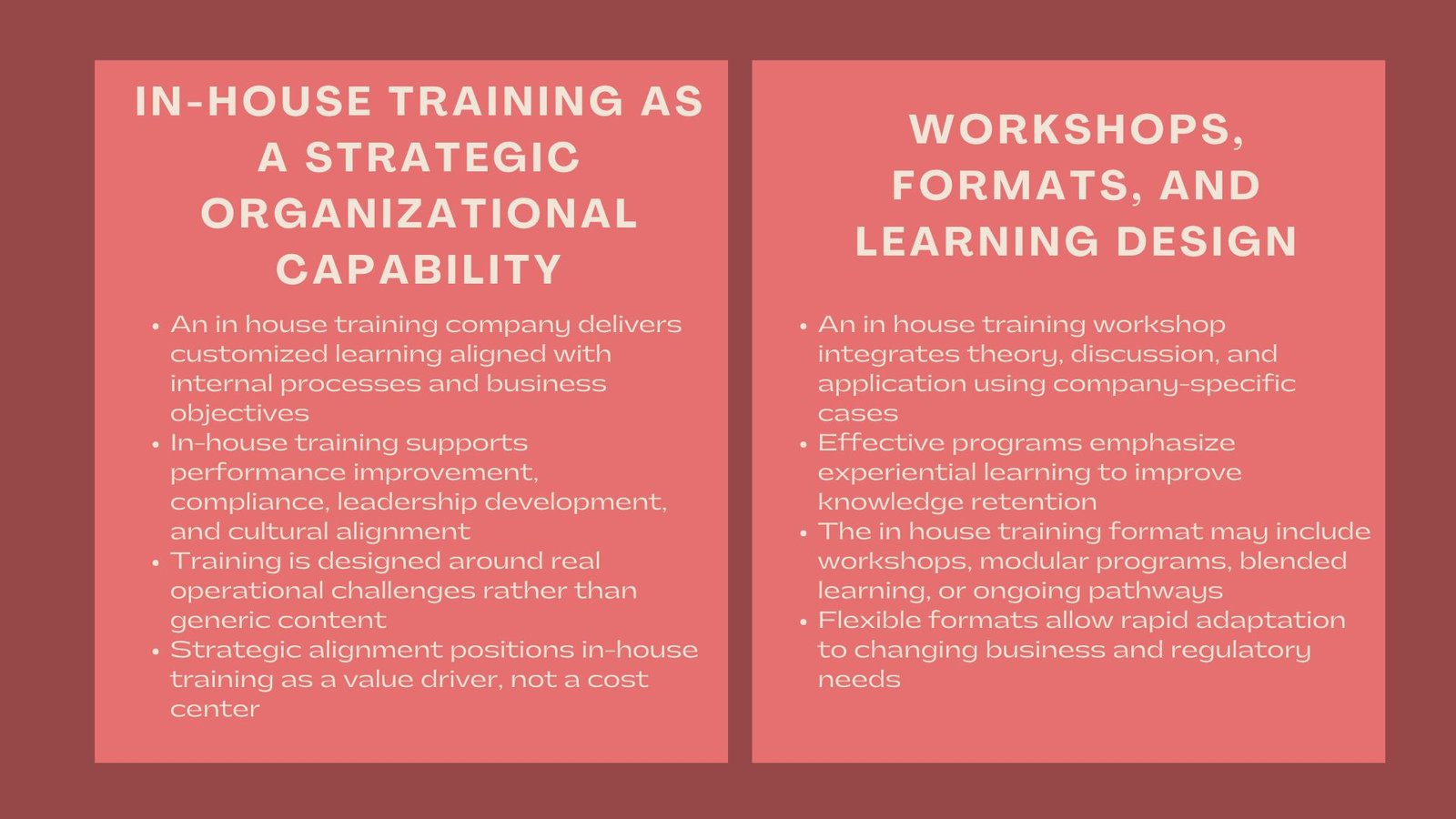
An in house training company offers learning solutions which are specific to the internal situation of a client, as opposed to the standard, off-the-shelf programs. In this way, training material can be based on the model of real business operations, internal policies, and real business problems. To take a concrete example, a financial services company might need training, which combines internal risk structure, regulating landscape as well as their own systems, which cannot be tackled entirely by generic courses. Training within the company is thus implemented in a strategic way which contributes directly into performance enhancement as well as organizational objectives.
1.2 Aligning Training with Business Strategy
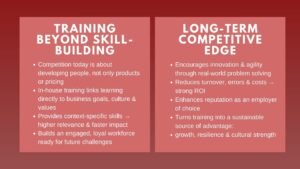
Best in-house training programs are those that are well integrated with the business strategy. The senior management is putting growing pressure on training to provide quantifiable results, i.e. increased productivity, diminished compliance risk or enhanced effectiveness of leading personnel. A mature in house training firm collaborates with stakeholders in order to pinpoint areas of weakness in their capabilities and create programs to aid transformation efforts, digitalization, or entering new markets. This orientation will not allow training to be viewed as a cost center but rather as a value-creating entity.
2. In-House Training Workshops as Learning Interventions
2.1 Designing Impactful In-House Training Workshops
In house training workshop is an organized learning intervention that takes place within the organization and in most cases it involves theory, discussion, and practice. Internal sessions give facilitators the chance to employ firm-specific examples, data, and situations unlike external workshops. As an example, when a manufacturing firm conducts its own training workshop on how to improve processes on its own production measures and processes, learning becomes directly relatable and practical.
2.2 Practical Application and Knowledge Retention
In house training workshop is effective when it can translate the knowledge into the practice. Adult learning principles lay stress on experiential learning, discussion with peers and problem solving. The in-house workshops usually incorporate the case simulation where the participants are required to consider the real life issues within the company and how they can implement it in their daily tasks. It is this pragmatic inclination which is one of the reasons why organizations are becoming more and more inclined towards in-house workshops rather than external programs which are strictly theoretical.
3. In-House Training Equipment and Learning Infrastructure
3.1 The Importance of In-House Training Equipment
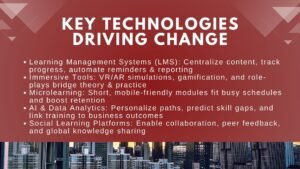
Effective learning facilities necessitate relevant in house training equipments to favor various teaching techniques. Such equipment can consist of presentation tools, collaboration, simulation software, and digital learning platforms. Although, physical equipment will not be forgettable when it comes to face-to-face workshops, it is now necessary to use digital tools as hybrid and technology-enabled models of learning grow and thrive.
3.2 Technology as an Enabler of Scalable Training
Advanced in house training equipment has increasingly become a combination of learning management system, virtual classrooms, and data analytics. These instruments help organizations to monitor attendance, evaluate learning results, and size training in more than one location. A local firm having a decentralized workforce is one example where a digital platform can be used to provide a uniform amount of in-house training but have it centrally controlled in terms of quality. By investing on the appropriate infrastructure, training initiatives will be made to be sustainable and flexible in the long run.
4. Structuring the In-House Training Format
4.1 Understanding the In-House Training Format
The in house training format is the way training contents are arranged, presented and ordered. They could be in the form of intensive workshops, modular programs, blended learning models or continuous development pathways. The format used will depend on the aim of learning, profile of the participants, and operational limitations. As an illustration, leadership development programs tend to take a modular structure, which integrates workshops, coaching and applied projects during a period of several months.
4.2 Customization and Flexibility in Training Design
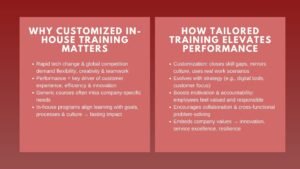
Flexibility is one of the main benefits of an in-house training. An in house training format can be adapted depending on the comments of the participants, as well as the organizational needs, unlike the standard courses that have a fixed agenda. This flexibility enables business to react swiftly to the fluctuating business environment, e.g., a regulatory change or one that involves technology. The various learning styles are also accommodated in a tailored format, which enhances the engagement and general efficiency.
5. In-House Training Opportunities for Employees and Organizations
5.1 Building Career Pathways Through In-House Training
in house training opportunities play a critical role in employee development and retention. When the workforce can get easily visible opportunities to develop their skills and career, then employee involvement and loyalty are likely to grow. Internal training initiatives could facilitate succession planning, technical specialization, making leaders ready. As an illustration, an agency firm can engage internal training to equip high potential employees with managerial positions, without necessarily resorting to the external recruitment process.
5.2 Organizational Benefits Beyond Skill Development
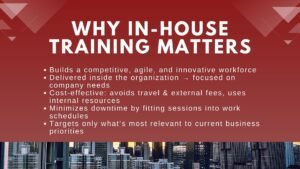
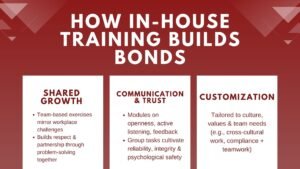
Other than personal growth, in-house training helps in organization resilience. Internal training is consistent and has the benefit of teaching corporate values, standardizing practices, and mitigating operational risk. Firms that have a high internal learning culture tend to be in a better position to cope with change which could be a result of market disturbance or regulatory changes. These more general advantages strengthen the strategic significance of collaboration with a good in house training company.
6. Real-World Applications of In-House Training Programs
6.1 Corporate Compliance and Risk Management
In in-house training, many organizations apply the training to meet the compliance and risk management demands. In-house training will help the employees to be familiar with the rules that are laid down by the regulators, as well as the application of the rules to processes of the company. A relevancy in house training on compliance with the backing of compliance training equipment may go a long way in minimizing chances of violation and fines.
6.2 Technical and Digital Transformation Initiatives
During digital transformation, in-house training is also important. Considering the implementation of new enterprise systems or the use of data analytics tools, companies will use tailored training formats to make the process smooth. Organizations will be able to cut down the learning curve by developing a proper in house training format to ensure that there is a minimal disruption of operations.
7. Selecting the Right In-House Training Partner
7.1 Evaluating Expertise and Industry Experience
Selecting the appropriate in house training company must be done with a keen consideration on expertise, methodology and experience in the industry. Experts in the sector are in a better position to create appropriate content and foresee real challenges. Companies ought to determine the ability of potential associates to provide strategic understanding as well as operationally based training resolutions.
7.2 Measuring Training Effectiveness and Impact
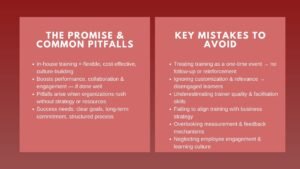
An in-house training partner is a professional who will focus on measurement and continuous improvement. This involves the identification of success measures, participant feedback and performance outcomes evaluation. This kind of evaluation will provide assurance that in house training opportunities will provide some form of tangible value, and be in line with the changing business requirements.
Conclusion
In-house training has become a strategic competence which assists in organizational performance, talent development and long-term competitiveness. Through the association with a well established in house training company the organizations will be able to design effective in house training workshop programs backed by the relevant in house training equipment and a dynamic in house training format. Such programs establish valuable in-house training facilities that are beneficial to the employees and the organization in general. With the constantly evolving business environment, organizations that invest in systematic and tailored in-house training are in a better position to change, innovate and maintain value in the long run.