Stress Management and Work-Life Balance: Internal Training Programs
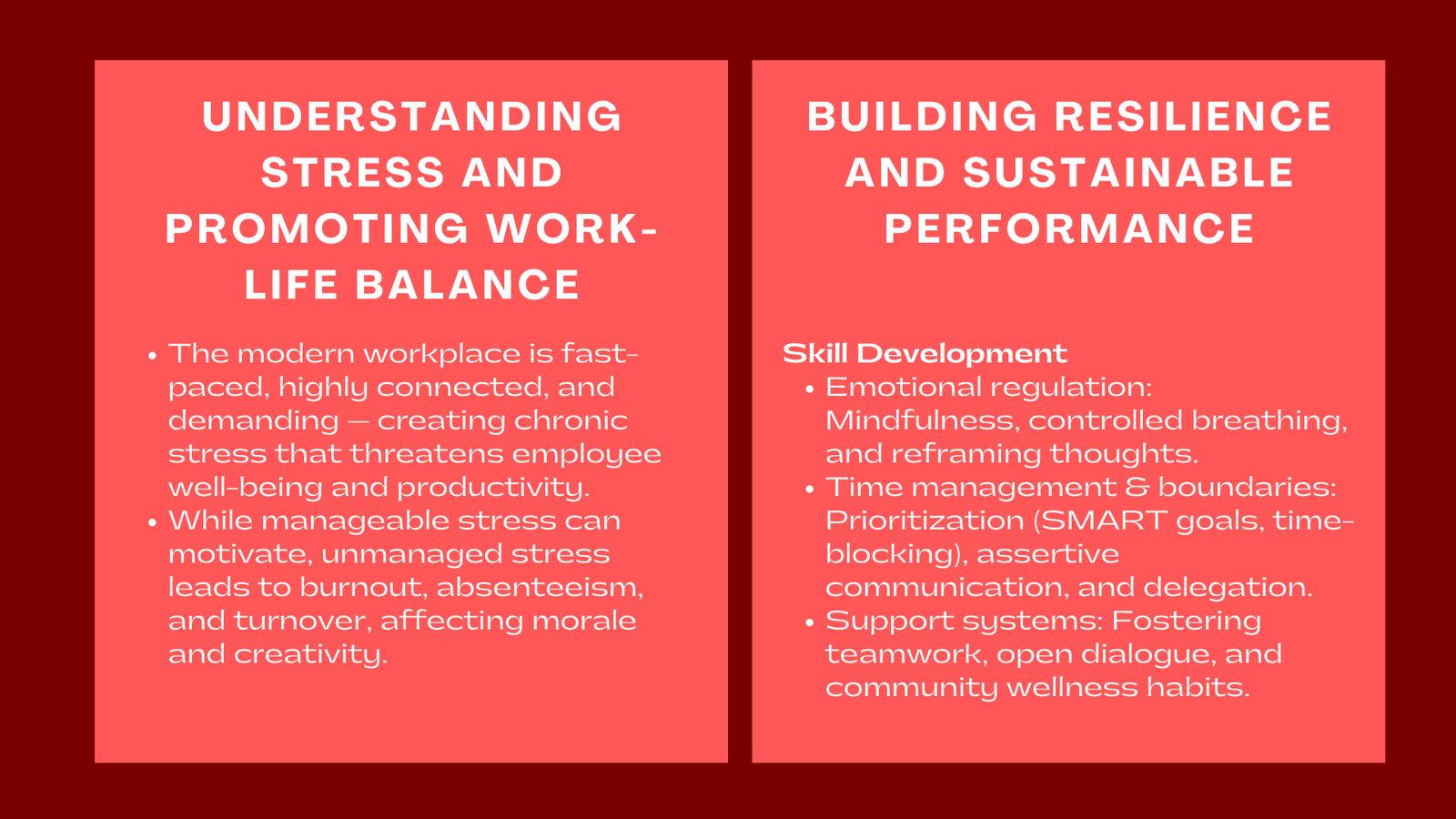
Stress has been a natural aspect of corporate life in the new business world. The modern world of employment is characterized by omnipresence, an increased and rapid rate of change in technology and the organization, as well as increasing expectations of performance. Strict deadlines, impatient customers and a never-ending innovation pressure can turn the situation in a pressure cooker that cannot be successfully handled even by the most competent employees. Although a certain amount of stress acts as a motivator, making one focused and productive, chronic stress or stress where it is not managed is a significant threat to physical well-being, mental health, and productivity of the organization. The long-time stresses at the workplace are a contributing factor to burnout, disengagement, absenteeism and turnover, which not only burn the companies in terms of money but also morale and imagination.
Since burnout and mental exhaustion have been escalating in all sectors, companies have come to appreciate the fact that to achieve sustained productivity it does not just rely on technical skills or efficiency in operations. Emotional well-being, psychological resilience, and healthy work-life balance are all needed to be prepared with the approach to corporate stress management and work-life balance training programs Singapore long-term performance. The Stress Management and Work-Life Balance: Internal Training Programs are both created to discuss this necessity. This integrative, evidence-based training is used to make employees integrate, explain, and handle stress efficiently besides balancing between work and personal satisfaction. The combination of psychology-grounded knowledge and exercises and reflection element of the program helps its participants with the means of staying focused, motivated, and balanced in the professional world that is very stressful. Eventually, it is expected to make the workplace a good ecosystem which promotes high performance and holistic well being.
The Relevance of Stress Management in Modern Workplaces
Understanding Workplace Stress
The sources of the stress in the modern workplace are not only limited to the workload, but a combination of many and interconnected ones: the organizational change, job insecurity, digital fatigue, and unrealistic expectation of availability. The contemporary managerial type is likely to be on duty 24/7 in this world, having to reply to emails, messages, and teleconferences when beyond the borders of his or her country, having little time to rest and recover. This state of hyperconnectivity always puts the boundaries between work and personal life, which leaves a person emotionally exhausted and continuously feel like they are always left behind. Through in-house training programmes Singapore workforce skills development, employees can learn strategies to manage these challenges, strengthen resilience, and achieve a healthier work-life balance.
The initial step of the training program is to assist the attendees in determining their own stressors, either they are a result of external influences (as deadlines and performance goals), or internal processes (such as perfectionism and self-doubt). By using self-assessment devices and reflective practices, the participants are also taught to identify the early signs of stress, both the physical (i.e. tension, fatigue, and insomnia) and the emotional (i.e. irritability or withdrawal) ones. By identifying them on a timely basis, the employees would react proactively and not reactively to avoid stress becoming burnout or disengagement.
Promoting Work-Life Balance
Work-life balance does not mean equal distribution of time between work and other activities in a life: it means the establishment of balance and harmony between professional demands and personal values. This module will help the participants redefine balance to themselves considering various life stages, goals in career and personal priorities. It is through formalized self-reflection that they get to learn how to know what gives them energy, what places them on the brink of exhaustion and how to craft rituals that ensure that they could be productive as well as healthy.
The participants also discover the notion of the idea of intentional recovery, which is learning that rest and downtime are not luxuries but vital elements of long-term performance. The training focuses on the importance of having simple everyday habits, like mindful breaks, digital boundaries, and leisure time as they can help a person become significantly more focused and creative. In the case of the organizations, work-life balance leads to increased morale, innovation, and retention of employees. Healthier and stronger corporate culture with loyal, committed employees with balanced minds is more productive.
Core Components of the Stress Management and Work-Life Balance Training
Developing Stress Awareness and Emotional Regulation
The initial part of this training is related to emotional intelligence and cognitive awareness development. The employees are brought to know how their perceptions and beliefs can influence their experience of stress. Through the study of the correlation between thoughts and emotions and behavior, the participants get to learn the way they should to control the internal conversation and react to the external problems in a more positive and constructive way. The introduction of such techniques as mindfulness, controlled breathing, cognitive reframing reduces anxiety and makes one feel clear under pressure.
Other methods of relaxation such as progressive muscle relaxation, visualization, and grounding, which can be incorporated in the work day are incorporated in the training. These techniques are considered to help the participants to calm down fast in the stressful situations of a meeting or when making decisions. Regular practice also develops emotional resilience in employees, or a certain capability to stay calm and focused on the solution despite uncertainty or a negative event.
Time Management and Boundary Setting
One of the most useful mechanisms of management through which stress is minimized is time management. It becomes stressful when priorities are undefined or working loads have been mismanaged. The participants undergo training on the utilization of systematic prioritization systems like Eisenhower Matrix, SMART goal setting, and time-blocking systems in order to get their tasks organized. The training also examines the ways that they can be able to set realistic goals, delegate in the right way and match the day to day activities with the long term goals.
Another concept that is essential is the concept of setting boundaries. Most professionals are stressed as they find it difficult to say no or not as well as feel obligated to work hard. The partakers are exposed to techniques of assertive communication through role-play and reflective discussion to help them control the expectations in a respectful manner. They get to know how to guard personal time without interfering with professional relationships. This turns the current practice of managing time reactively and strategically designing the boundaries empowers the employees to control their schedules once again and channel their energy in a more efficient way, as well as keep a sustainable working rhythm.
Building Support Systems and Healthy Routines
Stress management cannot be an individual experience, it needs to be community-based, related, and should include daily routines. This part of the training gives a lot of attention to support networks and the need to build networks in the work environment and beyond. The participants are taught how to express needs, consult, and develop work relationships with each other, which would bring emotional and practical support.
Wellness education was also incorporated into the program, and it includes nutrition, sleep hygiene, and physical activity. The interviewees will be advised to employee wellness workshops for mental health and productivity to devise morning and evening routines that will help them to be more focused and rejuvenated. The vision of intertwining health, social bonds, and work patterns will provide the employees with the insight to build lifestyles that can sustain the long-term well-being patterns and successful professional life.
Practical Application in the Workplace
Applying Stress Management in Realistic Scenarios
The training involves interactive simulation that may reflect real-life stressors of the corporate setting tight project deadline, conflicting priorities or difficult interpersonal interactions. These guided exercises among the participants can be used to simulate stress management skills and the exercises are done in real life scenarios that can simulate the daily pressures that they may face at the workplace. The trainers give individual feedback, which is necessary so that they can identify their physiological and emotional responses to stress, change their coping mechanisms, and support constructive behavioral patterns. This experiential learning enables the participants to be able to shift to practice with confidence and clarity.
Building Supportive and Psychologically Safe Work Cultures
The training involves interactive simulation that may reflect real-life stressors of the corporate setting tight project deadline, conflicting priorities or difficult interpersonal interactions. These guided exercises among the participants can be used to simulate stress management skills and the exercises are done in real life scenarios that can simulate the daily pressures that they may face at the workplace. The trainers give individual feedback, which is necessary so that they can identify their physiological and emotional responses to stress, change their coping mechanisms, and support constructive behavioral patterns. This experiential learning enables the participants to be able to shift to practice with confidence and clarity.
Developing Long-Term Behavioral Change
Establishing Sustainable Stress Management Habits
To improve it sustainably, one has to commit to it. The participants are advised to come up with their action plans, which would include elaborating on their individual goals, coping strategies, and wellness schedules, based on their special needs. Journaling, self-evaluation, and reflection will help them to monitor the progress, find out their triggers, and develop strategies in the long term. Such organized habits slowly transform into habitual responses that help in avoiding escalation of stress and in strengthening emotional equality and form a sustainable basis of resilience.
Cultivating Self-Compassion and Emotional Resilience
The fundamental concept of self-compassion is also presented in the module and it trains employees to empathize and show understanding towards themselves instead of criticizing them. The respondents get to understand that failure or errors are part of professional development and by responding positively, those failures will recuperate faster and be inspired to work harder. By making the imperfection normal and focusing on reflection over regretting, the employees can have a state of mind of resilience, which could enable them to face challenges with calmness, insight and uplifted spirits.
Integrating Technology and Wellness Tools
Leveraging Digital Solutions for Stress Monitoring
Technology may also be a source of stress in a digital age and a great asset in dealing with stress. The digital wellness devices in this training include guided meditations apps, platforms like mindfulness, and wearable fitness trackers that can help employees track the physiological stress levels, sleep patterns, and energy levels. There are also participants that explore productivity applications and focus timers that encourage order of work as it is important to maintain balance in the rhythm of deep-focus work and deliberate rest. These are online solutions that can turn stress-management to provide it as a daily, measurable, and accessible process.
Embedding Wellness into Organizational Systems
In addition to individual responsibility, the organizations are specifically advised to promote the comprehensive well-being using structural and cultural initiatives. This involves creation of wellness portals, confidential mental health consultations and instituting flexible scheduling policies that would acknowledge individual needs. Business organizations that incorporate such programs with employment systems express a long term concern of welfare of the employees. Such institutional support does not only boost morale but also instills trust, loyalty and involvement among the workforce.
Benefits of Stress Management and Work-Life Balance Training
Empowering Individuals for Focused and Creative Performance
This program has benefits much further than a reduction in personal stress. Workers who learn to cope with stress at optimal levels demonstrate great changes in concentration, originality as well as emotional control. They are also more flexible and responsive as well as oriented to solutions- they can maneuver and fight uncertainty. This increased equilibrium is translated to increased productivity, stability in performance, and increased professional gratification.
Driving Organizational Health and Long-Term Success
The ROI is strategic and quantifiable in the case of organizations. Teams which are well managed in stress levels have enhanced team work, less absenteeism and slower rates of employee turnover. By being models, leaders have been able to provide positive examples to others in the belief that this creates a culture of sustainability and not exhaustion. Further, employers placed on well-being and work-life balance acquire the best talent and develop a good reputation as the place to work. A culture of ownership of people and the performance employs trust, creativity, and strength, the three attributes of a sustainable success in organizations.
Conclusion to Stress Management and Work-Life Balance Internal Training Programs
The ability to achieve success in the modern business world is very sustainable based not only on technical knowledge but also based on emotional stability and good health. The Stress Management and Balance of Work Internal Training Program allows the employee to balance both the stress and work life without losing his health, or joy of living. It assists people to turn stress as an inhibiting aspect, to an accelerating element of growth, adjustability, and creativity.
Organizations improve their resiliency, engagement and innovativeness base by instilling wellness and balance in their organizational culture. At a time where providing physical and psychological fitness is comparable to ability and expertise, those firms that strive to ensure the wellness of their staff are not merely creating healthier organizations, they are defining the future of what can be called sustainable and human-oriented success.