Understanding the Difference Between In-House Training and Corporate Training
Difference Between In House Training and Corporate Training
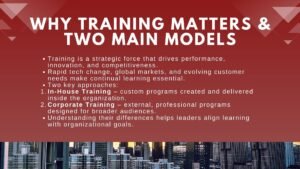
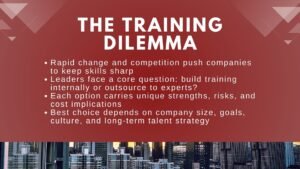
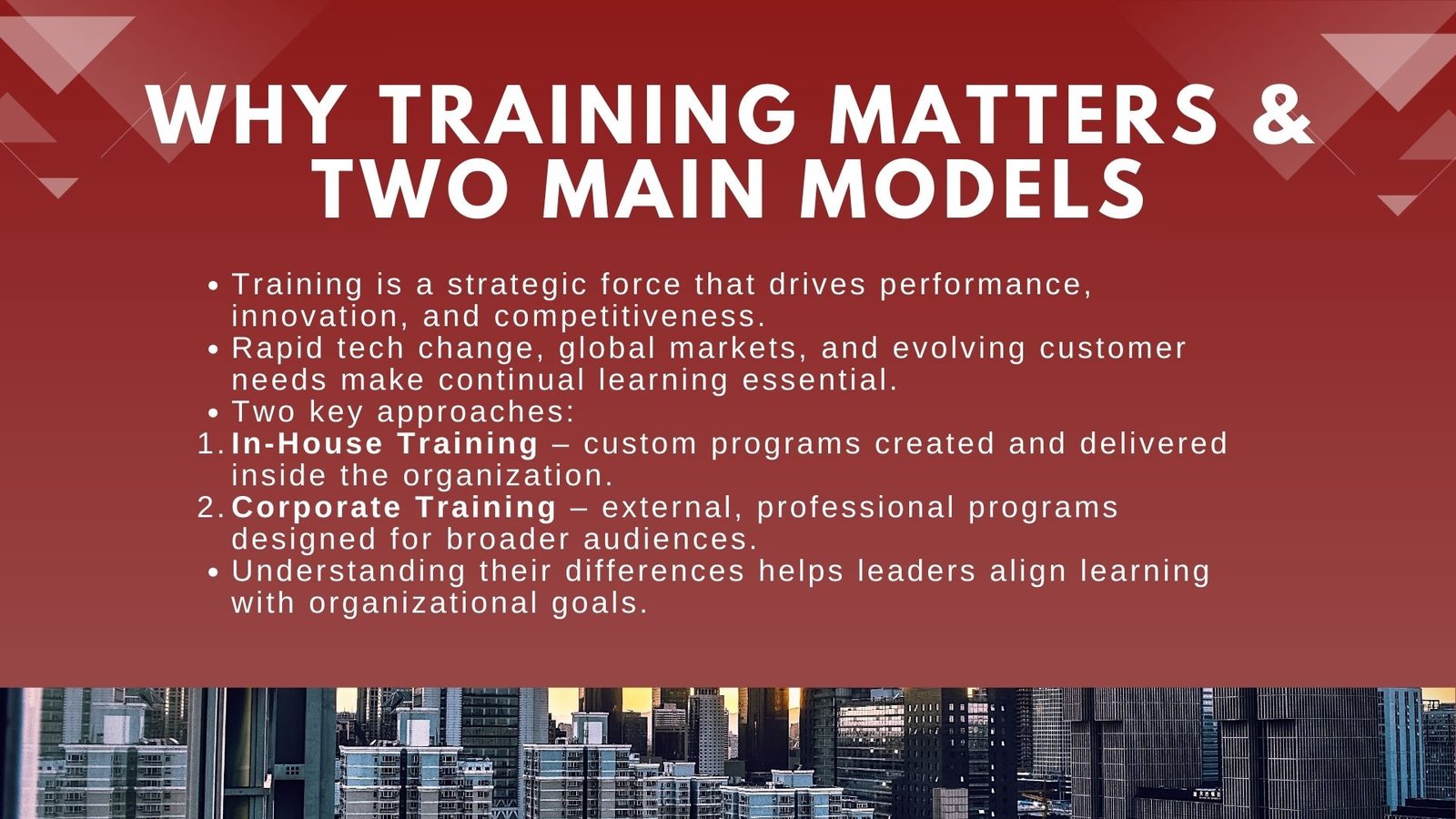
Training is among the strongest growth forces in any organization. People are the most valuable asset of a company, be it a global corporation with thousands of people or a small business in niche markets. The imperative to keep staff constantly learning and improving has never been greater and the advent of technology, the worldwide market, and the fast changing needs of customers are presenting new challenges to the ability of the workforce. With such pressures, training is not a compliance driven activity, it has become a strategic instrument that both supports performance and innovation and contributes to competitive advantage.
There are two common approaches to workforce training, which are commonly talked about in-house training and corporate training. Although the terms are used interchangeably, they are used to mean different methodologies of imparting knowledge and developing skills. Internal training normally occurs in-house and is tailor-made to fit certain business requirements, often supported by customized in-house training programs Singapore that use purpose-built training materials for in-house learning.
Corporate training, by contrast, is usually taken to refer to externally developed, professional training programs offered by training firms, colleges, or consulting firms, and are typically standardized to be used wider industry-wide, such as a corporate valuation course in house training. Comprehending the distinction between the two models is important to the leaders and managers who wish to develop learning and development strategies consistent with their organizational objectives.
Defining In-House Training: Customization and Control
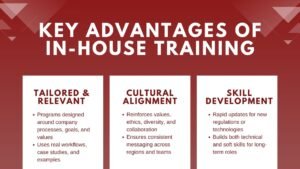
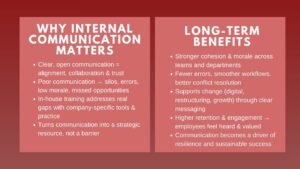
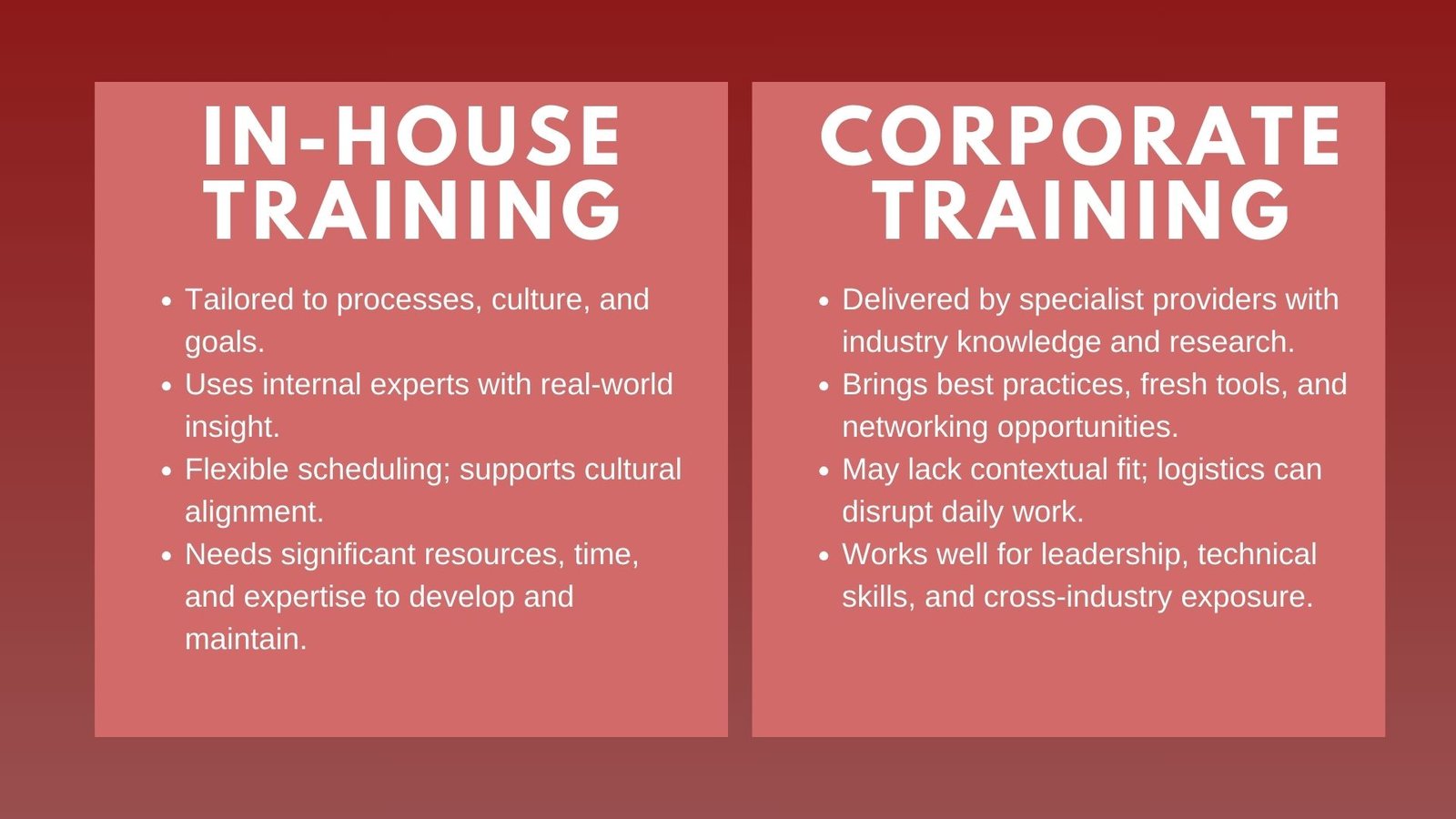
Organization-based training is created, elaborated and presented within the organization. Findings: Companies using this model develop training material based on their own processes, culture, tools and goals. An example is: a retail firm can design a customer service training unit that is representative of its own brand voice whereas a financial services firm can design a compliance course which is specific to the regulatory frameworks that it operates in its geographic location.
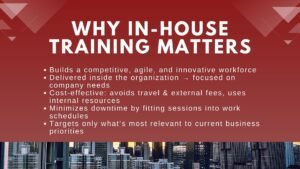
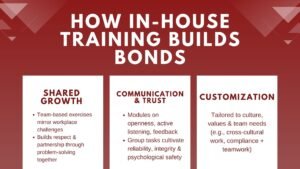
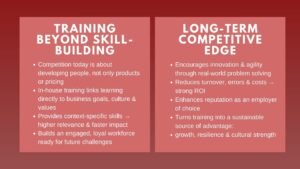
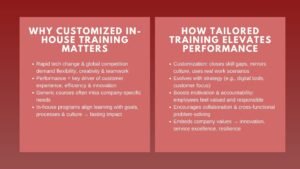
Customization is one of the largest benefits of in-house training. The training may be very flexible to capture not only the technical skills needed, but also values, mission and culture of the company. Internal subject matter experts are often referred to as trainers and these include individuals who are familiar with the finer details of the business and can give real world examples that employees can relate to. In-house programs also have flexibility in their schedule and can be tailored to fit within the day to day routine of the employees as opposed to them spending time off to attend outside courses.
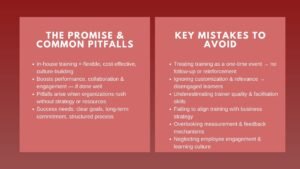
In-house training is however very costly in terms of time, expertise and resources. The development in this case requires organizations to assemble or recruit an effective learning and development team, construct and create appropriate materials, and constantly revise the materials as the business changes. In the case of small companies, these requirements may impose an impediment to implementation. However, in the case of organizations that possess good internal capabilities, the in-house training will guarantee the optimal level of coherence between learning activities and business priorities.
Understanding Corporate Training: Standardization and Expertise
Corporate training is usually the external programs provided by professional training providers, educational institutions, or consulting companies. Such programs tend to be standardized and aimed at serving the requirements of a large group of clients of various industries. They can be leadership development seminars, project management certification programs, or technical training (i.e., data analytics, finance, or coding).
The expertise and credibility of the external trainers is one of the major strong points of corporate training. Providers have a tendency to bring best practices, new methodologies, access to the latest research or technologies that may not be internal. In the case of businesses lacking the resources to put together in-house training, outsourcing to a corporate training company may give direct access to the high quality learning experiences. Also, corporate training can offer networking benefits to employees because they get to meet people in other companies and industries and exchange their ideas and viewpoints.
The primary constraint of corporate training is that it is generalized. Although external programs are developed to be broadly applicable, they do not necessarily represent the unique processes, culture, or issues of a given organization. Employees can find it difficult to relate what they teach in one of the corporate training seminars with what they see in actual reality. Moreover, when external training is involved, employees must be taken off their routine duties to participate in special training and that may create logistics and short-term workflow disruptions.
Comparing Benefits and Trade-Offs: Alignment, Cost, and Impact
In-house vs. corporate training This usually boils down to a matter of trade-offs versus benefits. In-house training is more customized and aligned but the resources have to be more resourceful. Corporate training provides external skills and depth of experience at the expense of contextual fitness.
In terms of expenses, in-house training has a high initial cost of development but it is more cost effective in the long-term when the programs are reused with large employee numbers. Corporate training, however, necessitates present spending per participant or session hence can be scaled in short term but not cost effective when the needs are large and repetitive.
Regarding effectiveness, in-house training can be more relevant and directly applicable since it is based on the exact processes and the goals of the organization. Corporate training, nevertheless, can open up the employees to new practices and wider horizons, than what they might have found in their own organization. In most instances, organizations adopt the blended model and employ in-house methods to train the fundamental processes and comply with the organization, and employ corporate methods to train the leadership, technical capabilities or areas where external skill is highly essential.
Strategic Considerations: Choosing the Right Training Mix
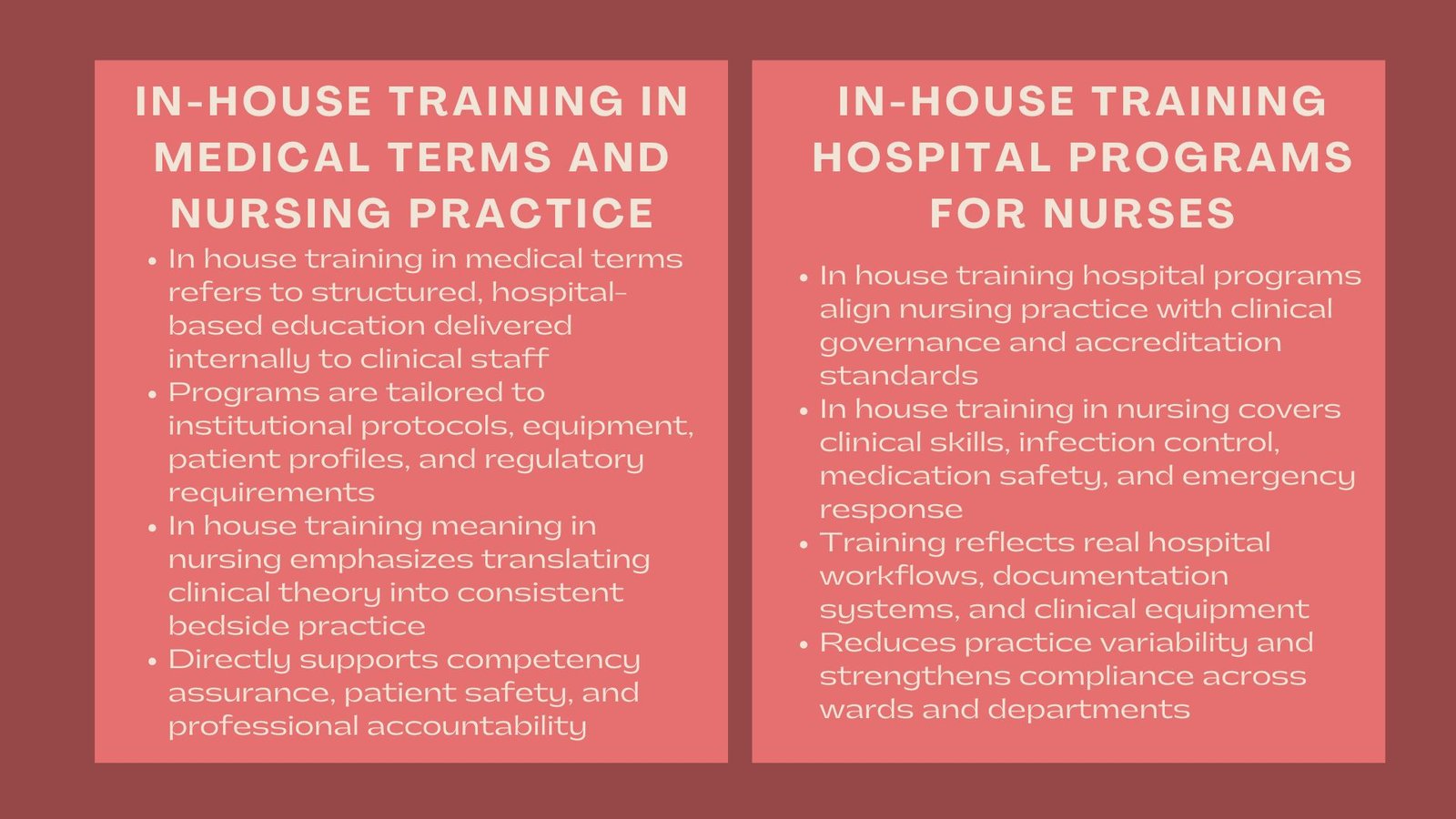
This requires the leaders to consider the strategic objectives of their organizations in determining the choice between in-house and corporate training. In-house training is essential in businesses where regulation is highly regulated, like the healthcare sector, banking and aviation, where employees must have the specific knowledge necessary to remain compliant and manage any risk. Corporate training can also deliver access to the most up-to-date knowledge and tools, which may not be built up by the internal team due to a lack of time and experience, especially with an organization operating in a quickly changing sector such as technology or digital marketing.
It is also relevant to the size and resources of the organization. Major companies that have a well-established learning and development department usually have the facilities to develop strong in-house training. Smaller companies, though, might also be more comfortable with offloading some specialized knowledge to corporate training vendors and occasionally creating easy to do in-house training to orient new employees or other company-specific areas.
The other factor is the organizational culture. Organisations that have strong cultures and are distinct, tend to favour in-house training to defend their values and to create the same message. In the meantime, corporate training might be attractive to companies concerned with benchmarking themselves against industry leaders because of the exposure it offers to external standards and practices.
The Future of Training: Integration and Hybrid Models
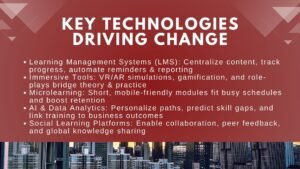
With the ongoing development of the workplace, the demarcation between the in-house training and the corporate training is slowly getting blurry. It is becoming increasingly popular to have hybrid models that combine the two approaches. The rise in digital learning systems, learning management systems, and e-learning content development software enables the organization of internal customization and external resources. A company can use as an example subscribing to an online corporate training platform and improve modules by matching them with the internal processes and values.
The continuous learning trend also implies that companies have to prepare the employees with diverse training experiences. The in-house programs are capable of meeting the urgent business requirements whereas corporate training is capable of equipping employees to meet the future by introducing them to international trends and cross-industrial knowledge. Firms which integrate the best of both have greater chances to create nimble, well learned and robust workforces that are able to survive in the competitive business environment.
Conclusion: Training as a Strategic Lever for Growth
In in-house versus corporate training, there is no universal answer to this question, rather, it is a question of what approach can favor the strategic interest of an organization. In-house training is better at customization, alignment and cultural reinforcement whereas corporate training is better at external expertise, standardization, and breadth of perspective. The careful combination of the two is to the advantage of most organizations, as it makes employees well-equipped in terms of skills and knowledge that are required nowadays and in the future.
Knowing the advantages and the disadvantages of each method, business leaders will be able to make effective decisions to gain the maximum of training investments. Finally, regardless of the mode of delivery, be it in-house or by using third parties, the purpose of training should always be to empower the staff, spur the performance and make the organization sustainable.