How Can Management Training Programs Develop Better Leaders?

Management training programs are designed to build better managers by improving communication, decision-making, coaching abilities, emotional intelligence, conflict resolution, and strategic thinking, which are vital for managers to lead their team more effectively. With structured in-house learning, organizations transform technically competent staff into empowered managers, confident to lead and deliver, to overcome the challenges of their work environment, and to help support the organization’s long-term success. 
Management Training Programs

What Are Management Training Programs?

Management training programs are planned, structured, skills-based training sessions designed to develop the skills, communication, and decision-making abilities required for managers to lead their teams effectively. Mostly, they use a blend of practice, coaching, and workplace situations instead of theory. Programs may be delivered in-house as well, giving the content a focus that aligns to the organization’s problems, environment and business objectives.

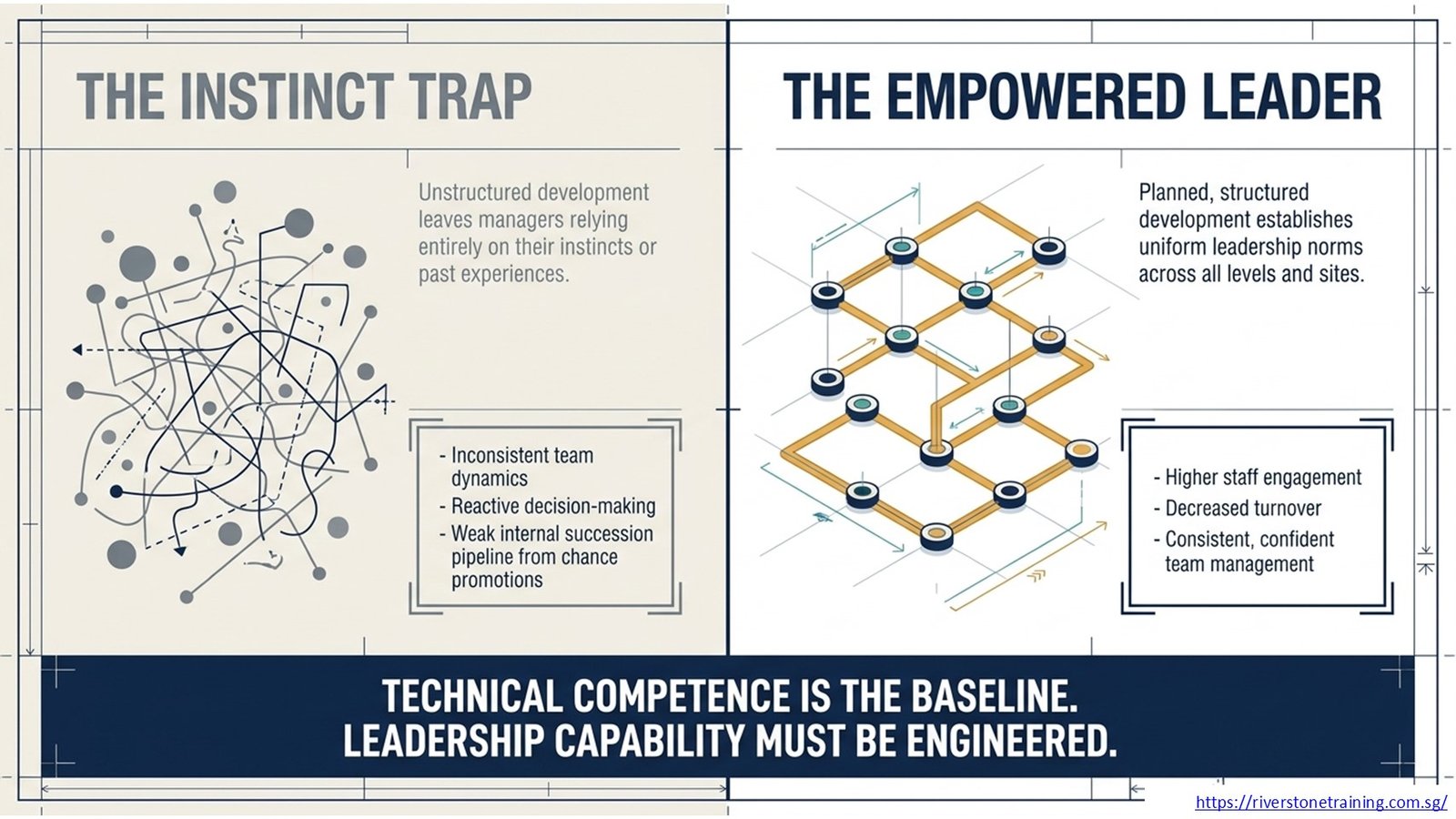
Such programmes include operational skills like strategic thinking, delegation and performance management, as well as core competencies like communication, emotional intelligence and conflict resolution. Effective management training programs are not ‘seminars’ but rather a process of development that takes place over time. This systematic approach will enable organizations to establish a uniform leadership norm at different levels and sites. 

Why Is Leadership Development Important?

Leadership development is crucial as it directly influences the effectiveness of managers in leading teams, decision-making, and addressing workplace issues. Unstructured development leaves managers to rely on their instincts or the approach of the managers they’ve worked with in the past, which can be inconsistent. Companies that develop their leaders experience higher staff engagement, lower staff turnover, and greater uniformity among teams.

Leadership development programs can also help organizations anticipate succession planning needs by proactively developing internal resources. It provides supervisors and team leaders with a clear path to becoming confident supervisors, not by chance. This can prevent making promotion decisions that result in a weak leadership team.

Leadership Competencies and Their Business Benefits

Competency Business Benefit
Communication Clear team direction and fewer misunderstandings
Decision-Making Faster, more consistent problem-solving
Emotional Intelligence Stronger employee relationships and trust
Strategic Thinking Long-term business growth and adaptability
Coaching Higher employee engagement and skill development

How Do Managers Improve Communication Skills?

Managers develop communication skills with guidance in listening skills, providing instruction, and feedback. Real workplace case studies and role-play scenarios allow managers to practice the skills they learned in a simulated context that mirrors real-world situations. The practice repetition is a much more effective way to grow confidence than theory alone.

Clear communication minimizes misunderstandings, sets clear expectations, and ensures that everyone on a team is working towards the same goals. Managers who are able to communicate clearly are also more likely to be able to give tough feedback without ruining working relations. This uniformity fosters trust among managers and employees, promoting increased engagement and productivity over time. 

How Does Soft Skills Training Strengthen Leadership?

Soft skills training can boost leadership skills by improving managers’ soft skills, which are essential for their ability to lead people, motivate, inspire, and engage others beyond the technical aspect. Active listening, presentation delivery, and collaborative problem-solving skills are immediate contributors to the experiences employees have every day while working under management.

Programs built around soft skills training corporate needs, such as onsite communication and presentation workshops, help managers translate ideas clearly and build stronger working relationships. Leaders who excel with soft skills are better suited to work with diverse groups and build consensus when change occurs, and complement their technical management knowledge to make them well-rounded leaders. 

Soft Skills and Their Leadership Benefits

Soft Skill Leadership Benefit
Active Listening Stronger team communication
Conflict Resolution Better workplace relationships
Presentation Skills Clear, confident communication
Collaboration Improved cross-team teamwork
Empathy Increased employee trust

Why Is Emotional Intelligence Important for Managers?

Emotional intelligence is crucial for managers as it influences their interpretation of what they see, their own emotional response, and how they react to the needs of their staff when they are stressed. High EI managers are aware of stress, frustration, and/or disengagement in their groups before it impacts performance. This awareness enables intervention to be more timely and positive.

EI training can assist managers in controlling their reactions when faced with high-stress situations, like when they are dealing with conflict or a tight deadline. It also enhances empathy, thereby facilitating feedback and support for employee wellbeing by managers. TMS with emotionally intelligent managers tends to have higher levels of trust and psychological safety. 

How Can Managers Make Better Business Decisions?
Management Training Programs

Managers are better equipped to use structured decision-making processes that consider data, risk, and business impact as opposed to assumptions when making business decisions. In training programs, techniques are presented, like root cause analysis and scenario planning, to help managers look at options systematically. This decreases reactive decision-making and ensures uniformity in teams.

Knowing when to involve others, delegate, and escalate issues is also important for better decision-making. In management training, managers learn to keep both speed and accuracy in mind, especially when they are limited on resources or when they are operating in the field. The clearer and more effective the decision-making, the fewer mistakes will be made, and the quicker day-to-day issues will be solved. 

How Do Leaders Build High-Performing Teams?

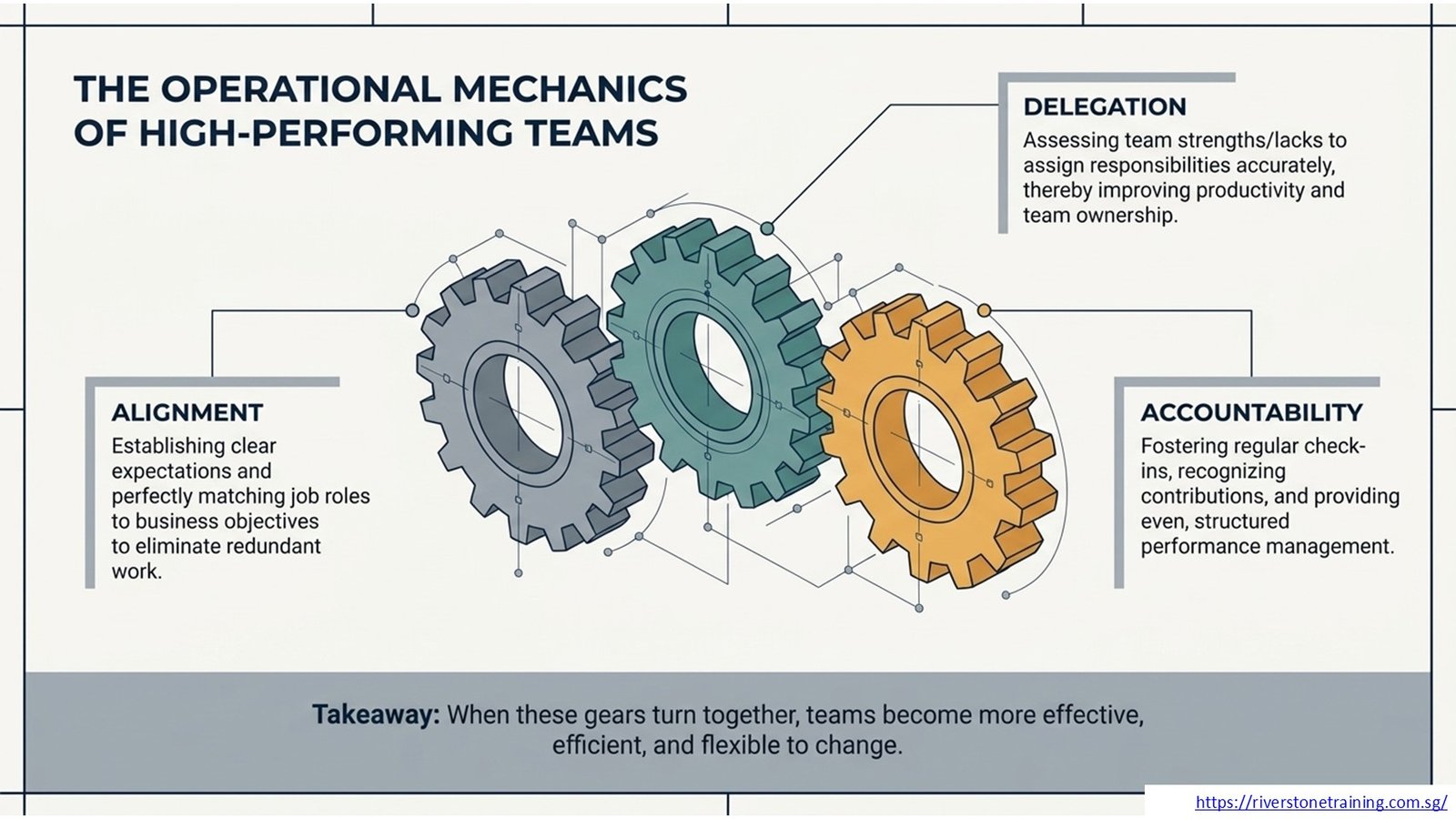
Leaders develop effective teams by establishing clear expectations, matching job roles to business objectives, and developing structures for accountability that employees understand. Through training, managers can determine how strong their teams are and what they lack and assign responsibilities accordingly. This alignment eliminates redundant work and reduces confusion.

Building trust and open communication is also essential for high-performing teams, fostered by regular check-ins and recognizing contributions. Good teamwork is taught in training, as are methods for leading efficient meetings and providing even feedback. As these practices continue, teams become more effective and flexible to change. 

Management Skills and Their Workplace Applications

Skill Workplace Application
Coaching Develops employee potential and future leaders
Delegation Improves productivity and team ownership
Performance Management Increases accountability and clarity
Change Management Supports organizational transformation
Conflict Resolution Maintains team morale during disagreements

What Conflict Resolution Skills Should Managers Develop?

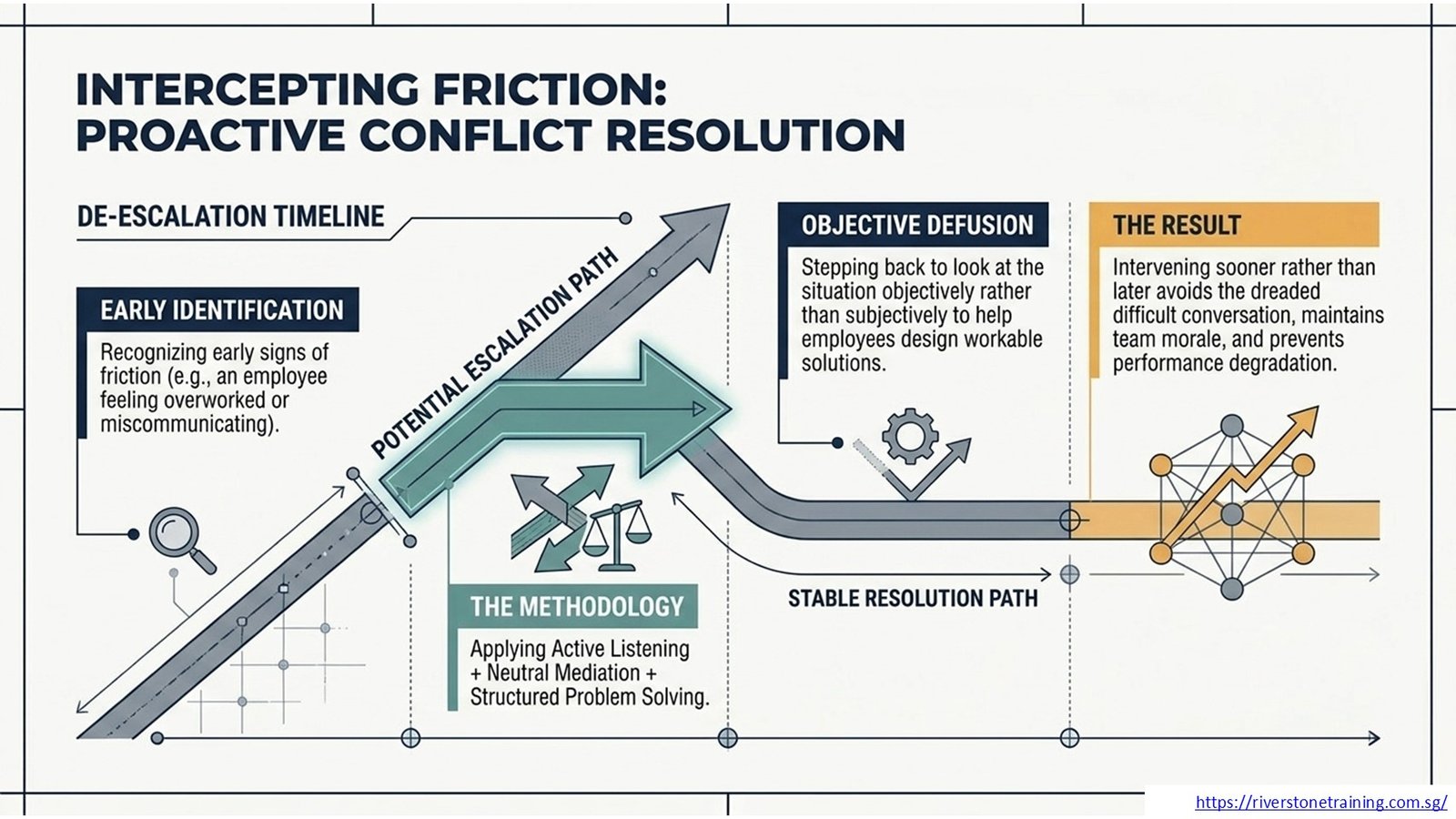
To manage workplace conflict situations, managers should acquire the skills to resolve conflict through active listening, neutral mediation, and structured problem-solving. The exercises are usually practical, based on real-life situations, for example when someone feels that they are overworked or not communicating. This equips managers to intervene sooner instead of later, to avoid the “difficult conversation” scenario.

Great conflict resolution helps to maintain team morale and avoids an issue from having a negative impact on the performance of the team. Those who are trained in this area learn to take a step back and look at the situation objectively rather than subjectively, and to help their employees come up with a workable solution. This is especially helpful in situations of speed or stress. 

How Does Coaching Improve Employee Performance?

Coaching allows managers to move beyond tasks and into developing their team members’ skills and confidence, which increases employee performance. Training helps managers to develop coaching skills, including the ability to ask questions instead of giving answers. This way, employees will gradually develop their problem-solving abilities.

Frequent coaching sessions also help managers and employees get along better and work more engaged because the employees feel supported in their development. Managers whose coaching skills are more suited to identifying potential future leaders in their team. The continuous investment in workers’ capability is directly related to succession planning. 

Leadership Challenges and Training Solutions

Challenge Training Solution
Poor Communication Soft skills workshops
Low Employee Engagement Coaching techniques
Team Conflict Conflict management training
Resistance to Change Leadership development programs
Inconsistent Decision-Making Structured decision-making frameworks

How Can Managers Drive Organizational Change?

Managers lead the way in facilitating organizational change by communicating the need for change clearly; by directly engaging the concerns of employees during the transition; and by modelling the behaviours expected during the transition. Managers are equipped with the skills to recognize resistance and react with empathy instead of disrespect. This minimises disruption and maintains teams’ focus in times of uncertainty.

Change management training also helps managers to scope a large change into achievable steps for their teams, thereby minimizing their overwhelm. Effective managers can contribute to keeping the business productive and morale high despite changing priorities. With the change of technology, processes, and market conditions, this is becoming more relevant than ever. 

How Do Management Training Programs Improve Operational Performance?
Management Training Programs

Management training programs can enhance operational efficiency by providing managers with planning, risk awareness, and process management skills necessary to effectively operate efficient teams. Structured management training programs, such as those covering operational risk management, help managers identify inefficiencies and reduce operational risk before it affects business outcomes. A proactive approach will reinforce day-to-day decision-making at team level.

Operating managers with operational best-practice training are better prepared to allocate resources, manage flow blockages and quality, and respond to pressure. This equates to tangible benefits like fewer mistakes, quicker response times, and more predictable service quality. A strong operational ability at the management level contributes to organisational efficiency. 

How Can Organizations Measure Leadership Development?

Employee engagement scores, retention rates, internal promotion rates, and manager performance reviews are examples of leadership development metrics that are measured and tracked by organizations. Pre- and post-training assessments also allow for measuring progress in certain skills such as communication or decision-making. These metrics provide L&D teams data to demonstrate the effect of training beyond just attendance.

360 feedback from peers and direct reports, as well as other qualitative data, can give further insight into leadership behavior changes. Over time, monitoring these metrics can guide organizations to adjust training material and pinpoint areas for improvement. This data-centric process guarantees leadership development investments are aligned to business outcomes. 

Why Is Continuous Learning Important for Managers?

With business needs, team changes, and market fluctuations, business challenges constantly change, and managers need to continuously learn. While a single training program helps managers develop key skills, continuous development ensures they stay agile in the face of emerging challenges. Companies that make leadership development a continuous process have more resilient management teams.

As managers assume more responsibility, there are additional modules and refresher training, peer learning, and the development of skills including strategic thinking and change management. This continual investment also conveys to managers that the organization values their long-term growth. This means that ongoing learning plays a role in an employee’s growth and a company’s continued sustainability. 

How Do In-House Training Programs Support Future Leaders?

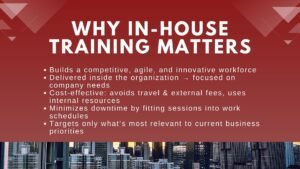
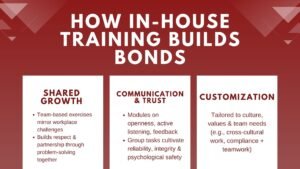
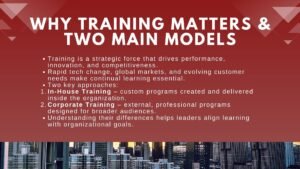
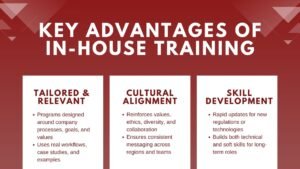
Future leaders are supported by in-house training programs that focus on content designed to fit into an organization’s culture, processes, and business challenges, instead of generic content. This relevance assists participants in using new skills in real situations in the workplace. The in-house delivery feature also enables organisations to train numerous team leaders and supervisors on a consistent basis – creating a common language of leadership between departments.

In-house programs are run in the environment of the business and can include case studies and scenarios directly from the organization’s business environment. The practical relevance defines more quickly the transferability of skills than external courses with a generic focus. In-house training is also beneficial for sustaining structured succession planning for organisations that are grooming future leaders by identifying and nurturing their internal talent at an early stage. 

How Can Leadership Training Create Long-Term Business Success?

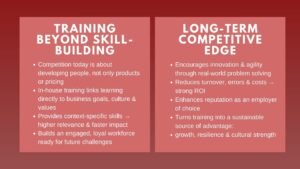
Leadership training is the basis for long-term business success – developing a leadership pipeline of competent managers to ensure that the business continues to perform, is prepared for change and is ready for the next generation of employees. Effective leadership at all levels minimises the need for anyone to be the leader and provides organisational resilience. Companies that have managers who are knowledgeable and skilled are more likely to be able to deal with growth, restructuring, or changes in the marketplace.

Regular leadership development also enhances the organizational culture, as trained managers set the communication, accountability, and collaboration norms in their teams. The uniformity of culture helps with employee retention and helps build the company’s reputation as a place to grow. Over time, this investment generates quantifiable improvements in productivity, participation and business results. 

Summary: How Management Training Strengthens Leadership

Leadership Area How Management Training Helps
Communication Builds clarity and trust across teams
Emotional Intelligence Improves relationships and self-awareness
Decision-Making Strengthens judgment under pressure
Coaching Develops employee potential and succession readiness
Organizational Change Prepares managers to lead transitions effectively

Conclusion

Management training programs build better leaders to help managers acquire the skills necessary to communicate effectively, make effective decisions, coach employees, and lead through change. EI, conflict management, and strategic thinking enhance the way managers address everyday challenges and keep these skills on par with business requirements. Organic management training programs provide a plan-based, measurable method for developing management skills instead of relying on intuition to determine the effectiveness of managers.

This is built on a corporate-wide approach to soft skills training that boosts the communication, presentation, and interpersonal skills that managers must possess to motivate employees and to solve conflicts in the workplace. These two aspects of development combine to build technically competent leaders who are also confident to lead people, performance, and change.

Companies that develop their leadership internally in a structured way are able to create a more resilient, flexible, and capable leadership team in the process. Spending on practical, continuous management training is a long-term strategy for improving the ability of management at all levels. 
Frequently Asked Questions

What are management training programs?

Management training programmes are designed learning programs to develop the communication, decision-making, and people management skills required to lead teams effectively. They will normally not include theory but will be a mixture of workshops, coaching and real workplace scenarios. Many organisations provide these programmes in-house and so the content is specific to their business, processes and culture.

Leadership skills are essential as they influence the effectiveness of the manager’s communication of expectations, conflict management, and employee performance support. If managers are not given formal leadership development, they tend to do things by instinct and may not be able to produce consistent results among teams. Effective leadership is vital for better engagement, retention and team performance, which is crucial for long-term business success.

The soft skills training enhances leadership skills; it helps to build communication, active listening, and presentation skills that managers apply daily. These soft skills are essential for building trust, giving feedback, and working in teams with other managers. The role of soft skills training in corporate programs is to round up the technical knowledge of management with soft skills to make them good managers of tasks and people as well.

The types of skills that are usually taught in a management training program include communication, emotional intelligence, decision-making, coaching, conflict resolution, performance management, and change management. Various programs also feature hands-on activities like role-play scenarios and case studies based on actual situations in the workplace. This mix of subjects equips managers with the skills needed to manage day-to-day operations and tackle leadership challenges of a more advanced nature. 

Some of the metrics used to assess leadership development are scores on employee engagement surveys, retention rates, internal promotion rates, and manager performance reviews. Pre- and post-training assessments measure gains in specific skills, and 360-degree feedback provides further information on behaviour change. These metrics can be combined to assess the true business impact of training.

Business leaders, managers and supervisors, team leaders, HR professionals, and learning and development teams that are tasked with developing talent will all benefit from management training programs. They are also a good resource for staff who are developing their leadership skills. Training is sometimes organized by experience, providing useful, hands-on skills for new supervisors and skills for the senior management.

Management training programs are designed to build better managers by improving communication, decision-making, coaching abilities, emotional intelligence, conflict resolution, and strategic thinking, which are vital for managers to lead their team more effectively. With structured in-house learning, organizations transform technically competent staff into empowered managers, confident to lead and deliver, to overcome the challenges of their work environment, and to help support the organization’s long-term success. 

Management Training Programs

What Are Management Training Programs?

Management training programs are planned, structured, skills-based training sessions designed to develop the skills, communication, and decision-making abilities required for managers to lead their teams effectively. Mostly, they use a blend of practice, coaching, and workplace situations instead of theory. Programs may be delivered in-house as well, giving the content a focus that aligns to the organization’s problems, environment and business objectives.

Such programmes include operational skills like strategic thinking, delegation and performance management, as well as core competencies like communication, emotional intelligence and conflict resolution. Effective management training programs are not ‘seminars’ but rather a process of development that takes place over time. This systematic approach will enable organizations to establish a uniform leadership norm at different levels and sites. 

Why Is Leadership Development Important?

Leadership development is crucial as it directly influences the effectiveness of managers in leading teams, decision-making, and addressing workplace issues. Unstructured development leaves managers to rely on their instincts or the approach of the managers they’ve worked with in the past, which can be inconsistent. Companies that develop their leaders experience higher staff engagement, lower staff turnover, and greater uniformity among teams.

Leadership development programs can also help organizations anticipate succession planning needs by proactively developing internal resources. It provides supervisors and team leaders with a clear path to becoming confident supervisors, not by chance. This can prevent making promotion decisions that result in a weak leadership team.

Leadership Competencies and Their Business Benefits

Competency Business Benefit
Communication Clear team direction and fewer misunderstandings
Decision-Making Faster, more consistent problem-solving
Emotional Intelligence Stronger employee relationships and trust
Strategic Thinking Long-term business growth and adaptability
Coaching Higher employee engagement and skill development

How Do Managers Improve Communication Skills?

Managers develop communication skills with guidance in listening skills, providing instruction, and feedback. Real workplace case studies and role-play scenarios allow managers to practice the skills they learned in a simulated context that mirrors real-world situations. The practice repetition is a much more effective way to grow confidence than theory alone.

Clear communication minimizes misunderstandings, sets clear expectations, and ensures that everyone on a team is working towards the same goals. Managers who are able to communicate clearly are also more likely to be able to give tough feedback without ruining working relations. This uniformity fosters trust among managers and employees, promoting increased engagement and productivity over time. 

How Does Soft Skills Training Strengthen Leadership?

Soft skills training can boost leadership skills by improving managers’ soft skills, which are essential for their ability to lead people, motivate, inspire, and engage others beyond the technical aspect. Active listening, presentation delivery, and collaborative problem-solving skills are immediate contributors to the experiences employees have every day while working under management.

Programs built around soft skills training corporate needs, such as onsite communication and presentation workshops, help managers translate ideas clearly and build stronger working relationships. Leaders who excel with soft skills are better suited to work with diverse groups and build consensus when change occurs, and complement their technical management knowledge to make them well-rounded leaders. 

Soft Skills and Their Leadership Benefits

Soft Skill Leadership Benefit
Active Listening Stronger team communication
Conflict Resolution Better workplace relationships
Presentation Skills Clear, confident communication
Collaboration Improved cross-team teamwork
Empathy Increased employee trust

Why Is Emotional Intelligence Important for Managers?

Emotional intelligence is crucial for managers as it influences their interpretation of what they see, their own emotional response, and how they react to the needs of their staff when they are stressed. High EI managers are aware of stress, frustration, and/or disengagement in their groups before it impacts performance. This awareness enables intervention to be more timely and positive.

EI training can assist managers in controlling their reactions when faced with high-stress situations, like when they are dealing with conflict or a tight deadline. It also enhances empathy, thereby facilitating feedback and support for employee wellbeing by managers. TMS with emotionally intelligent managers tends to have higher levels of trust and psychological safety. 

How Can Managers Make Better Business Decisions?

Management Training Programs

Managers are better equipped to use structured decision-making processes that consider data, risk, and business impact as opposed to assumptions when making business decisions. In training programs, techniques are presented, like root cause analysis and scenario planning, to help managers look at options systematically. This decreases reactive decision-making and ensures uniformity in teams.

Knowing when to involve others, delegate, and escalate issues is also important for better decision-making. In management training, managers learn to keep both speed and accuracy in mind, especially when they are limited on resources or when they are operating in the field. The clearer and more effective the decision-making, the fewer mistakes will be made, and the quicker day-to-day issues will be solved. 

How Do Leaders Build High-Performing Teams?

Leaders develop effective teams by establishing clear expectations, matching job roles to business objectives, and developing structures for accountability that employees understand. Through training, managers can determine how strong their teams are and what they lack and assign responsibilities accordingly. This alignment eliminates redundant work and reduces confusion.

Building trust and open communication is also essential for high-performing teams, fostered by regular check-ins and recognizing contributions. Good teamwork is taught in training, as are methods for leading efficient meetings and providing even feedback. As these practices continue, teams become more effective and flexible to change. 

Management Skills and Their Workplace Applications

Skill Workplace Application
Coaching Develops employee potential and future leaders
Delegation Improves productivity and team ownership
Performance Management Increases accountability and clarity
Change Management Supports organizational transformation
Conflict Resolution Maintains team morale during disagreements

What Conflict Resolution Skills Should Managers Develop?

To manage workplace conflict situations, managers should acquire the skills to resolve conflict through active listening, neutral mediation, and structured problem-solving. The exercises are usually practical, based on real-life situations, for example when someone feels that they are overworked or not communicating. This equips managers to intervene sooner instead of later, to avoid the “difficult conversation” scenario.

Great conflict resolution helps to maintain team morale and avoids an issue from having a negative impact on the performance of the team. Those who are trained in this area learn to take a step back and look at the situation objectively rather than subjectively, and to help their employees come up with a workable solution. This is especially helpful in situations of speed or stress. 

How Does Coaching Improve Employee Performance?

Coaching allows managers to move beyond tasks and into developing their team members’ skills and confidence, which increases employee performance. Training helps managers to develop coaching skills, including the ability to ask questions instead of giving answers. This way, employees will gradually develop their problem-solving abilities.

Frequent coaching sessions also help managers and employees get along better and work more engaged because the employees feel supported in their development. Managers whose coaching skills are more suited to identifying potential future leaders in their team. The continuous investment in workers’ capability is directly related to succession planning. 

Leadership Challenges and Training Solutions

Challenge Training Solution
Poor Communication Soft skills workshops
Low Employee Engagement Coaching techniques
Team Conflict Conflict management training
Resistance to Change Leadership development programs
Inconsistent Decision-Making Structured decision-making frameworks

How Can Managers Drive Organizational Change?

Managers lead the way in facilitating organizational change by communicating the need for change clearly; by directly engaging the concerns of employees during the transition; and by modelling the behaviours expected during the transition. Managers are equipped with the skills to recognize resistance and react with empathy instead of disrespect. This minimises disruption and maintains teams’ focus in times of uncertainty.

Change management training also helps managers to scope a large change into achievable steps for their teams, thereby minimizing their overwhelm. Effective managers can contribute to keeping the business productive and morale high despite changing priorities. With the change of technology, processes, and market conditions, this is becoming more relevant than ever. 

How Do Management Training Programs Improve Operational Performance?

Management Training Programs

Management training programs can enhance operational efficiency by providing managers with planning, risk awareness, and process management skills necessary to effectively operate efficient teams. Structured management training programs, such as those covering operational risk management, help managers identify inefficiencies and reduce operational risk before it affects business outcomes. A proactive approach will reinforce day-to-day decision-making at team level.

Operating managers with operational best-practice training are better prepared to allocate resources, manage flow blockages and quality, and respond to pressure. This equates to tangible benefits like fewer mistakes, quicker response times, and more predictable service quality. A strong operational ability at the management level contributes to organisational efficiency. 

How Can Organizations Measure Leadership Development?

Employee engagement scores, retention rates, internal promotion rates, and manager performance reviews are examples of leadership development metrics that are measured and tracked by organizations. Pre- and post-training assessments also allow for measuring progress in certain skills such as communication or decision-making. These metrics provide L&D teams data to demonstrate the effect of training beyond just attendance.

360 feedback from peers and direct reports, as well as other qualitative data, can give further insight into leadership behavior changes. Over time, monitoring these metrics can guide organizations to adjust training material and pinpoint areas for improvement. This data-centric process guarantees leadership development investments are aligned to business outcomes. 

Why Is Continuous Learning Important for Managers?

With business needs, team changes, and market fluctuations, business challenges constantly change, and managers need to continuously learn. While a single training program helps managers develop key skills, continuous development ensures they stay agile in the face of emerging challenges. Companies that make leadership development a continuous process have more resilient management teams.

As managers assume more responsibility, there are additional modules and refresher training, peer learning, and the development of skills including strategic thinking and change management. This continual investment also conveys to managers that the organization values their long-term growth. This means that ongoing learning plays a role in an employee’s growth and a company’s continued sustainability. 

How Do In-House Training Programs Support Future Leaders?

Future leaders are supported by in-house training programs that focus on content designed to fit into an organization’s culture, processes, and business challenges, instead of generic content. This relevance assists participants in using new skills in real situations in the workplace. The in-house delivery feature also enables organisations to train numerous team leaders and supervisors on a consistent basis – creating a common language of leadership between departments.

In-house programs are run in the environment of the business and can include case studies and scenarios directly from the organization’s business environment. The practical relevance defines more quickly the transferability of skills than external courses with a generic focus. In-house training is also beneficial for sustaining structured succession planning for organisations that are grooming future leaders by identifying and nurturing their internal talent at an early stage. 

How Can Leadership Training Create Long-Term Business Success?

Leadership training is the basis for long-term business success – developing a leadership pipeline of competent managers to ensure that the business continues to perform, is prepared for change and is ready for the next generation of employees. Effective leadership at all levels minimises the need for anyone to be the leader and provides organisational resilience. Companies that have managers who are knowledgeable and skilled are more likely to be able to deal with growth, restructuring, or changes in the marketplace.

Regular leadership development also enhances the organizational culture, as trained managers set the communication, accountability, and collaboration norms in their teams. The uniformity of culture helps with employee retention and helps build the company’s reputation as a place to grow. Over time, this investment generates quantifiable improvements in productivity, participation and business results. 

Summary: How Management Training Strengthens Leadership

Leadership Area How Management Training Helps
Communication Builds clarity and trust across teams
Emotional Intelligence Improves relationships and self-awareness
Decision-Making Strengthens judgment under pressure
Coaching Develops employee potential and succession readiness
Organizational Change Prepares managers to lead transitions effectively

Conclusion

Management training programs build better leaders to help managers acquire the skills necessary to communicate effectively, make effective decisions, coach employees, and lead through change. EI, conflict management, and strategic thinking enhance the way managers address everyday challenges and keep these skills on par with business requirements. Organic management training programs provide a plan-based, measurable method for developing management skills instead of relying on intuition to determine the effectiveness of managers.

This is built on a corporate-wide approach to soft skills training that boosts the communication, presentation, and interpersonal skills that managers must possess to motivate employees and to solve conflicts in the workplace. These two aspects of development combine to build technically competent leaders who are also confident to lead people, performance, and change.

Companies that develop their leadership internally in a structured way are able to create a more resilient, flexible, and capable leadership team in the process. Spending on practical, continuous management training is a long-term strategy for improving the ability of management at all levels. 
Frequently Asked Questions

What are management training programs?

Management training programmes are designed learning programs to develop the communication, decision-making, and people management skills required to lead teams effectively. They will normally not include theory but will be a mixture of workshops, coaching and real workplace scenarios. Many organisations provide these programmes in-house and so the content is specific to their business, processes and culture.

Leadership skills are essential as they influence the effectiveness of the manager’s communication of expectations, conflict management, and employee performance support. If managers are not given formal leadership development, they tend to do things by instinct and may not be able to produce consistent results among teams. Effective leadership is vital for better engagement, retention and team performance, which is crucial for long-term business success.

The soft skills training enhances leadership skills; it helps to build communication, active listening, and presentation skills that managers apply daily. These soft skills are essential for building trust, giving feedback, and working in teams with other managers. The role of soft skills training in corporate programs is to round up the technical knowledge of management with soft skills to make them good managers of tasks and people as well.

The types of skills that are usually taught in a management training program include communication, emotional intelligence, decision-making, coaching, conflict resolution, performance management, and change management. Various programs also feature hands-on activities like role-play scenarios and case studies based on actual situations in the workplace. This mix of subjects equips managers with the skills needed to manage day-to-day operations and tackle leadership challenges of a more advanced nature. 

Some of the metrics used to assess leadership development are scores on employee engagement surveys, retention rates, internal promotion rates, and manager performance reviews. Pre- and post-training assessments measure gains in specific skills, and 360-degree feedback provides further information on behaviour change. These metrics can be combined to assess the true business impact of training.

Business leaders, managers and supervisors, team leaders, HR professionals, and learning and development teams that are tasked with developing talent will all benefit from management training programs. They are also a good resource for staff who are developing their leadership skills. Training is sometimes organized by experience, providing useful, hands-on skills for new supervisors and skills for the senior management.

Related Posts

Complete Guide to In-House for Companies and Teams

Best Training Company for your inhouse courses and customised program