When coupled with structured soft skills training corporate programs, HR training programs can yield a tangible impact on productivity, teamwork, and employee engagement, ultimately enhancing workplace performance.HR training programs contribute to workplace performance by improving employee skills, ensuring compliance, improving communication, and matching employee capability to the organisation’s objectives — and when integrated with structured soft skills training corporate programs, the results are measurable in terms of enhanced productivity, better collaboration, and higher employee engagement.
What Are HR Training Programs?
HR training programs refer to the planned learning activities that aim to enhance the capabilities of employees, reinforce the norms in the workplace, and promote the team and individual performance of employees in an organisation. They address a wide range of learning requirements – from regulatory compliance to technical skills to leadership development to interpersonal skills.
HR Training, in reality, is not one particular training type, but a collection of specific training programs tailored to particular skill gaps and business goals. Compliance training, on-boarding training, leadership development, functional skills development, and soft skills training are generally conducted concurrently by organisations and are each used for a specific purpose of workforce development.
Table 1: HR Training Program Types
| Training Type | Focus Area | Primary Workplace Outcome |
| Compliance Training | Legal and regulatory adherence | Reduced legal risk and regulatory exposure |
| Leadership Training | Management and decision-making | Stronger team leadership and performance management |
| Soft Skills Training | Communication, EQ, and teamwork | Improved collaboration and workplace relationships |
| Technical / Functional Training | Job-specific skills and tools | Faster task completion and higher output quality |
| Onboarding Training | Role integration and culture | Reduced time-to-productivity for new employees |
| Diversity and Inclusion Training | Workplace equity and respect | Stronger team cohesion and reduced bias |
Why Are HR Training Programs Important for Workplace Performance?
It’s crucial that HR training programs are implemented because employees who lack training tend to make more mistakes, have less communication, and are less capable of managing the changing demands of their roles — which impacts organisational productivity and introduces risk to operations. Structured training will fill the gap between what employees can do and what a business needs them to do.
Companies that have a steady focus on employee development have lower turnover, higher employee engagement scores, and quicker performance recovery when transitioning through management changes or system upgrades. Training is not a stand-alone HR initiative; rather, it’s an operational performance lever that gives businesses the ability to scale up capability as they scale up.
How Do HR Training Programs Improve Employee Productivity?
HR training enhances productivity by providing the right training, knowledge, skills, and procedures for employees to carry out their roles efficiently. When employees know exactly what to do, what tools to use and how to do it well, they waste less time going up and down the line seeking answers, avoiding incorrect actions and wasting effort.
A real-world example: A new hire’s onboarding time can be saved by weeks when they have role-specific task simulations and system walkthroughs. Likewise, consistency in process training can augment output quality and remove inconsistencies from delivering standard tasks, while providing no additional hours or personnel costs.
How Do HR Training Programs Strengthen Workplace Communication?
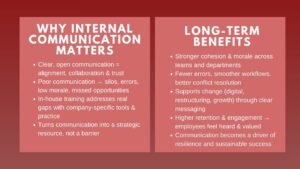
HR training programs enhance communication in the workplace by improving how employees can effectively express themselves, give feedback, and actively listen to others within and between teams and levels. Communication training transcends beyond simple presentation to include email clarity, cross-functional briefings, challenging conversations and communication between employees working remotely.
Structured communication training initiatives in organisations have a tangible impact on fewer internal escalations, email congestion, and cross-team misalignment. Feedback delivery trained managers have more effective performance conversations, directly affecting employee engagement and eliminating ambiguity that leads to disengagement and turnover.
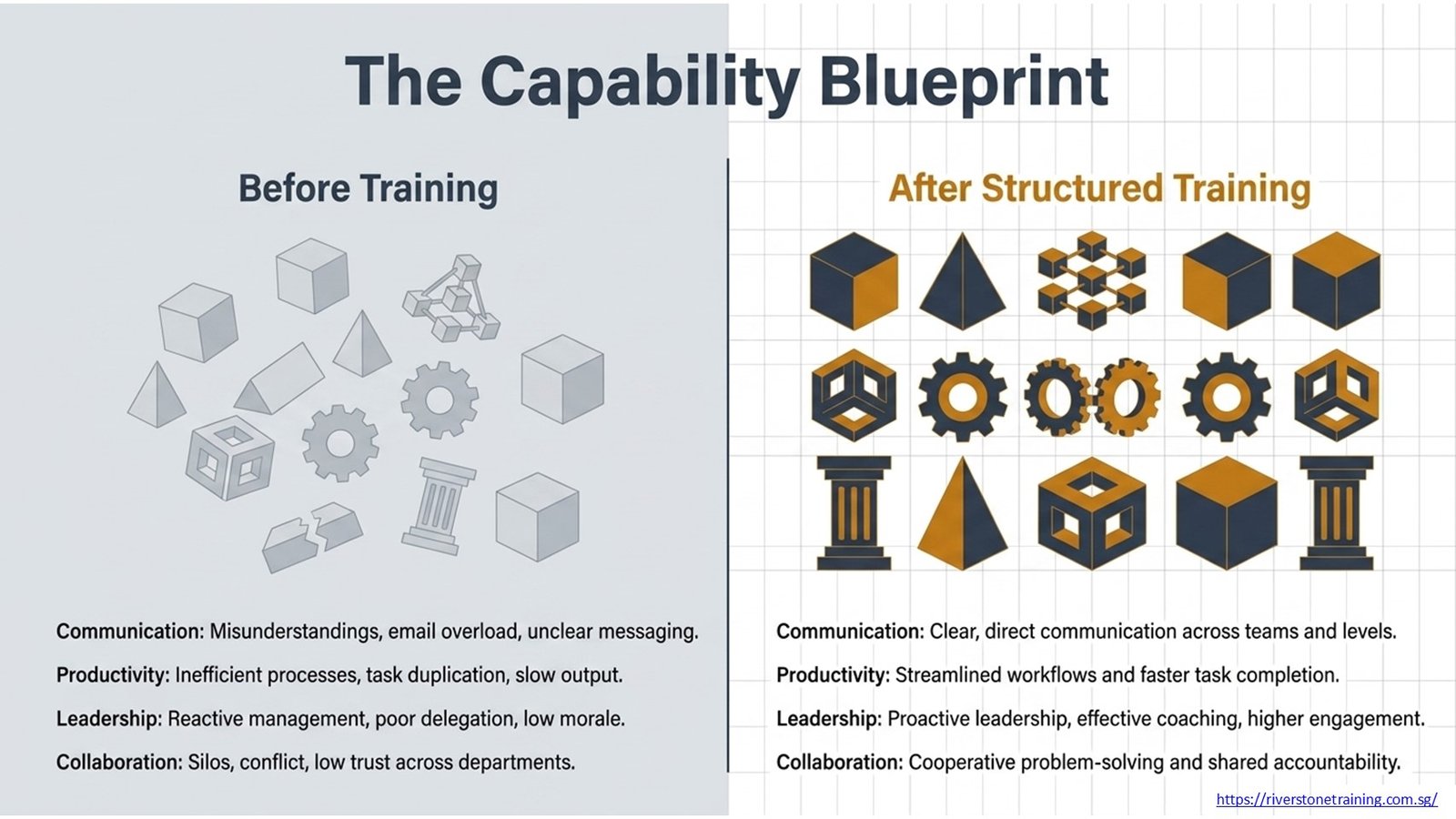
Table 2: Workplace Performance Improvement Through HR Training
| Performance Area | Before Training | After Structured Training |
| Communication | Misunderstandings, email overload, unclear messaging | Clear, direct communication across teams and levels |
| Productivity | Inefficient processes, task duplication, slow output | Streamlined workflows and faster task completion |
| Compliance | Policy breaches, regulatory gaps, liability exposure | Consistent policy adherence and reduced legal risk |
| Leadership | Reactive management, poor delegation, low morale | Proactive leadership, effective coaching, higher engagement |
| Team Collaboration | Silos, conflict, low trust across departments | Cooperative problem-solving and shared accountability |
How Does Compliance Training Reduce Workplace Risk?
Compliance training helps minimise risks in the workplace by making sure that each employee is aware of the legal, regulatory and policy requirements, and the ramifications of failing to comply. Targeted HR training programs covering workplace safety, data protection, anti-harassment, and financial regulations protect both employees and organisations from liability.
If an organisation doesn’t have a systematic compliance program, it leaves individuals to their own devices to understand the policies, which can lead to disparate interpretations and regulatory risks. Compliance training that targets the actual job and scenarios, rather than dry e-learning courses, helps employees retain the information more effectively and use it when it’s needed most during actual work situations.
How Do HR Training Programs Improve Leadership and Management Skills?
HR training programs enhance leadership abilities by expanding the capacity of managers to coach, delegate, communicate goals, oversee performance and promote team wellness in stressed situations. Leadership training turns management theory into actionable methods for managers that they can use in real business dealings, team meetings, and evaluations.
Early signs of improved team performance metrics from management development are improved absenteeism, lower turnover in high-performing teams, and increased team output consistency. A trained manager who is proficient in giving people feedback and handling difficult conversations will eliminate people issues that normally devour HR bandwidth.
What Role Do Soft Skills Training Corporate Programs Play in Workplace Success?
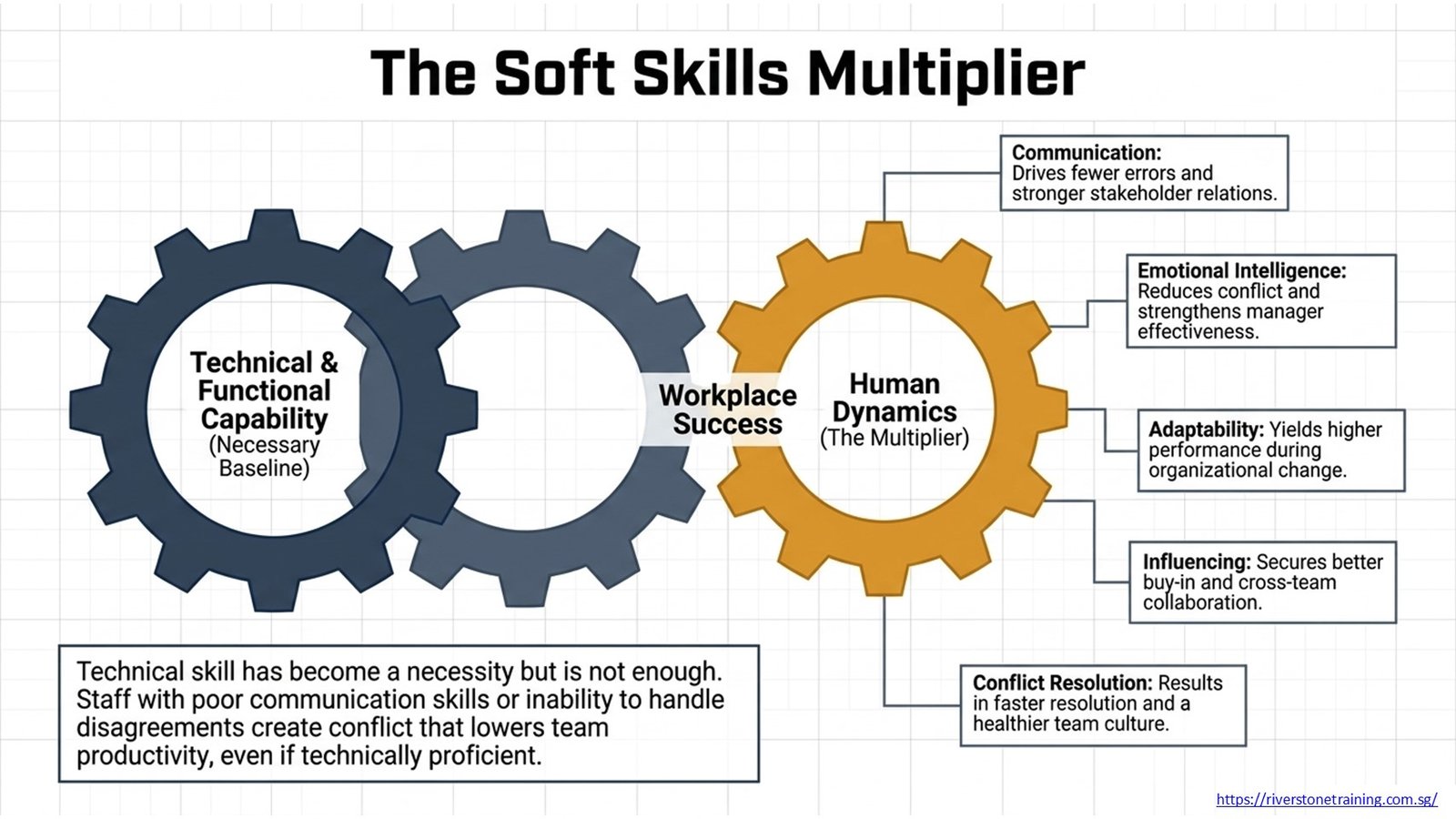
However, soft skills training corporate programs are essential to workplace success, as they help to build interpersonal and emotional skills that are not taught through technical training: communication, emotional intelligence, conflict resolution, adaptability, and influencing. These abilities influence employee working relationship skills, change management, and the ability to contribute to team performance.
Technical skills have become a necessity, but are not enough in today’s work environment. Staff who have poor communication skills, are unable to handle disagreements well, and/or are not self-aware create conflict, which lowers the team’s productivity, even if technically proficient. Corporate soft skills training programs clearly positively impact the human dynamics that are essential to successful collaboration, engagement, and organisational effectiveness.
Table 3: Soft Skills Training Corporate — Key Skills and Workplace Benefits
| Soft Skill | Training Focus | Workplace Benefit |
| Communication | Active listening, structured messaging, feedback delivery | Fewer errors, better alignment, stronger stakeholder relations |
| Emotional Intelligence | Self-awareness, empathy, emotional regulation | Improved teamwork, reduced conflict, stronger manager effectiveness |
| Conflict Resolution | De-escalation, mediation, structured dialogue | Faster resolution, lower turnover, healthier team culture |
| Adaptability | Change readiness, resilience, and problem-solving under pressure | Higher performance during transitions and organisational change |
| Influencing and Persuasion | Stakeholder management, negotiation, confidence | Better buy-in on initiatives, stronger cross-team collaboration |
How Do HR Training Programs Support Employee Engagement?
HR training programs benefit employee engagement in two ways: by showing employees that their organisation is investing in them, which is a direct contributor to employee commitment and retention. Structured development opportunities are linked to considerably higher engagement scores as compared to organisations that lack structured learning and development.
In addition to retention, training is key to employee engagement through providing the necessary skills or confidence for employees to perform successfully. Well-designed HR training directly addresses the feeling of lack of skills, lack of value, and lack of clarity of expectations. When managers are trained in coaching conversations, they can reinforce learning and development in the day-to-day interactions with their employees, expanding this effect.
How Do Organisations Design Effective HR Training Programs?
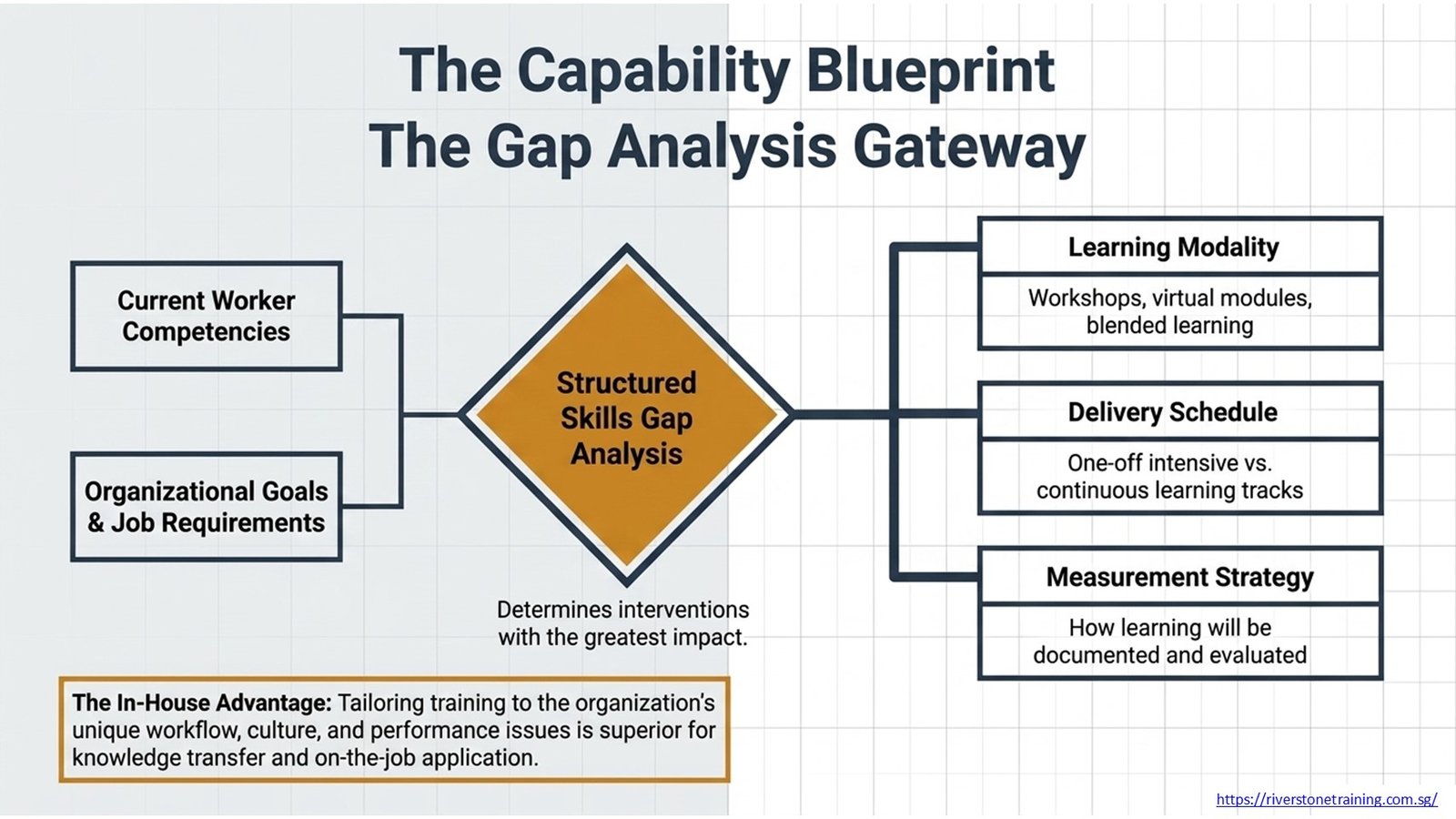
The first step in creating effective HR training programs is to conduct a structured skills gap analysis, which involves comparing the current competencies of workers to the competencies needed to meet job requirements and organisational goals. This analysis will determine what training interventions will have the greatest impact and will influence choices of program format, program content detail, and program delivery approach.
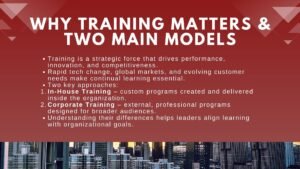
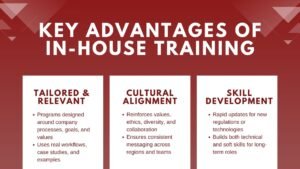
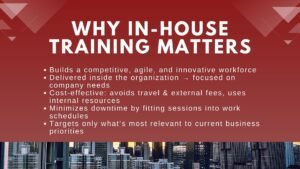
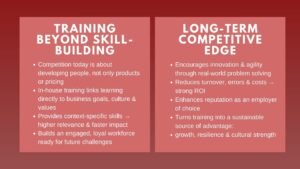
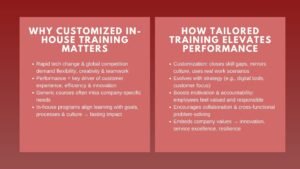
Design considerations then focus on learning modality (workshops or virtual modules or blended learning), delivery schedule (one-off intensive or continuous learning tracks), and the measurement (how will the learning be measured, documented, and evaluated). In-house training, which tailors training programs to the organisation with its unique workflow, culture, and performance issues, is always superior in all aspects of knowledge transfer and application on the job.
What Skills Are Developed Through HR Training Programs?
HR training programs focus on 3 general areas of competency: functional/technical skills (HR tools, processes, and job knowledge), compliance/regulatory skills (HR workplace legislation, safety, data protection, ethics), and interpersonal/leadership skills (communication, emotional intelligence, conflict management, team effectiveness).
The type of skills covered will vary depending on the capability gaps within the organisation and the workforce development strategy. Leadership Development and Cross-Functional Collaboration training are priorities for high-growth organisations. Compliance and technical ability are the main concerns for regulated industries. For organisations in cultural change, soft skills and change management training are heavily invested in to drive adoption.
How Do HR Training Programs Improve Team Collaboration?
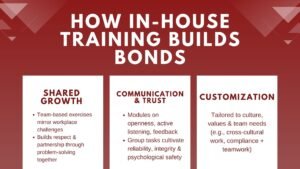
HR training programs help build team cohesion by cultivating communication norms, interpersonal and conflict-resolution strategies that allow teams to collaborate effectively in stressful situations. If everyone involved in a team knows the same system for providing feedback, resolving differences, and addressing interdependencies, then they will collaborate more consistently and productively.
The contextualization of learning to real team dynamics by team-based training (in which intact teams attend workshops together) helps to speed up the process of improving collaboration. Companies with HR training programs that are implemented in cross-functional teams see faster project completion, fewer escalations, and increased peer accountability within the trained teams.
Table 4: Training Impact Measurement Framework
| Measurement Level | What Is Measured | Method |
| Reaction | Participant satisfaction and immediate feedback | Post-training surveys and trainer evaluations |
| Learning | Knowledge retained and skills demonstrated | Pre/post assessments, role plays, quizzes |
| Behaviour | On-the-job application of trained skills | Manager observations, 360-degree feedback, performance reviews |
| Results | Business outcome improvement | Productivity data, error rates, attrition, sales metrics |
| ROI | Financial return on training investment | Cost-benefit analysis comparing training cost to performance gains |
How Can Companies Measure Training Effectiveness?
Effectiveness of training is measured through a framework consisting of four levels of impact – immediate reaction of the participant, development of knowledge and skills, change in the participant’s behaviour, and measurable business results. The Kirkpatrick model, or the Kirkpatrick system, helps L&D teams to tie the training they’ve invested in to actual performance results instead of just satisfaction scores.
Some of the practical measurement tools are pre- and post-training assessment, manager observation checklist, 360-degree feedback surveys, business performance data like error rates, productivity data, attrition data, etc. Organisations that embed measurement into the learning design process from the start, instead of looking back on the effects of the program, have much more meaningful data to inform future learning programs.
What Are the Common Challenges in HR Training Implementation?
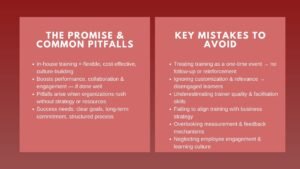
The most frequently occurring obstacles to the implementation of HR training are low participation rates, lack of management support post-training, lack of the right training content for specific jobs, and lack of time allocation in operational training programs. Workload pressure is always a competing factor and thus scheduling, leadership buy-in and manager accountability are essential success factors with regard to training.
Relevance of the content is another significant aspect. When employees feel training is not relevant to their day-to-day work, they quickly lose interest and don’t retain much. The answer lies with the development of custom programs that meet real workplace needs, role-specific case studies and skills that can be put to use within days of workshop completion. In-house training delivery, which involves delivering training in-house with business-specific content directly and immediately, fills this gap in relevance.
How Do HR Training Programs Differ Between SMEs and Large Organisations?
HR training in SMEs is often more specific, more inter-disciplinary, and more economical – covering core competencies in compliance, communication, and leadership, usually in shorter-duration training, targeted at multiple levels of employees in the organisation. The managers of the SMEs train alongside the employees, fostering common language and quicker behavioural alignment.
Large corporations, on the other hand, have tiered training architectures with individual programs for various roles at each level, ranging from executive leadership academies to frontline onboarding programs. They have L&D teams, LMS, annual learning programs, etc. The basic rules of effective HR training are unchanged, irrespective of size of the organisation: Training must be needs-based, practically designed, and must be linked to measurable performance outcomes.
Table 5: HR Training Programs — Skills, Benefits, and Impact Summary
| Training Focus | Key Skill Developed | Organizational Impact |
| Compliance Training | Regulatory knowledge and policy adherence | Reduced legal risk and operational liability |
| Soft Skills Training | Communication, EQ, and conflict resolution | Improved collaboration, morale, and retention |
| Leadership Training | Coaching, delegation, and performance management | Higher team output and stronger succession pipeline |
| Technical Training | Job-specific tools and functional expertise | Faster output, fewer errors, greater role competence |
| Team and Collaboration Training | Trust, shared accountability, cross-functional working | Reduced silos, faster problem-solving, better results |
Conclusion
HR training programs are one of the most direct levers at companies’ disposal when they want to enhance workplace performance, bolster compliance, cultivate leadership ability, and foster collaborative teams. The benefits of structured training are measurable — in productivity measures, retention rates, compliance results and the quality of daily on-the-job interactions.
Corporate programs that focus on soft skills are especially impactful, as they target soft skills that affect how well employees can communicate, collaborate and work through the complexity of today’s workplaces. Technical skill isn’t enough — employees must also be able to work collaboratively, resolve conflicts in positive ways, and embrace ongoing change.
The bottom line for HR professionals, managers and business leaders is: Workforce performance is not automatic. It is developed through targeted, planned, and consistent training programs based on actual skills deficits and business goals. Organisations that foster a culture of continuous learning – one where learning is a constant process and not a single event that happens every now and then – are more likely to retain their talent and execute their operations better over time than organisations that don’t.