Coaching and Mentoring Skills: Professional Development Workshops for Staff
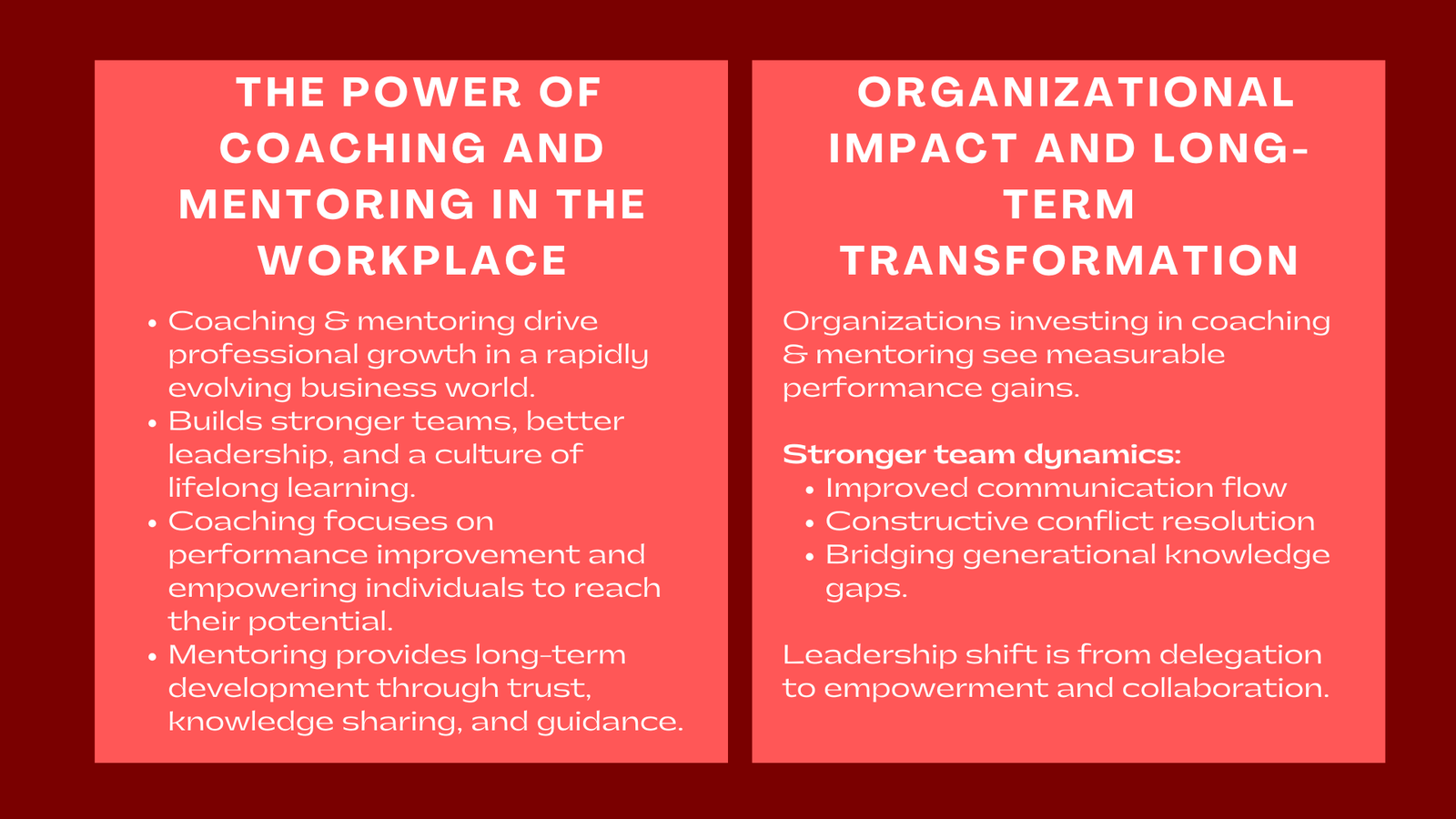
Coaching and mentoring are the current-day earmarks of professional growth in the world of rapidly evolving business where professional growth is deemed of utmost importance. When these skills are encouraged in the organizations, the organizations develop stronger teams, good leadership skills, and a culture of life long learning skills. Corporate training on coaching and mentoring skills should be well designed in order to enable the employees the capability to guide, motivate and inspire each other thus, making the work place a living learning environment.
Coaching is not only about the need to correct the gaps in performance but also empowering an individual to be at his best potential. Mentoring, on the one hand, is based on long-term development in terms of sharing the knowledge, trust, and professional guidance. By being trained in both, employees get to know how to offer constructive feedback, how to develop talent and be able to become confident in others. Such capabilities, often delivered by the best in-house training companies in Singapore, enhance the relations on both ends of the organization, as well as engagement and retention.
Building Effective Coaching and Mentoring Capabilities
It does not happen that an organization suddenly develops a good coaching and mentoring culture. It needs organized learning processes that will instruct the employees on how to listen effectively, ask effective questions, and support an effective development dialogue. During these workshops, the attendees get to understand the difference between performance-based and development-based coaching and mentoring, which is a fitted but a different process.
By defining short-term and quantifiable goals, coaching is beneficial in making employees gain new competencies in a certain field. Mentoring on the other hand emphasizes on wholesome career counseling and the cultivation of skills in the long run. The staff members undergo role-playing exercises and discussions of cases, and feedback simulations to understand how these techniques can be applied in the workplace practices. This approach highlights the importance of in-house training for employees in Singapore, ensuring that learning is practical, relevant, and impactful. Being more confident, they will be in a better position to assist their colleagues, resolve intrapersonal issues, and encourage a feeling of collective responsibility.
The Organizational Impact of Coaching and Mentoring
Companies that invest in coaching and mentoring training have quantifiable advantages. This is because the more self-oriented and confident employees are, the greater their productivity is. Team Dynamics become good since there is a better flow of communication and the conflict is settled with dignity. Most importantly, mentoring relations help in the bridging of the generation gap, as well as the maintenance of knowledge in institutions, which maintain continuity as new generations of leaders are introduced.
To managers, learning such skills can be a revolution. They also get to know how to open potential instead of merely delegating. This transition in leadership towards supportive leadership enhances morale, gains even more power through collaboration and pushes towards innovation. An organization is able to create a working environment based on mentorship, which will enable employees to feel that they are valued and supported, which is a major retention aspect of the organization. This also reflects the importance of employee training in finance Singapore, where developing leadership and mentorship skills strengthens overall organizational performance.
Conclusion to Coaching and Mentoring Skills Professional Development Workshops for Staff
There is no such thing as an isolated program of coaching and mentoring: instead, these are long term approaches of designing leadership and organizational excellence. This training enables employees to acquire an attitude and the ability to mentor others with sympathy, transparency, and boldness. These strengths accumulate over time, posing a helping atmosphere in which individuals gain quicker as well as crews accomplish more.
Finally, an organization investing in coaching and mentoring produces more than better performers, it produces better leaders as well. It builds a self-perpetuating circle of development in which knowledge, trust and co-operation will stimulate success. The employees are constantly coaching and mentoring one another and this creates a more firm, tougher culture that subsists based on collective learning and the successes made by the group.