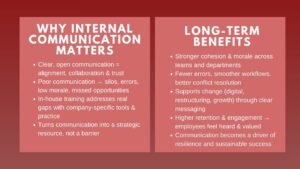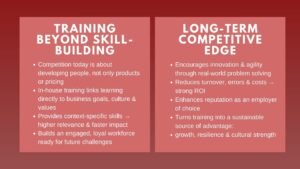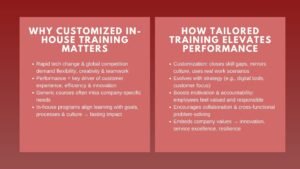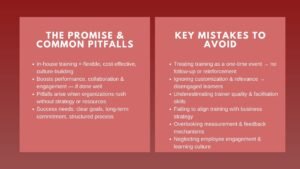
Technical skills, communication, leadership, collaboration, problem-solving, and digital skills are the types of skills that should be emphasized in in-house training for employees, as they enable them to work effectively and contribute to the overall success of the organization. Deliberate training priorities transform employee development training from a routine HR activity to an accepted indicator of performance gains.
What Is Employee In-House Training?
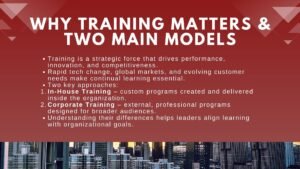
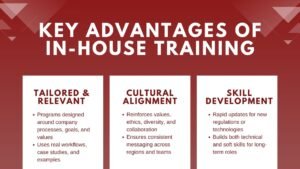
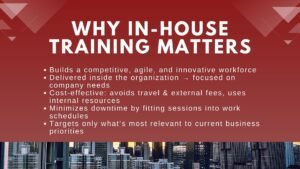
In-house training is a training method which is led by the organization, conducted in-house and not provided by any external agency, and is used specifically for the development of role-specific and company-specific capacities. It enables the organization to tailor learning content directly to meet its processes, tools and performance needs, which makes it more relevant than generic external courses.
In-house training can be tailored rapidly in response to changing business requirements since it happens onsite or via internal training platforms. An external training provider simply cannot match the speed of updating safety and process training in-house as a new machine is rolled out, as is the case for a manufacturing company.
Why Is Skills Development Important for Employees?
It is essential to consider skills development because it will have a direct impact on the way staff carry out their jobs and respond to the changing demands of the job. Current skills mean fewer mistakes, less supervision and increased team production.
In addition to current performance, structured skills development can be used to advance within a career pathway and for internal mobility. Companies that put money into employee development training will reap higher employee retention rates, as staff members are more inclined to remain at an organization where they feel they have a clear path for development.
The table below outlines core workplace skills and the business benefit each one supports:
| Skill | Business Benefit |
| Communication | Improves collaboration and reduces rework |
| Leadership | Prepares future managers for team responsibility |
| Problem-Solving | Enables faster, better-informed decision-making |
| Digital Skills | Increases productivity and process accuracy |
| Emotional Intelligence | Strengthens interpersonal working relationships |
Which Technical Skills Should Organizations Prioritize?
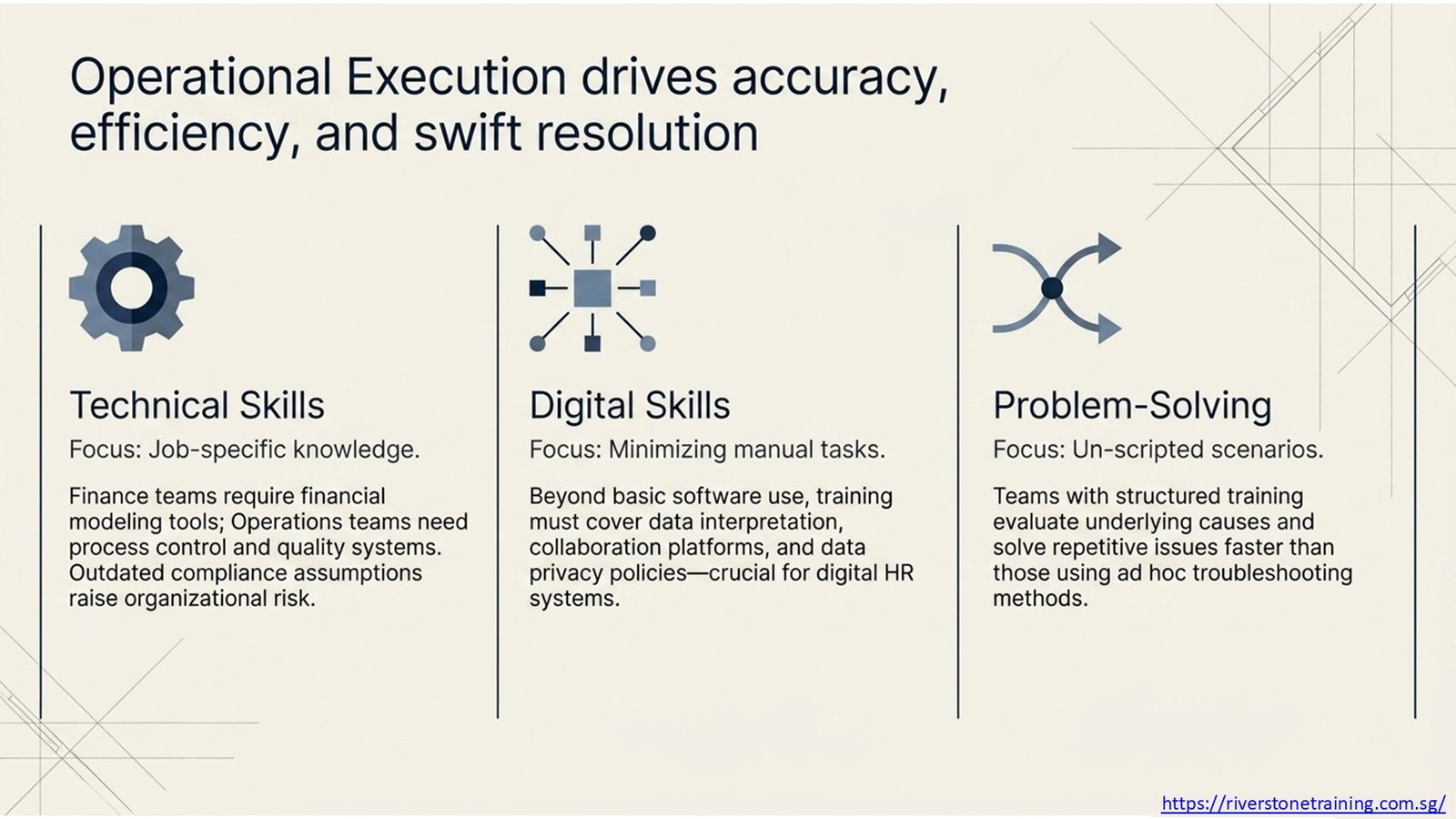
Technical skills should be those that are directly related to the tasks that are pertinent to the job and how these tasks are changing in the world. These include financial analysis, the accuracy of financial reports and the knowledge of financial modelling tools for finance teams and process control and quality systems for operations teams.
The review of the technical training must be carried out on a regular basis, as tools and regulations evolve over time. For example, a finance team that hasn’t trained in reporting for several years might still be relying on outdated compliance assumptions that are raising the risk for the organization.
Skill categories generally fall into four groups, each contributing differently to workplace performance:
| Category | Example Skills |
| Technical Skills | Job-specific knowledge and tools |
| Soft Skills | Communication, teamwork, adaptability |
| Leadership Skills | Coaching, delegation, feedback |
| Digital Skills | Data analysis, collaboration platforms |
Why Are Communication Skills Essential in the Workplace?
Because most problems in the workplace stem from a lack of communication, and not from a technical error, communication skills are a must. Clear communication leads to fewer reworks, quicker issue resolution and better interdepartmental cooperation from employees.
Communication training is comprehensive, consisting of written and verbal communication skills as well as being able to give constructive feedback and explain information to various audiences. Communication training, for instance, has been developed to help sales teams communicate more clearly with customers and listen to them.
How Does Emotional Intelligence Improve Team Performance?
EI strengthens team performance by helping members to control their emotions and gain insight into other team members’ emotions when dealing with stressful situations. EI teams have fewer unresolved issues and bounce back from failures better.
Employee in-house training that builds emotional intelligence and interpersonal skills, such as the programs outlined in these emotional intelligence and interpersonal skills workshops, gives employees practical tools for managing workplace relationships. This directly bolsters cooperation, especially with cross-functional teams where conflicts may arise.
What Leadership Skills Should Future Managers Develop?
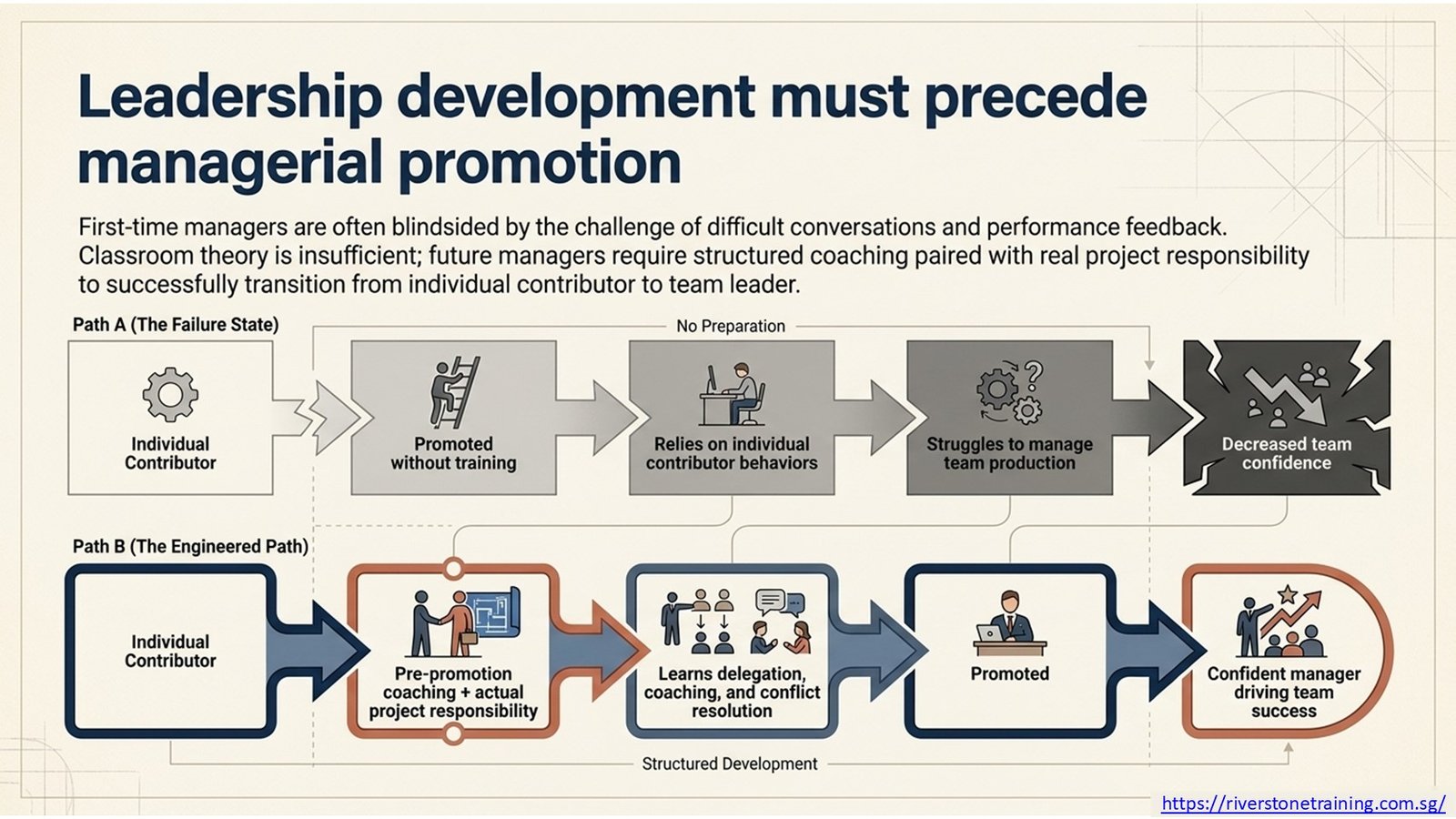
To be a good manager, future managers will have to learn how to delegate, coach, and make decisions, which should all be done prior to being assigned a formal managerial position. Otherwise, there is a risk that employees will not be prepared for promotion and may find it difficult to transition from individual contributor behaviors to managing team production.
Performance feedback and conflict resolution are also important areas of leadership development, as new managers are often unsuspecting the challenges of difficult conversations. First-time managers are more confident when they have structured coaching programs, combined with actual project responsibility, than they are when they just attend a classroom.
Why Is Problem-Solving a Critical Workplace Skill?
Problem-solving is essential because many problems will arise during the working day which cannot be foreseen by the organisation, and a procedure can’t be written for each of them. There is less delay, and small problems don’t become big problems when employees are able to evaluate a situation, consider the options and make swift decisions.
When training incorporates problem-solving and thinking, employees can assess the underlying causes instead of going with the first solution that comes to mind. Teams with structured problem-solving training usually solve repetitive issues in processes more quickly than teams with ad hoc methods of troubleshooting.
How Can Digital Skills Improve Employee Productivity?
The increased productivity of digital skills is due to the fact that they minimize manual and repetitive tasks for workers and allow them to quickly get the right information. Staff members who are familiar with collaboration platforms, data tools, and automation features can execute routine tasks with fewer mistakes.
With the development of technology in the workplace, digital literacy training should not only cover the use of software, but also the interpretation of data and the handling of secure information. Digital HR systems, such as those used to handle employee data, should be trained on the software and its data privacy policies.
How Does Teamwork Contribute to Organizational Success?
Teamwork helps achieve organizational success because the various skills are better utilized to achieve the common objectives than when individuals work alone. A good team works collaboratively and identifies mistakes that one person may not.
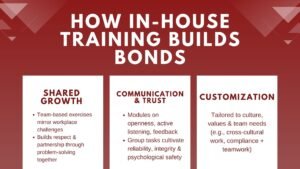
Engaging, collaborative training sessions such as structured exercises and cross-departmental initiatives foster trust and shared responsibility. Companies that provide teamwork training tend to complete projects quicker because there is less time wasted on the lack of communication between all parties in the project.
Why Should Companies Invest in Continuous Learning?
Investing in continuous learning is good business practice because the skills you are using now may not be sufficient as the job, the tools and the industry change. This is because a single training session is insufficient to keep up with these changes.
Continuous learning also contributes to employee engagement as those who perceive that there is ongoing investment in their learning are more likely to be engaged. Frequent, brief training sessions within the work week generally result in retention of skills over longer sessions that are less frequent.
How Can Organizations Identify Employee Skill Gaps?
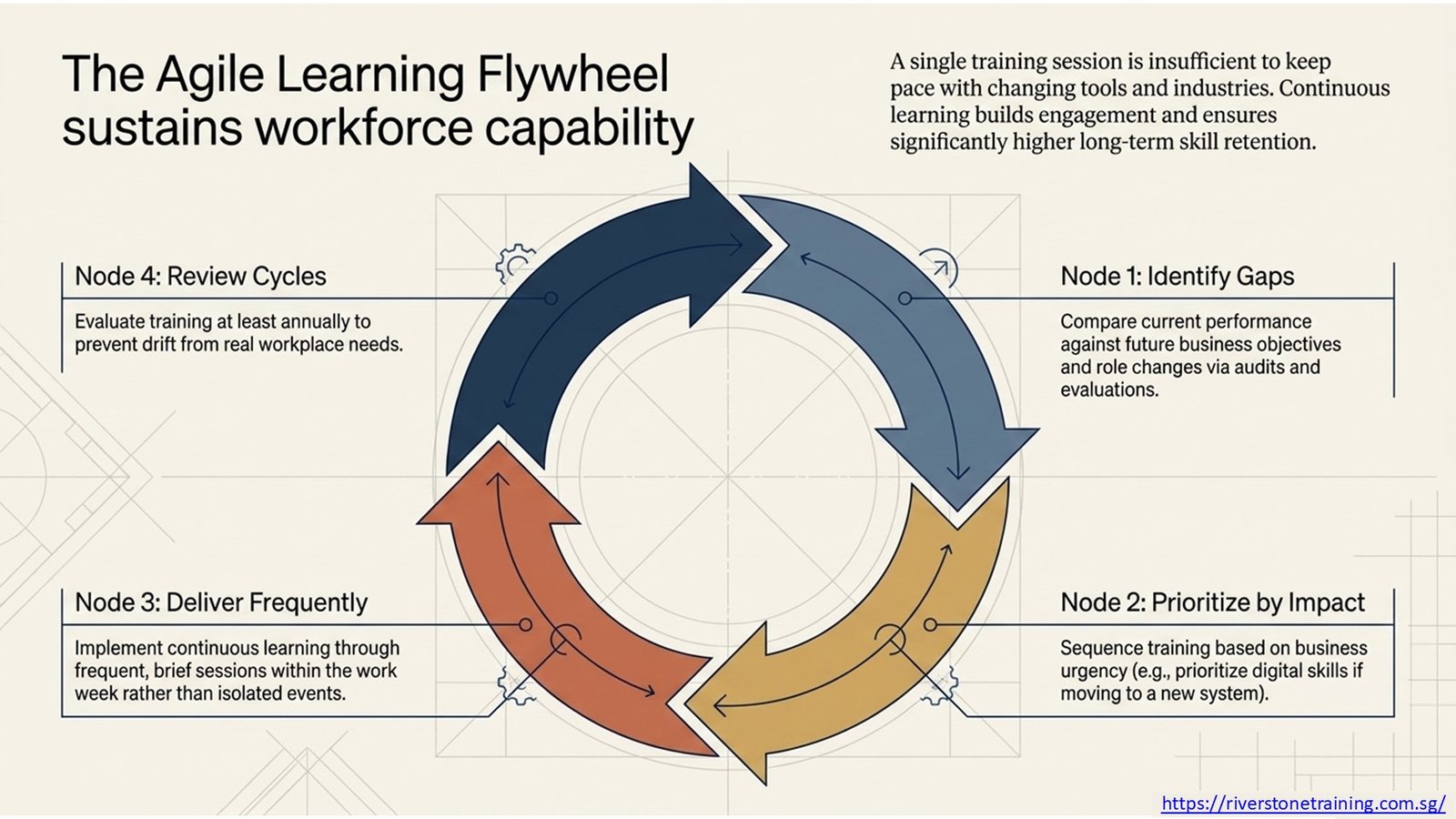
Skill gaps can be identified by comparing employee performance and skills to future business objectives or employee role changes. Common methods include skills audits and manager and/or performance evaluations.
Training priorities should be prioritized in terms of business impact after gaps have been identified instead of prioritizing all of them in one. Digital skills training should be given priority over less time-sensitive soft skills training in a department that is getting ready to move to a new system.
How Does Employee Development Training Improve Business Performance?
Training for employee development boosts the performance of a business by closing the gap between the abilities of the employees and the requirements of the business to implement its strategy. As detailed in this overview of employee development training, structured programs translate individual skill growth into measurable organizational outcomes such as reduced errors and faster project delivery.
The better the link between training and performance, the stronger the link between the training and the business metrics, such as reporting accuracy or customer response time. This makes it simple for the ROI of training to be presented to leadership.
How Can In-House Training Be Customized for Different Departments?
In-house training can be tailored to the requirements of each department, making use of the current skills requirements, the specific responsibilities of the departments and the challenges that they face. While the commonalities in soft skills exist, finance teams still require some training emphasis that is different to that of sales or operations people.
Customization also covers the delivery method—they might be interested in a hands-on workshop, or a discussion of case studies might work for them. A department-specific approach allows the employees to spend time in training on skills that are relevant to their daily work rather than on generic content.
Common department-level training priorities include:
| Department | Training Focus |
| Finance | Financial analysis and reporting accuracy |
| Sales | Negotiation and client communication |
| HR | Employee engagement and compliance |
| Operations | Process improvement and efficiency |
How Can Companies Measure Employee Training Effectiveness?
Instead of using participant satisfaction surveys, companies can track certain performance metrics pre and post-training. Some of the indicators that are useful are the error rate, the speed of output and the proportion of internal promotion.
Manager observation and follow-up assessments also support the confirmation of training skill transfer to the job. Otherwise, companies may be training with no impact on actual behavior in the workplace.
What Makes an Effective Employee Development Strategy?
A successful employee development program integrates employee learning with specific business goals as opposed to providing training as a separate advantage. It’s a blend of technical, soft skills, and leadership development, respectively tailored to organizational needs.
The best strategies also incorporate review cycles, which enable training priorities to change as business objectives and staff evolutions evolve. This ensures that employee in-house training remains relevant over time rather than becoming a set training that slowly drifts off course from actual needs.
Common employee development methods, and the purpose each one serves, are summarized below:
| Method | Purpose |
| Workshops | Practical, hands-on skill development |
| Coaching | Individual, targeted improvement |
| Case Studies | Real-world application of concepts |
| Role-Playing | Communication and leadership practice |
The summary below brings together the core skill priorities discussed throughout this guide:
| Priority Area | Why It Matters |
| Technical Expertise | Supports accurate, role-specific execution |
| Communication | Reduces errors and improves collaboration |
| Leadership | Prepares employees for management responsibility |
| Problem-Solving | Speeds up decision-making and issue resolution |
| Digital Skills | Increases efficiency and adaptability |
Conclusion
The following skills should be developed through in-house training for employees: Technical expertise, communication, leadership, collaboration, digital capability and problem solving – these skills will have a bearing on how well employees perform in the job and how well they adapt to change in the business. By matching training needs with business needs – not a list of skills – learning dollars are invested in measurable performance improvements and improved employee career paths.
Employee development training is a long-term investment in workforce capacity, and employee in-house training is a short-term investment in learning experience that can be applied directly to the workplace to create immediate positive results for the organization. Companies that view skills development as a continuous, systematic approach instead of a single event are more likely to be adaptable and grow in a sustainable manner. To invest in structured in-house training today is a practical move for developing the workforce to be able to meet future demands of business.