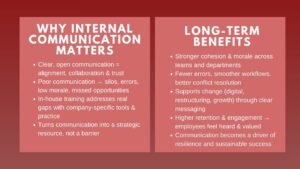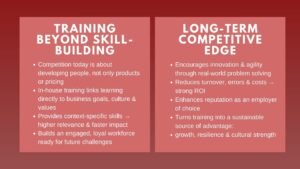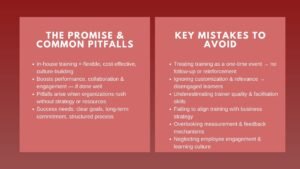
In-house leadership training helps to develop future leaders by providing them with communication, strategic thinking, decision-making, coaching, and team management skills through experiences created in the organisation. This is a hands-on training program, which is facilitated in-house and embedded in real work situations and translates to leadership skills that are directly applicable to day-to-day business.
What Is In-House Leadership Training?
In-house leadership training is a tailored leadership training program that is conducted in-house to enhance leadership capacity in any organisation at all levels. Unlike standard external courses, it is based on the company’s culture, processes, and authentic business issues. Facilitators generally collaborate with HR and business leaders to come up with the key competencies that will be relevant to the organisation’s objectives.
This way, participants can use the leadership tips in their own work group and project. It’s used by organisations to train their supervisors, managers and high potentials for higher responsibilities and to ensure learning is relevant to day-to-day operations. Since sessions are based on the organisation’s own systems and terminology, the lessons can be implemented within the same week of learning.
Why Should Organizations Develop Future Leaders Internally?
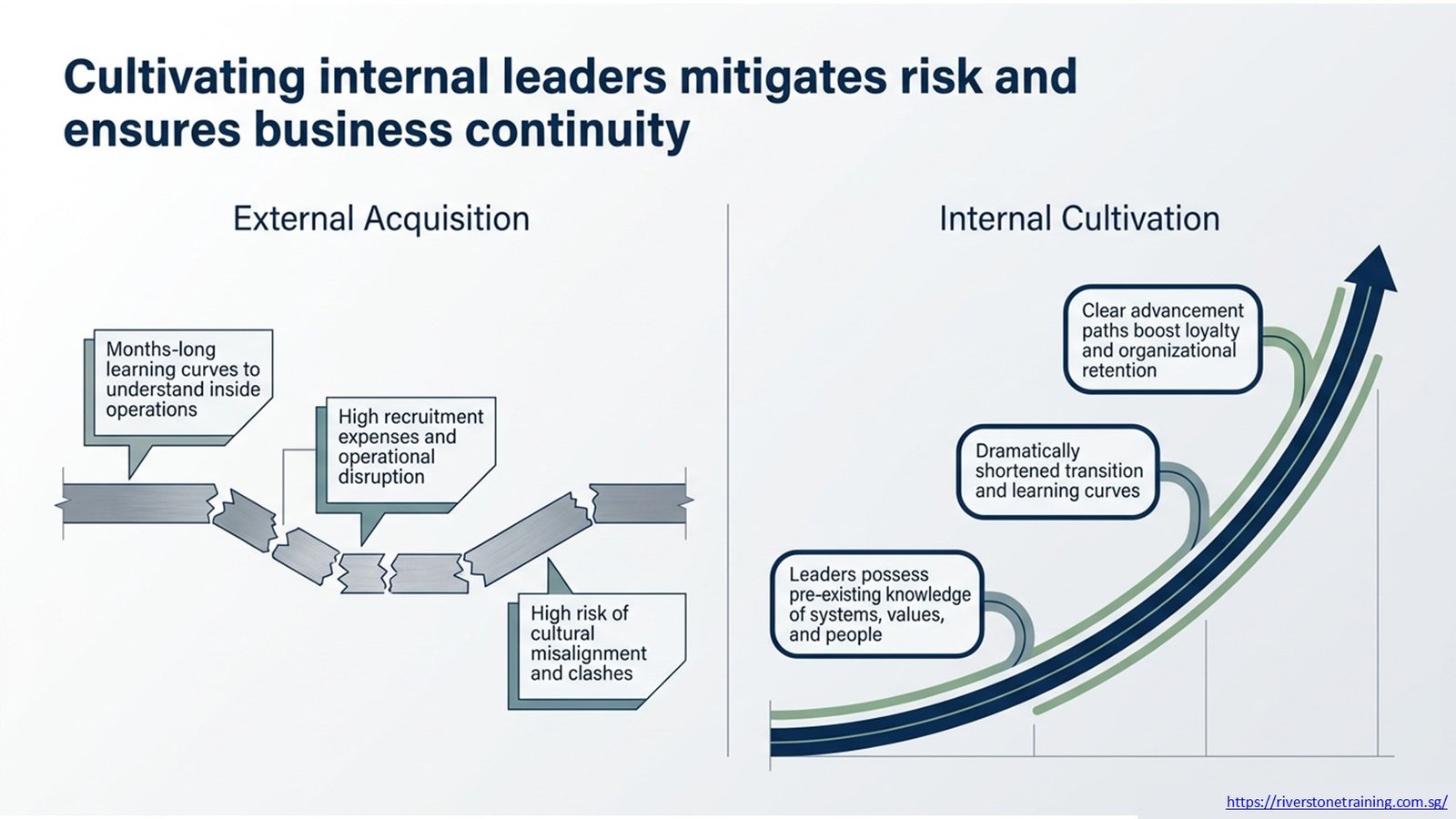
When leaders are developed in-house, they learn the systems, values, and people of the organization before they assume leadership. This will shorten the learning curve and help to ensure business continuity during transitions. It also reduces the risk associated with bringing in an outside contractor who could take months to get a handle on the inside operation.
In-house leadership development also boosts employee retention. If employees are clear about the possibility of advancement and promotion, they will be more likely to remain loyal, and this will save on recruitment expenses and disruption. This fosters a company culture that believes in growth and development, and that it is possible to grow and develop into leadership roles within the company, not just by hiring someone else.
How Do In-House Training Workshops Support Leadership Development?
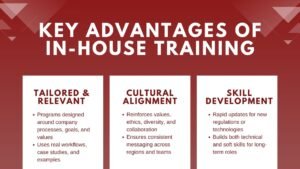
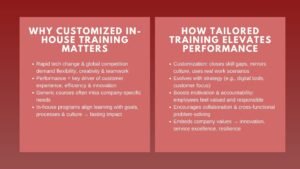
In-house training workshops are designed to foster leadership development through structured learning combined with practical application in real-world scenarios. The exercises are developed by facilitators based on the actual problems faced by the organization; therefore, the skills being developed by the participants are applicable in the organization. This customization strengthens skill transfer and improves employee capability, collaboration, and productivity, as outlined in this overview of in-house training workshops.
Teams also develop a common language and expectations within the workshop for leadership behavior. This uniformity facilitates new leaders to learn and implement their education without bringing mismatched management approaches to the different departments. It also helps HR and senior leadership to monitor progress as everybody is assessed using the same competency framework.
What Communication Skills Do Future Leaders Need?
Future leaders must have the ability to communicate clearly, directly, and effectively to unite, set expectations and conduct performance dialogues. This includes listening actively, providing constructive feedback, and adapting to different audiences. Good communicators can likewise make the strategic objectives familiar in plain, clear directions that the team can follow.
In-house leadership training develops these skills through role-play and real scenario training, for example when having to give feedback to a team member doing a poor job, or when making a business case to a senior member of the team. Confidence is developed in a safe environment before leaders encounter these situations in the workplace. Facilitators can also provide instant feedback on tone, clarity, and delivery to help accelerate the learning of skills.
How Does Leadership Training Improve Decision-Making?
Leadership Coaching enhances decision-making by providing leadership and learning frameworks for assessing alternatives, risk analysis, and making timely decisions in stressful situations. Leaders learn to know the difference between urgent and important and avoid decision paralysis. They also acquire skills to distinguish between decisions that need more widespread consultation and those that it is possible to make alone.
Case studies are frequently taken from the organization’s experience in the workshops, which allow leaders to practise applying frameworks to real-life situations. This develops the judgment to make quicker and more confident business decisions. Over time, leaders are able to make good decisions even with limited information by noticing patterns.
How Can Managers Develop Coaching and Mentoring Skills?
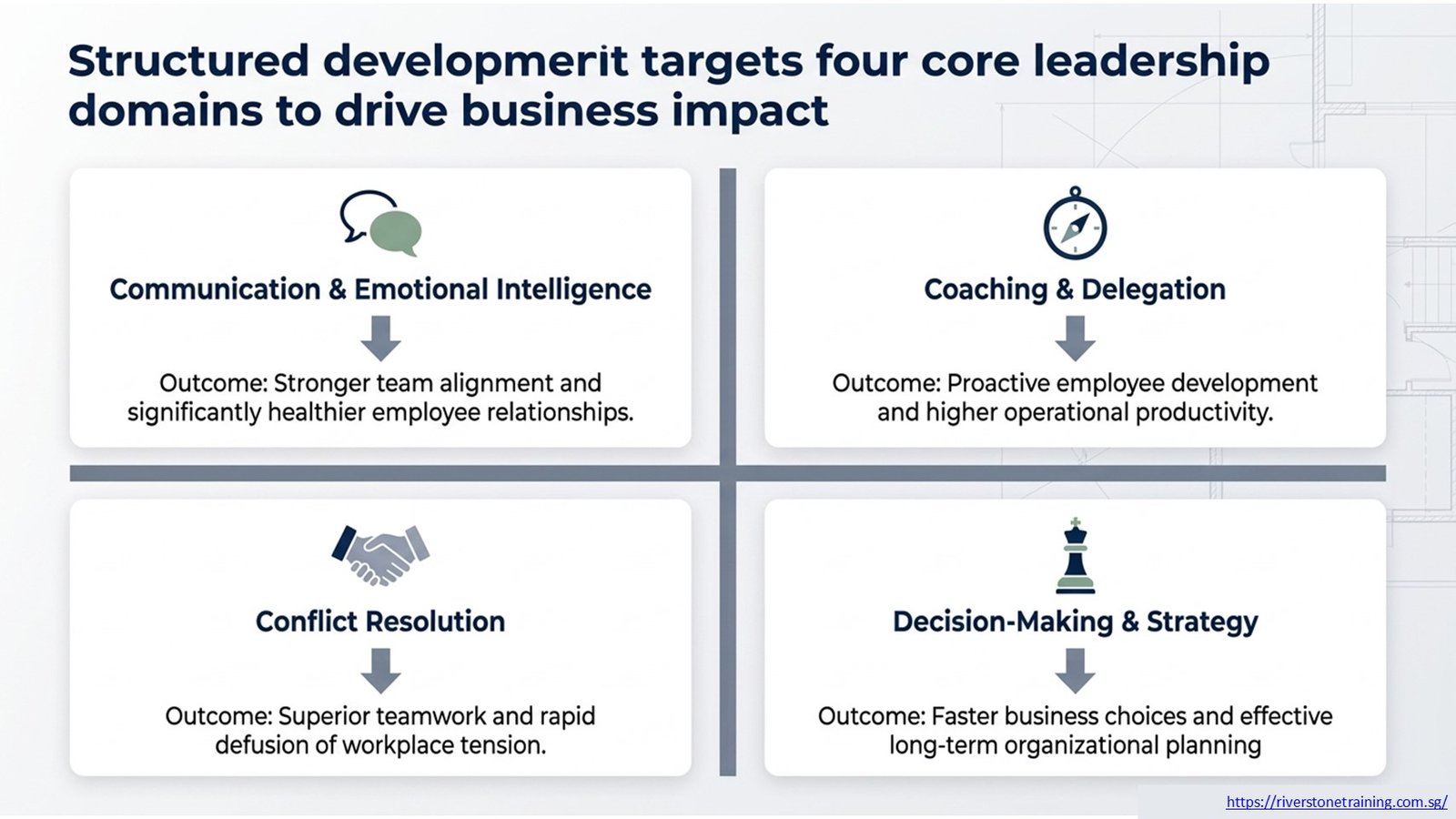
Coaching and mentoring skills are developed by managers by learning how to ask effective questions, set development goals, and guide employees to solutions, not just instruct them. This moves the manager from a supervisor to a development partner. This also empowers workers to assume more responsibility for their individual development and troubleshooting.
Training workshops are usually held in-house and feature sessions with coaching practice exercises in which managers practice scenarios of employee development. This practical approach will help managers become accustomed to nurturing the practice of employee development for the long term. Skill gaps are also identified early, by means of regular coaching conversations which are supported by training, before they impact on performance.
Why Is Emotional Intelligence Important for Leaders?
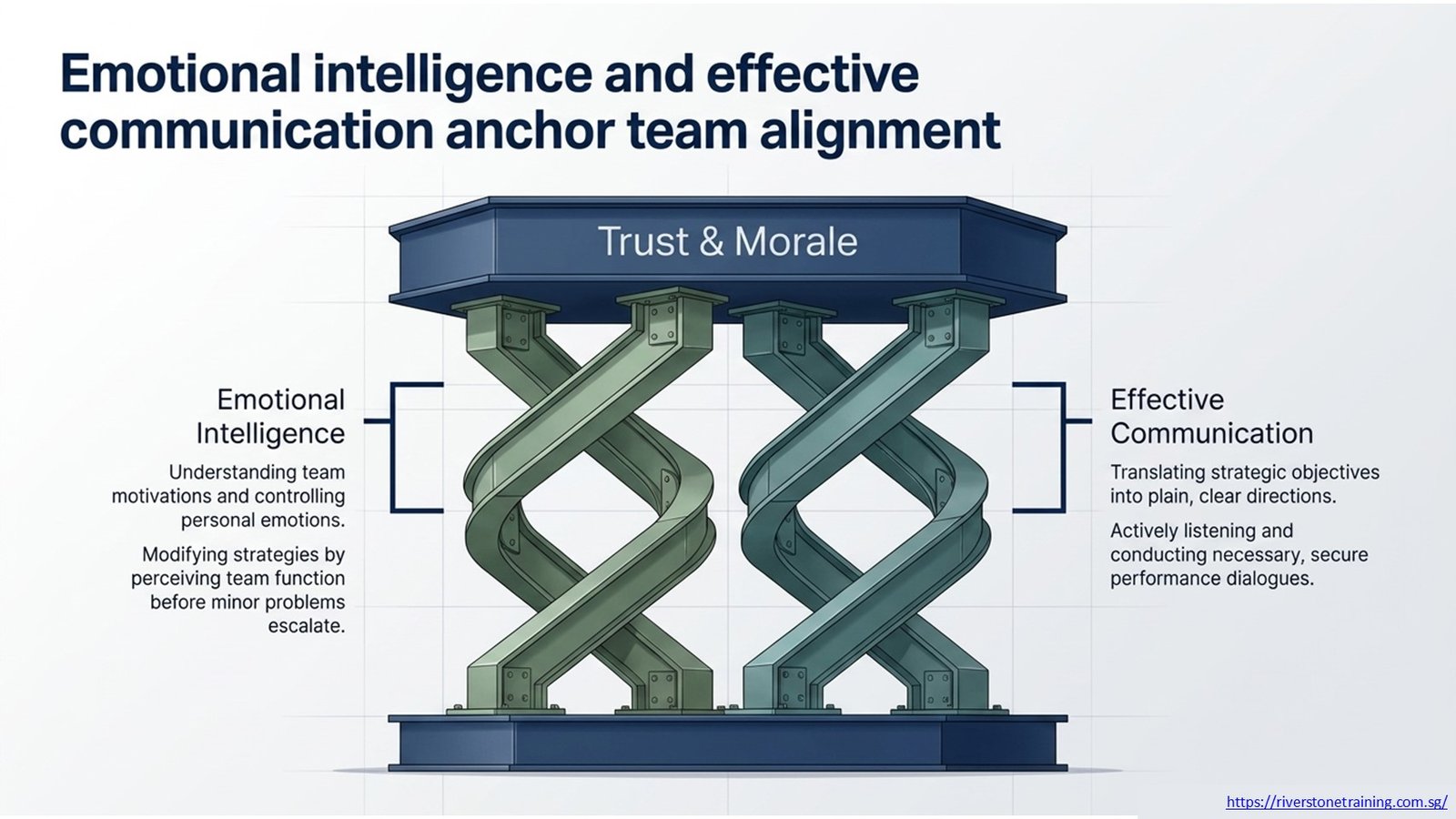
EI also enables leaders to see things from a different perspective, to control their own emotions and to understand the emotions and motivations of their team members. This can help to foster trust, alleviate tension, and keep morale positive during difficult times. Leaders who are emotionally intelligent are also more likely to be able to perceive how their team is functioning and modify their strategy before minor problems become major problems.
Leadership Training exercises build emotional intelligence through self-assessment exercises and guided reflection of real-life interactions. Leaders with this skill will be more at ease in leading diverse teams and have better communication abilities in a challenging situation. As companies become more diverse and teams operate in various functions and locations, this capability becomes more and more crucial.
How Does Leadership Training Strengthen Team Management?
Leadership training boosts team management by providing training in delegation, performance monitoring, and workload balancing. Leaders develop the ability to allocate tasks effectively, using other individual team members’ strengths, and to ensure accountability throughout the team. This helps to eliminate bottlenecks where a manager is attempting to take on too much on his own.
Training also includes effective team meeting skills and expectations for performance. These hands-on tools assist leaders in maintaining team unity and effectiveness, even when priorities change. Leaders also become aware of early warning signs of burnout or disengagement in their teams.
How Can Leaders Improve Conflict Resolution Skills?
Leaders develop strategies to improve conflict resolution by learning how to understand the underlying issue of a conflict and to help have a positive conversation between parties. The emphasis of training is on neutrality, listening to all sides, and helping teams get to a solution. Leaders also learn ways to defuse tension prior to a disagreement impacting team performance.
Each practical exercise represents a typical conflict in the workplace: for example, resource allocation or work style conflicts. Demonstrating these scenarios allows leaders to respond properly and fairly in actual conflict. This preparation helps to prevent the potential damage of unresolved conflict to collaboration or employee morale.
How Do Organizations Build Strategic Thinking Through Leadership Training?
Organizations develop strategic thinking by training leaders to relate day-to-day actions to business objectives. This involves researching market trends, exploring financial considerations, and considering future consequences instead of short-term solutions. Leaders also develop an understanding of how their decisions in one department can impact other areas of the organization.
Frequently, in-house leadership development involves sessions with strategy planning that reflect the organization’s real goals and challenges. This is to help future leaders practice thinking outside of the box of their team roles. This ‘big picture’ view is crucial as leaders move into the next level of their roles to lead the direction of their organizations.
How Can Leadership Training Increase Employee Engagement?
Teaching employees how to be a leader boosts employee engagement by teaching them to identify and appreciate the contributions of others, to give relevant feedback, and to establish a sense of purpose in their team. Retention rates go up and productivity increases when employees are engaged. Leaders also understand how to relate specific tasks to company and team goals to increase motivation.
Those who have received training in engagement strategies can be more conscientious in detecting the precursors of disengagement and take steps to prevent their impact on performance. This proactive strategy safeguards team spirit and business productivity. A consistent method of communicating concerns early – regular check-ins – also helps employees to build this habit during training.
How Do Organizations Measure Leadership Training Success?
Leadership training effectiveness is determined by a range of performance indicators, observation, and feedback from colleagues. Some typical ones are better team performance, higher retention rates, and better internal promotion rates. There are also some organisations that measure the time it takes for new leaders to move onto new tasks.
Pre- and post-testing is also common in many organizations in order to measure the gains in particular skills like communication effectiveness or decision-making speed. These measurements can be used to fine-tune training programmes in the future. Direct report and peer feedback can also confirm leadership behaviors are indeed different on the job.
What Skills Do High-Potential Employees Develop?
High-potential employees build technical leadership skills and soft skills such as communication, coaching, strategic thinking, and change management. These skills are geared towards their future responsibilities before they formally enter leadership positions. Many also develop an early familiarity with budgeting, planning and cross-functional working.
In-house leadership training is designed in a structured way and provides these employees exposure to leadership challenges in a supported environment, thereby minimising risk when these employees eventually move to a formal leadership position. During this process, they are also mentored by senior leaders to further help them prepare for promotion.
Why Is Continuous Leadership Development Important?
Leadership challenges are constant, as they change in relation to the growth of the organization, changes in markets, and changes in teams. Continuous leadership development is important. Leaders can’t be trained for all future situations in one training session. Continuously evolving team makeup and changing employee expectations, along with new technologies, also require adjustment by leaders.
An in-house training programme is ongoing to keep leaders up to date with fundamental skills and new approaches. This long-term investment ensures leadership capability is matched to an organization’s development. It also conveys a message to staff that investing in leadership is a continuous process, and not a one-off.
How Can Organizations Build a Sustainable Leadership Pipeline?
To create a sustainable leadership pipeline, organizations look for high-potential employees and give them a structured pipeline of ongoing development. Programs such as in-house leadership training ensure that leadership skills are built consistently across departments rather than relying on ad hoc development.
A robust pipeline helps minimize the risk of leadership gaps when higher-level staff retire or move on, and assists in making sure that promoted leaders already have the skills necessary for their new job. Organizations that make investments in this pipeline year after year are better equipped to maintain the performance they achieve.
Leadership Competencies Table
| Leadership Skill | Workplace Application |
| Communication | Team alignment |
| Decision-Making | Faster business decisions |
| Coaching | Employee development |
| Strategic Thinking | Long-term planning |
Leadership Skills and Workplace Applications Table
| Skill | Business Benefit |
| Conflict Resolution | Stronger teamwork |
| Delegation | Higher productivity |
| Emotional Intelligence | Better employee relationships |
| Change Management | Successful organizational transformation |
Benefits of In-House Leadership Training Table
| Benefit | Organizational Impact |
| Customized Learning | Higher relevance |
| Practical Scenarios | Better skill transfer |
| Team-Based Learning | Stronger collaboration |
| Immediate Application | Faster performance improvement |
Leadership Development Roadmap Table
| Career Stage | Development Focus |
| Emerging Leader | Communication and teamwork |
| Supervisor | People management |
| Manager | Strategic leadership |
| Senior Leader | Organizational transformation |
Summary Table: Building Future Leaders Through In-House Training
| Focus Area | Outcome for the Organization |
| Communication and coaching | Stronger day-to-day leadership |
| Decision-making and strategic thinking | Better business outcomes |
| Emotional intelligence and conflict resolution | Healthier team dynamics |
| Continuous development | Sustainable leadership pipeline |
Conclusion
In-house leadership training reaps the benefits of systematic development of communication, strategic thinking, decision-making, coaching and emotional intelligence at every level of the organisation to prepare future leaders. These skills enable leaders to handle teams, to defuse conflict and to make good decisions in real business situations. In-house leadership programs help nurture workplace skills in future leaders, and customized in-house training workshops improve employee performance, facilitate succession planning, and contribute to the long-term success of the organization. Structured, long-term leadership development creates a succession of leaders who can help achieve repeat business success.