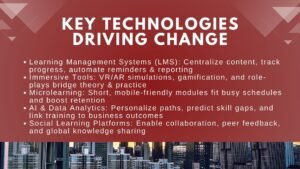
What Are Digital Skills Gaps in the Workplace?
A digital skills gap is a skills gap that arises when employees lack the necessary technical skills to carry out their job effectively with current tools and systems. This may encompass low proficiency with spreadsheets, limited experience with cloud-based platforms, or feeling uneasy with software integrated with AI tools. Often it’s not apparent until a new system is launched and adoption slows down.
These gaps can hinder daily operations, cause errors and restrict an organization’s ability to embrace new technology. For instance, if a finance team is not used to automated reporting tasks, they might still be doing manual reporting, which means low efficiency. These gaps tend to grow if they’re not resolved as business systems continue to change.
Why Is In-House Training Effective for Digital Upskilling?
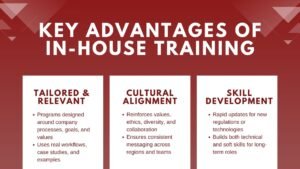
In-house training is effective because it’s designed to fit the company’s own systems, workflows, and goals, not just industry-specific information. The time between training and application is reduced as employees learn on the same software and processes they apply to their work each day. This alignment also assists trainers in highlighting real-world business situations rather than hypothetical ones for comparison.
The direct relevance boosts engagement and retention. If a customer service team practices with the company’s own CRM dashboard during the training, the skills will be transferred directly to their day-to-day work, instead of having to be translated from theory to practice. Employees are already familiar with the task, so they can perform it on their own after the session.
How Does Customized Training Address Different Job Roles?
Tailored training reflects various job roles and adapts the content to the digital tools used by each department. There is a need for training Sales teams in CRM analytics and Operations teams in process automation. On the other hand, HR teams will best benefit from learning about people analytics and digital record-keeping systems.
This is role-based teaching which eliminates irrelevant materials. Training in data visualization and campaign analytics is more beneficial to a marketing team than the traditional software orientation sessions. The sense of utility in tailoring the content by function also helps employees see why they should read, listen to, or watch the content.
What Digital Skills Should Organizations Prioritize?
Digital skills that are directly relevant to everyday tasks and objectives that drive strategic priorities should be prioritized, such as using spreadsheets for analysis, collaborating on the cloud, being cybersecurity aware, and having a basic understanding of AI. Most of these core competencies are relevant to most departments and jobs. The first step is to invest in widely applicable skills first, so that a broad spectrum of workers can gain these skills.
| Digital Skill | Workplace Application |
| Excel | Data analysis and reporting |
| AI Tools | Workflow automation |
| Cloud Collaboration | Team communication |
| Data Visualization | Business decision-making |
| Cybersecurity Awareness | Risk reduction and data protection |
How Can In-House Training Improve Technology Adoption?
In-house training ensures that employees have first-hand experience with new technology before taking to the field, which helps to foster a more positive mindset for its adoption. Trained sessions help minimize hesitation and increase confidence on new interfaces. The presence of a trainer helping with questions on the fly also helps to avoid small confusions becoming long-term resistance.
It is more likely that a tool will be used regularly by staff if they understand how it is going to help solve a real problem, such as a repetitive report. Practical knowledge is essential and frequently a deciding factor in the success of a new system or whether it is simply put away and forgotten.
Why Is Practical Learning More Effective Than Theory Alone?
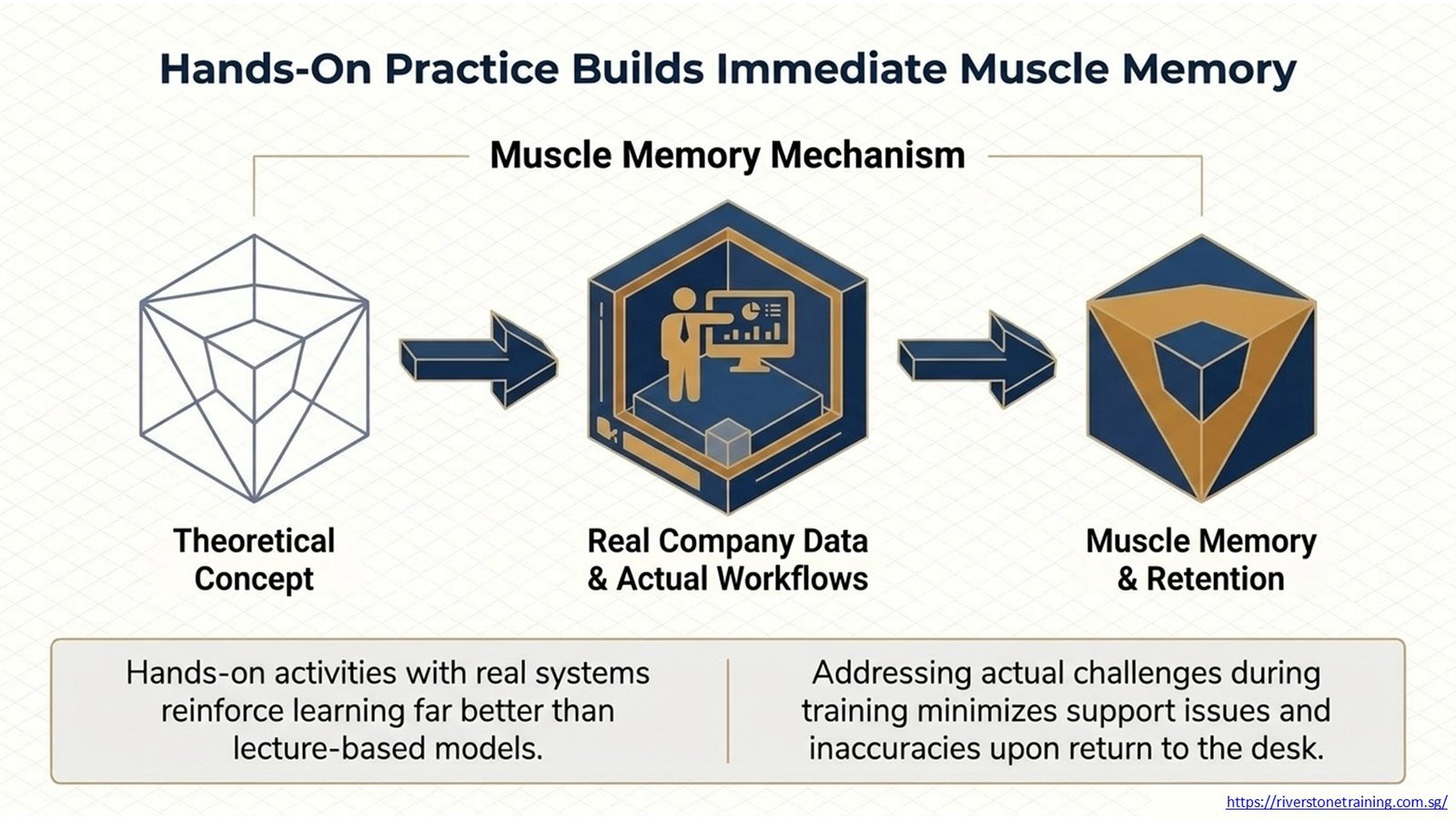
Practical learning is preferable to theory because employees are more likely to remember the skills they have learnt if they can put them into practice in a realistic situation. Hands-on activities with real company data or systems reinforce learning much better than lecture-based activities. Running through real workflows also helps cultivate muscle memory that translates to real-world tasks.
A practical approach also brings up role-specific questions/ challenges during training, and trainers can address actual challenges first before the employees face them on the job. This will minimize support issues and inaccuracies upon return to normal working hours.
How Do Managers Identify Digital Skills Gaps?
Digital skills gaps are identified by managers through talking to staff, structured Learning Needs Analysis and observation. Common signs are errors in the digital process, slow uptake of new processes or manual workarounds requested. Frequent communications with team leaders can also uncover holes in the system before they become problematic for the metrics.
| Skill Gap | Training Solution |
| Spreadsheet Skills | Excel workshops |
| Data Analysis | Business analytics training |
| Digital Collaboration | Cloud platform training |
| Automation | Process improvement training |
| Cybersecurity Practices | Security awareness training |
How Does Digital Skills Training Support Business Growth?
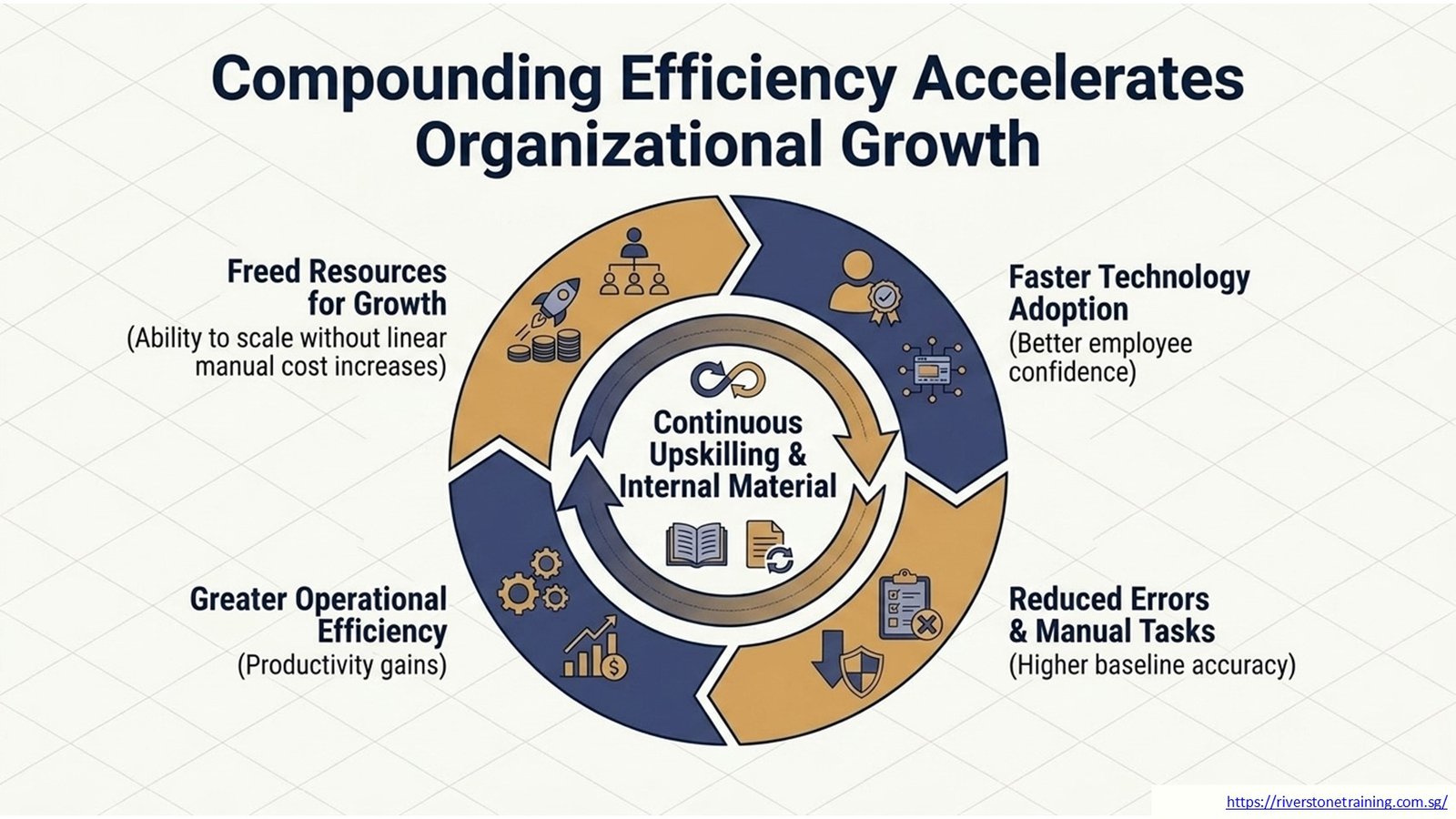
Digital skills training is a key enabler of business growth as it boosts efficiency and allows businesses to adopt and use new technologies ahead of rivals. Staff who are able to confidently leverage data and automation tools directly impact productivity gains. This service-compounding efficiency releases resources which are free for growth efforts over time.
Improved digital skills also enable organisations to scale up without having to increase the number of manual tasks or mistakes that are made. This can help in faster recruitment of new employees and ensure uniformity of standards when hiring more people.
What Is the ROI of In-House Training?
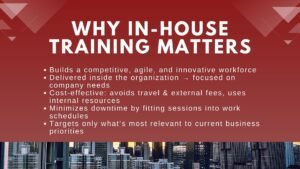
The ROI of in-house training ROI is measured through improvements in productivity, reduced errors, faster technology adoption, and lower reliance on external consultants. In-house courses are developed to fit within the existing system and often yield a quicker, more tangible return than more generic courses out of the house.
Moreover, organizations can save on long-term training expenses as there is a reduction in the need to engage external trainers again for the same tasks, as trainers can be trained and internal material reused. After an internal curriculum is developed, it can be repeatedly used and modified for several training cycles at little extra expense.
How Can Organizations Measure Digital Training Success?
Indicators of a successful digital training can be measured through participation, performance and technology usage. It is more informative to monitor completion than just attendance, as completion provides more information about on-the-job application. The best measurement of impact is pre- and post-performance data.
| Metric | Purpose |
| Productivity Improvement | Measure performance gains |
| Training Completion | Monitor participation |
| Technology Adoption | Evaluate implementation success |
| Cost Savings | Assess business value |
| Error Reduction | Track quality improvement |
How Does Continuous Learning Support Digital Transformation?
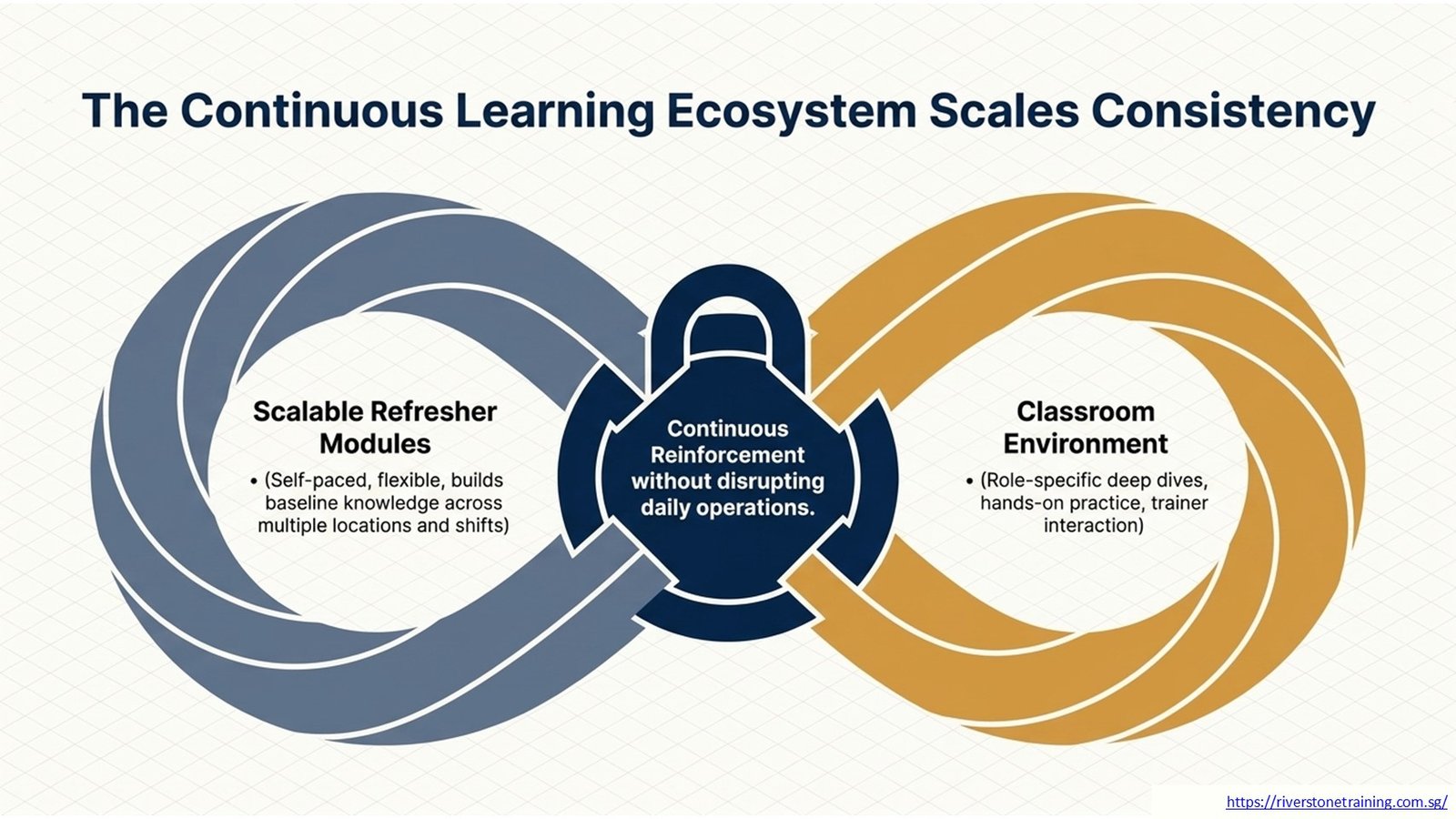
Continuous learning is essential to digital transformation because it helps employees stay current with the new tools and devices without having to catch up after just one training session. Ongoing digital skills training corporate programs can incorporate e-learning content to deliver flexible, scalable refresher modules alongside in-person sessions.
This combination of training can help employees practice skills at their own speed and learn more advanced or role-specific skills in the classroom environment. It also makes it easier to scale training across multiple locations or shift schedules without compromising consistency when used together.
What Common Mistakes Should Organizations Avoid?
Typical pitfalls include single-shot training, generic training material that is not related to the workplace, and not evaluating performance following training. Such gaps diminish the effective outcomes of the training investments in the long term. Another common error is using too many tools in one session, which diminishes the amount of tool retention.
A common mistake is not involving managers. Staff will not be as likely to integrate new digital skills into their work without support from their supervisors. There are greater rates of uptake when managers actively promote and check on tool use following training.
How Can Corporate Digital Skills Training Prepare Employees for Future Technologies?
Corporate digital skills training equips staff with the core skills of digital literacy, empowering them to be more straightforward and comfortable adapting to fresh technologies over time. It is easier for employees who possess high baseline skills to adjust to upgrades or replacements of systems. This flexibility minimizes disruptions when introducing a new platform or process in the organisation.
Educating workers now about the concepts of artificial intelligence and automation is preparing them to adapt to future technologies in the workplace. By creating this comfort early on, resistance and anxiety will be decreased when more advanced systems are later introduced.
Why Should Organizations Invest in Long-Term Workforce Development?
While digital tools and business processes evolve continuously, it is imperative that organisations invest in building skills over time and continuously renew their skills and knowledge. Continued investment protects an organization from “outdated” skills. It also allows the company to have the technology at its fingertips as soon as the technology is relevant.
Long term development also enhances employee retention, as employees tend to be more loyal to organizations that invest in their development. This decreases turnover expense and keeps institutional knowledge from being lost with the experienced employees.
How Can In-House Training Create a Future-Ready Workforce?
In-house training is a process that establishes a digital workforce for the future by putting digital competency development into the very heart of business practices. This fosters an environment where learning and technology use are ongoing. This way of doing things becomes a competitive advantage that is hard for slower competitors to catch up on.
Regular and continuous training of workers in appropriate tools helps to build adaptability within the organisation, enabling it to deal with market changes and technological shifts promptly. This flexibility will ultimately enhance the organization’s resilience in the ever-evolving digital landscape.
What Are the Business Benefits of In-House Digital Training?
Using in-house digital training will have tangible business impact by directly benefiting the way employees use technology in their day-to-day work. These benefits build upon each other over time as skills become part of routine operations, thereby decreasing the need for manual work and external resources.
| Benefit | Business Impact |
| Faster Technology Adoption | Improved productivity |
| Better Employee Confidence | Reduced errors |
| Higher Collaboration | Greater efficiency |
| Continuous Upskilling | Stronger organizational agility |
| Reduced External Training Costs | Improved training ROI |
Summary: Key Takeaways on Closing Digital Skills Gaps
The table below summarizes the core elements of an effective in-house digital skills training strategy.
| Focus Area | Why It Matters |
| Role-Specific Training | Increases relevance and application speed |
| Hands-On Practice | Improves retention over theory alone |
| Ongoing Learning | Keeps pace with evolving technology |
| Outcome Measurement | Demonstrates training ROI |
| Manager Involvement | Reinforces consistent skill application |
Conclusion
In-house training is designed to address digital skills gaps by providing tailored training focused on specific roles and tasks to enhance practical skills and meet the needs of the business. Emphasis on real-world practice, ongoing education and measurable results ensures that organisations get the most value from their in-house training, while preparing staff for the changing technology landscape.
Corporation-based digital skills training programmes can be implemented using a blend of structured in-house training and scalable online learning, offering the flexibility for an organisation to upskill its teams on a regular basis. Companies that prioritize continuous, personalized digital training create a more flexible and future-ready workforce, ensuring long-term competitiveness.