Learning and development programs create an organization that is equipped to meet the demands of tomorrow through enhancing the capabilities of its employees, cultivating leadership skills, facilitating ongoing learning, and readying employees and teams for evolving business conditions. A structured upskilling approach, coupled with leadership development within the organisation, enhances decision-making, communication, and adaptability of the business at all levels.
What Are Learning and Development Programs?
Learning and development programs are designed initiatives that develop the ability of employees by providing training, coaching, and skill development activities that are linked to business objectives. They tend to be delivered in a linear development programme, as opposed to single, stand-alone workshops, and integrate classroom-based training, digital learning, on-the-job coaching, and leadership development.
These are not generic training days, but they address specific skill gaps and priorities identified within the organisation, which may include digital literacy, communication, problem-solving and management readiness. This is the step-by-step process that enables learning to be put into action at work. These are usually created in conjunction with other department managers and HR professionals to ensure that training content is relevant to the actual workspace.
Why Are Learning and Development Programs Important for Organizations?
Learning and development programs are crucial because they directly influence a company’s ability to adapt to market changes, new technology, and changes in customer expectations. When skills are not developed in a structured way, they start to grow over time, and teams cannot meet the evolving business requirements.
In addition to capability development, structured L&D also contributes to employee retention, as visibly investing in employees’ development will increase their likelihood of staying. This is why the focus on learning and development is a key priority for HR leaders and business leaders, rather than a reactive initiative. The second is that team supervisors can also directly benefit from a better-trained team, as they will need less rework and correction on a day-to-day basis.
| Benefit | Business Impact |
| Employee Upskilling | Stronger workforce capability |
| Continuous Learning | Better adaptability |
| Leadership Development | Future management readiness |
| Skill Improvement | Higher productivity |
| Structured Training Pathways | Improved employee retention |
How Do L&D Programs Improve Employee Skills?
L&D programs enhance the ability of employees through strategic training and application, and employees will get to use new skills in a real-world setting rather than simply learning theory. This could be a role play of a client negotiation, a working through of a real business scenario, or a software tool to a real task.
Effective programs include repetition and feedback, so that staff can practice skills, like communication, problem solving, and working as a team, throughout several sessions. This cycle of training is more sustainable than a stand-alone training. Corporate trainers will frequently follow each training activity with a brief follow-up activity, encouraging employees to practice the skill before the next training activity.
How Does Leadership Development Prepare Future Managers?
Leadership development programs are designed to groom future managers by strengthening their managerial skills, including decision-making, coaching, delegating, and planning, before they are assigned managerial responsibility. This diminishes the typical scenario of competent employees being promoted into management positions with little understanding of how to lead others.
Structured leadership programs also provide mentoring and guided practice of emerging managers in real-world situations—providing constructive feedback, addressing conflict in the team, etc. This helps them to transition to formal management roles more smoothly when promoted, which is common when making the leap from their first promotion to management.
Why Is In-House Leadership Training Effective?
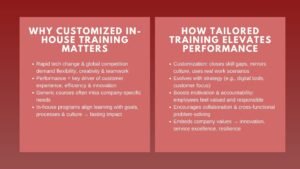
One-on-one leadership development programmes are effective because they address the organisation’s specific management challenges, culture, and business context and are not based on generic external content. An in-house leadership training program can incorporate real internal case studies, company processes, and team dynamics that external courses cannot replicate.
This customisation also enables organisations to develop multiple managers in the same way within the same leadership standards and expectations. In-house training also helps continue the coaching process and follow up, as trainers or facilitators already know the challenges faced by the organisation.
How Do Organizations Identify Employee Skill Gaps?
Employee skill gaps are identified by conducting a training need analysis, which involves an organisation’s study of current staff skills and the skills they need for the present and future business requirements. This usually includes feedback and consultation from managers, self-evaluations, and reflection on business results like missed targets or repetitive mistakes.
Skill Gap analysis should not be a one-off exercise as business priorities and skills needed change over time in accordance with the changing markets and technology. This continuous cycle allows organizations to invest in training where they will yield the most significant impact at the moment and helps organizations that are planning workforce transformation prioritize which teams to support first.
How Can Customized Training Support Different Teams?
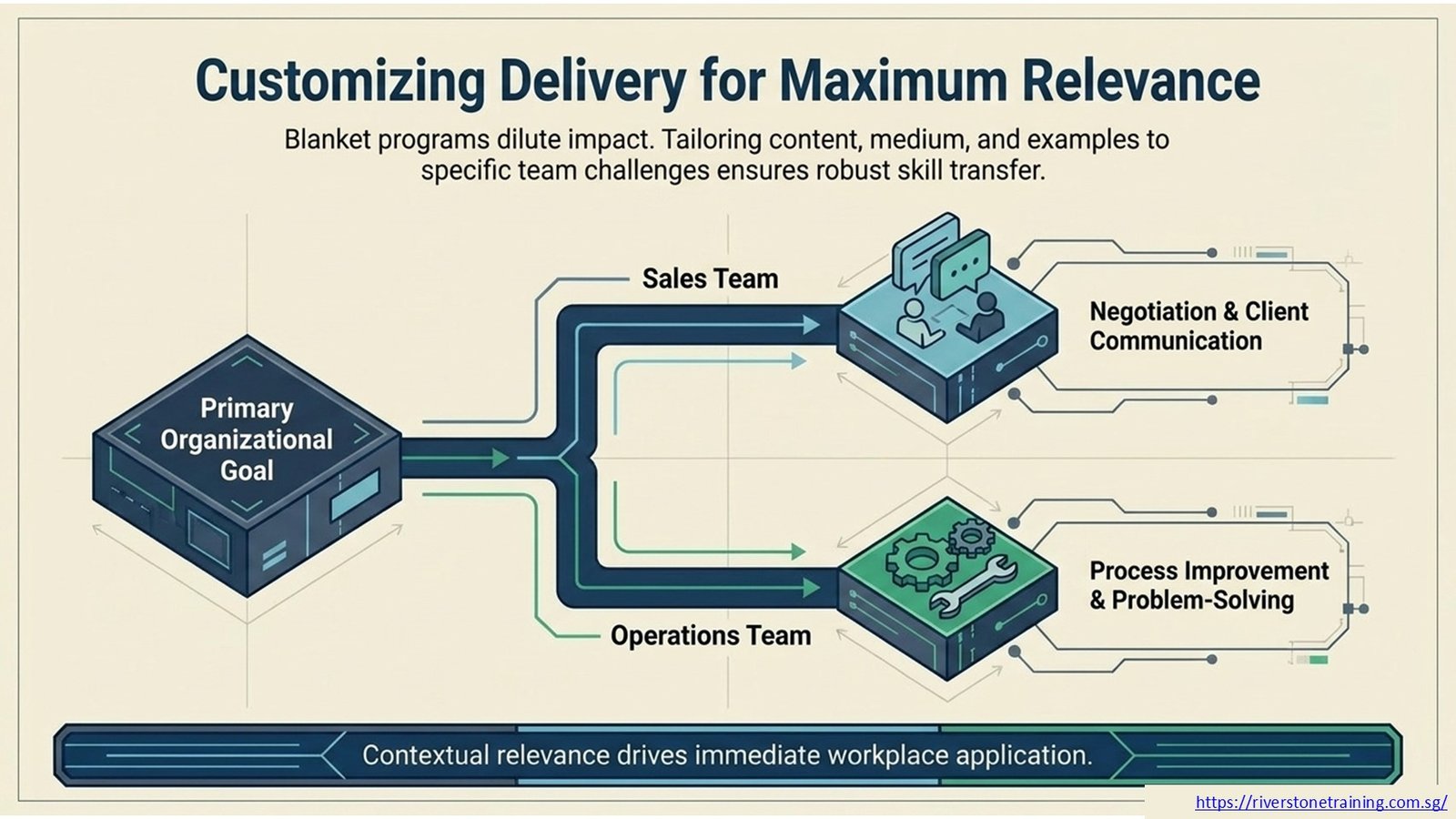
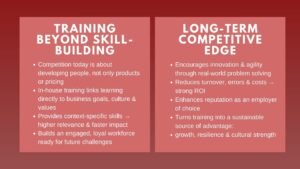
Customized training caters to the needs of various teams, tailoring the training content to the unique challenges of each team, as opposed to a blanket organization-wide program. Some sales teams might require negotiation and communication skills, whereas an operations team might focus on process improvement and problem-solving.
It’s also important to customize the material, the examples, and the medium of delivery to fit the context of each team, as the employees feel that there is direct relevance for their work. This specific training results in more robust transfer of skills than generic, universal training.
How Does Continuous Learning Improve Workplace Adaptability?
The continuity of learning ensures that the skills of employees are always up to date because the requirements of jobs, tools, and the market change constantly. To help employees meet new challenges with speed, companies that embed learning into everyday work, as opposed to training as a single event, tend to succeed.
A learning culture also accepts and normalizes questions, trying new methods, and learning from failures to help speed up problem-solving when needed. Organizational changes are easier to handle for teams that have been used to frequent learning.
What Skills Should Future-Ready Employees Develop?
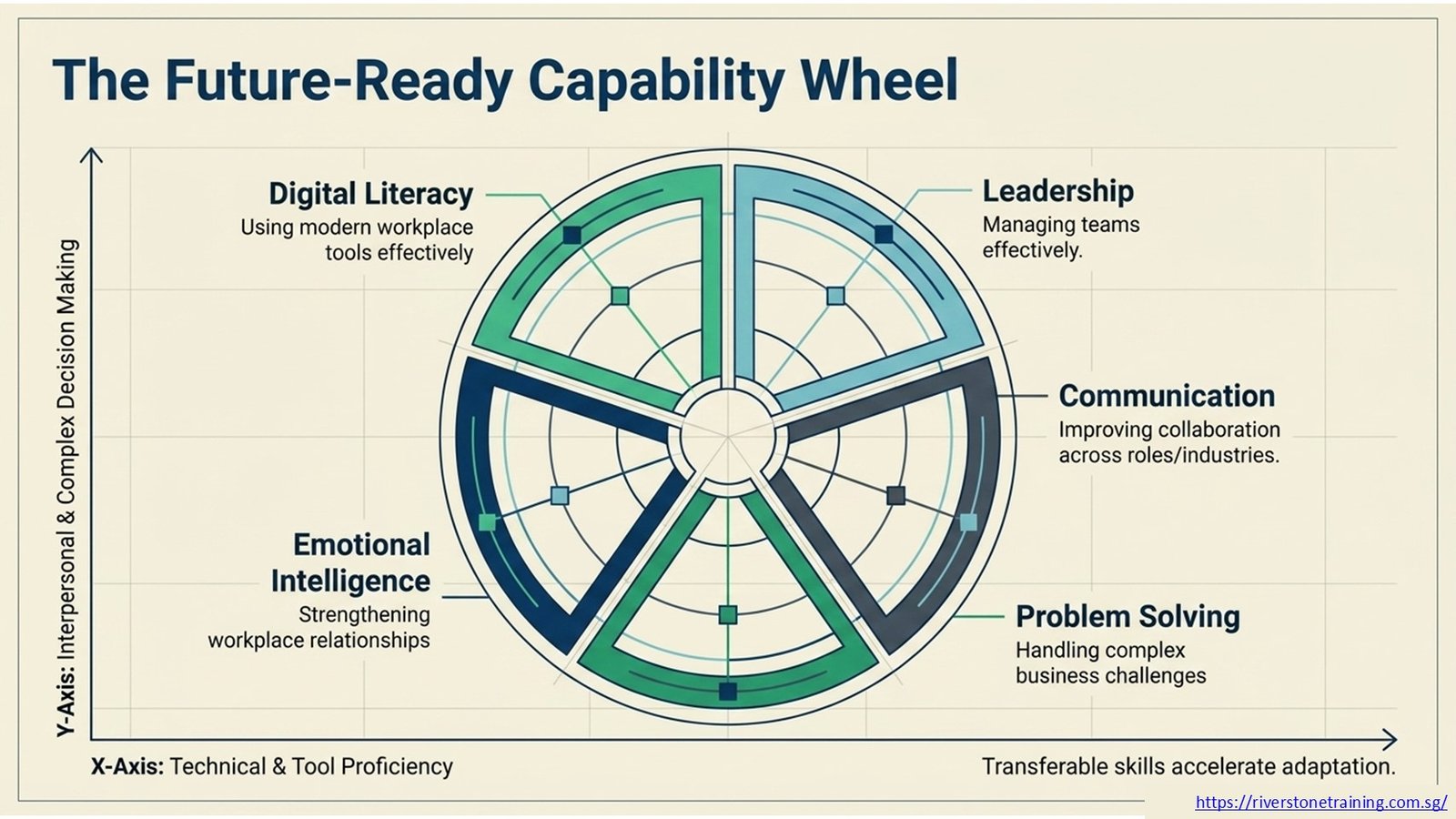
The workforce of the future must be able to do digital, communicate, problem-solve, be emotionally intelligent, and collaborate across roles and industries. Employees will be able to use new technology effectively while dealing with relationships and complex decision-making.
Technical skills that are specific to a job are still valuable; however, organizations are increasingly focusing on these transferable skills because they help to adapt to the changing needs of jobs. Someone who has the technical skills and can relate well with others will be better prepared for the next job.
| Skill | Workplace Application |
| Digital Literacy | Using modern workplace tools |
| Leadership | Managing teams effectively |
| Communication | Improving collaboration |
| Problem Solving | Handling business challenges |
| Emotional Intelligence | Strengthening workplace relationships |
How Do Digital Learning Solutions Support Employee Development?
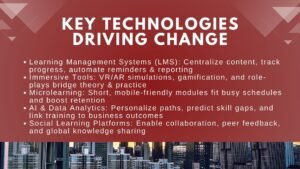
Digital learning solutions can be used to develop employees, since they make training available at the employee’s request, enabling them to learn when they want, while carrying out their work. Well-designed learning and development programs combine classroom training, digital modules, and flexible online learning so employees can build skills in the format that suits their role and schedule.
Digital platforms also facilitate scaling uniform training across multiple locations or large teams, and centrally monitor training completion and progress. The use of this blend means that employees do not need to be out of the workplace for extended periods of time and can learn continuously.
How Can Organizations Measure Training Effectiveness?
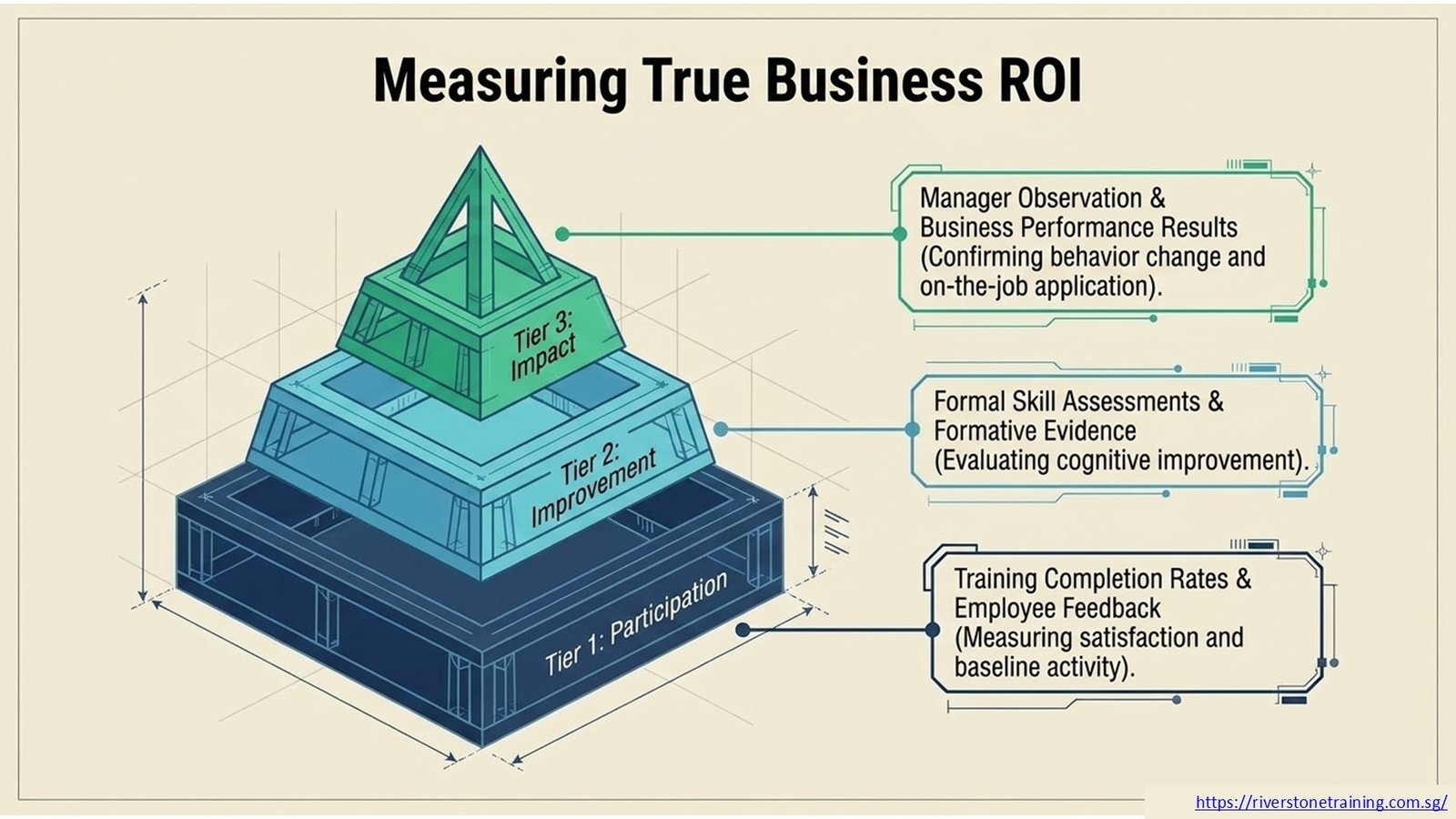
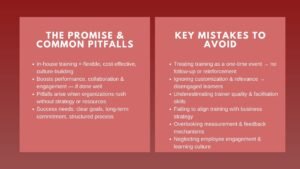
Rather than being based on attendance alone, organisations assess training effectiveness through a multitude of ways, including employee feedback, skill testing, performance results, and completion rates. Performance data from before and after training exercises can be used to confirm the use of the new skills on the job.
Manager observations and follow-up check-ins are also a part of the formative evidence of behavior change and can be used in conjunction with formal assessment scores. The multi-layered measurement process provides more clarity for HR and L&D teams on the return of training investments.
| Metric | Purpose |
| Employee Feedback | Measure satisfaction |
| Skill Assessment | Evaluate improvement |
| Performance Results | Track business impact |
| Training Completion | Monitor participation |
| Manager Follow-Up | Confirm behavior change |
What Role Does Employee Engagement Play in Learning?
Learning relies heavily on employee engagement, as employees who are motivated and engaged will be able to keep their skills longer than employees who attend training passively. Programs with linkages between learning goals and career development tend to elicit more participation and follow-through.
Also, when employees can practice new skills immediately after training, the importance of the training is reinforced. Support and experience with training in regular work contributes to this maintenance over time, and team supervisors who practice what they preach during training help reinforce the importance of training for the team.
How Do L&D Programs Support Business Growth?
L&D programs provide the workforce with the skills necessary to implement business strategy, new technology, and address market opportunities and changes. With a well-trained team, an organization does not have to solely depend on outside recruitment to take on new duties or projects.
Leadership development in particular helps with succession planning; as the company expands and grows, they have managers on board who will be able to assume greater roles. This internal capacity development helps lower the operational risk of leadership gaps when expansion is planned, and allows business leaders to be more confident when approving new projects or new markets.
How Can Companies Build a Strong Learning Culture?
Companies foster a learning culture by making development a regular and visible priority and by having leaders who engage with and refer to development. Catching staff implementing new skills will confirm that they are not only welcomed but appreciated.
Learning in the normal routine of work, e.g., in short learning sessions or peer coaching, also normalises ongoing learning. This consistency transforms learning from a scheduled event to a regular part of the way in which the organization functions.
Why Should Organizations Invest in Long-Term Workforce Development?
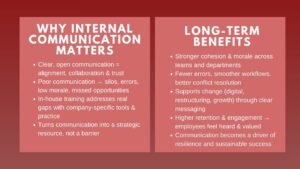
It’s important that organizations invest in the long-term development of their workforce, as training with short time horizons is not able to keep up with the changing business and technology requirements. Investing in employee capability not only creates a more resilient organisation, but it also enables the organisation to adapt to disruption before it occurs, instead of reacting to the lack of skills once it has happened.
Long-term development is also an important factor to improve staff retention and staff movement, which saves on recruitment expenses and helps to retain institutional knowledge. As an organization grows and scales into new markets or teams, it is more likely to be well-positioned for sustainable performance if it views learning as a continuous strategic investment.
Conclusion
Learning and development programs are designed to create a future-ready workforce, with upskilling the employees, providing ongoing training, and targeted learning methods that allow the organization to address evolving business requirements. These programs provide both structured routes of employee development and development for employees in preparation for future role increases.
Meanwhile, in-house leadership development enhances management skills, boosts decision-making, and nurtures future leaders and managers to effectively lead teams and organisations. These strategies are the foundation of the flexible and competent workforce that drives business performance.
| Focus Area | Organizational Value |
| Employee Upskilling | Builds practical, applicable capability |
| Leadership Development | Prepares future managers |
| Continuous Learning | Improves adaptability to change |
| Customized Training | Addresses team-specific needs |
| Training Measurement | Confirms business impact |
Companies prepared to enhance their ability to operate are welcome to invest long-term in strategic and structured development projects that will create flexible, skilled, and future-proof workforces.